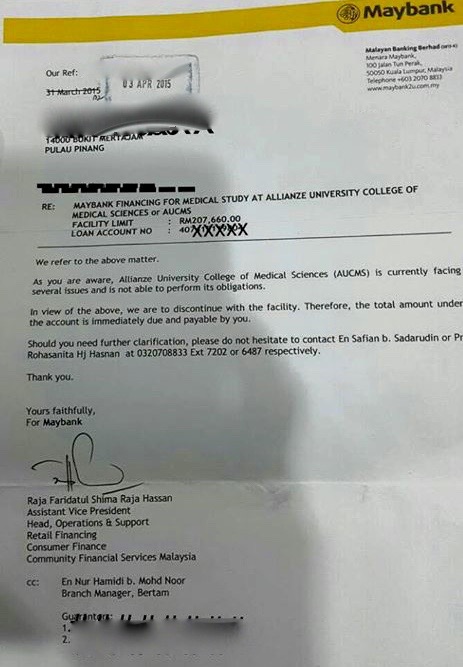
It has been almost 3 weeks since I last updated my blog as I was very busy. The above topic had 3 parts written before over HERE, HERE and HERE. I discussed how the medical profession is gradually changing with introduction of many new rules and regulations. A recent meeting between MMA president and Ministry of Education had yet again confirmed the fact that we are heading towards oversupply of doctors and unemployment (Berita MMA January 2015). The Ministry officials admitted the fact and are considering to increase the entry requirement to 5As in SPM. I will not elaborate any further as I had written enough.
In July 2014, I wrote the 1st part of the above topic. One of the issues discussed was about dispensing separation (DS). It was announced that the dispensing separation would begin in April 2015. Over the last few weeks, this is the hottest topic being discussed among the medical fraternity, especially among the GPs. It was informed that the Pharmacy Bill would be tabled in Parliament this March, which suppose to move the dispensing rights from doctors to pharmacist. This will have great impact to the GPs. As I had written before, most GP’s income comes from the sale of medications. If they were to survive by just charging consultation fee, most GPs may not earn enough to even maintain their clinic. They may have no choice but to increase their consultation fees, which in turn will increase the overall cost of medical care and chase away their patients.
I must agree that in most developed countries, doctors are not allowed to dispense their own medicines. However, are we ready for such practice over here? The best people to answer this question will be the public themselves. Is the public ready to pay consultation fee to the doctors and then go to the nearest pharmacy to collect their medications? I am sure the one stop center that is currently being practiced is a much better option. However, the patients have every right to request to buy their medications from elsewhere. We cannot deny that fact. The patients also have every right to know what medications they are taking, aka name of medicines. No doctors can refuse to inform the name of medications to the patients. In fact, under PHFSA, all medicines must be labeled.
Over the last 1-2 months, multiple letters were published in newspapers, even RTM had invited a pharmacist representative to talk about it, and last week, most major newspaper carried topics regarding dispensing separations. One issue that I noticed during these few months is the fact that the pharmacists are more united in supporting this change. What happen to the doctors? Sorry to say, we are the most disunited profession in this country! We had MMA as the sole representative of doctors in this country till a few years ago. MMA is the only body that the government communicates with, officially. Some felt that MMA is not representing them enough and not vocal enough. MMA, as a professional body and not a union will have to settle any issues with the government via diplomatic way. Unfortunately, many out there, who are NOT even a member of MMA and do not even know what MMA is doing, will only know how to complain without contributing anything.
Few years ago, social media aka Facebook was used to start a new organization known as Malaysian Primary Care Network aka MPCN. The main agenda is to unite all doctors. The group grew in size and subsequently registered as an organization. I am also a member of this Facebook group and supported the call for unity. I have been a member of MMA since I was a houseman and had been active with MMA since then. I have been a committee member of MMA Johor since 2000, SCHOMOS Chairman of Johor for 3 years and National SCHOMOS Treasurer for 2 years. Currently I am the CME Chairman since 2013. While I support MPCN’s call for unity, I always felt that they should work with MMA and all their members should also become MMA members. Only with total strength we can fight.
Unfortunately, doctors are far more divided than before. Not only we have MPCN, we also have GPs united and don’t forget the race and religion based association such as Persatuan Doktor Islam Malaysia (PERDIM), Muslim GPs united and even Kumpulan GP Melayu etc etc. IT is very sad to see that after almost 60 years of achieving independence, we still want to fight a course by differentiating ourselves along racial and religious lines. While all of us are doctors through western education and sworn to help human beings irrespective of who they are, I wonder how differentiating ourselves along racial and religious line will help mankind. These include backstabbing each other etc.
We must not forget that we are all in the same ship. We leave in symbiosis. If one falls, everyone falls. Frankly, our ship is sinking! Politicians will find whatever way to keep their power and thus, the increasing rhetoric on protecting race and religion. We, the so-called most educated people in this country should be the uniting factor. Unfortunately, day-by-day, I see the most educated people believing in conspiracy theories and prefer to hold on to their race and religion cards. Sad indeed.
I see each of these groups organising separate forums and agendas to fight the dispensing separation (DS). The only unity I see is the fight against DS. Why not we merge into a single group and fight the battle together? Why must we fight separately? Is it because, everyone wants to become a hero of their own group? I see sincerity in MPCN’s boss Jim Loi. Being in an organisation for almost 17 years thought me one thing: backstabbing is common. There are many armchair critics and keyboard warriors who will only talk but will never help you when the need arises. There will be many who may be nice to you but will say the opposite behind your back. I have seen and heard enough. A person who you thought is your best friend may have a totally different agenda behind your back. This is becoming more common as our politicians use race and religion to their benefit. Many minds are being polluted with multiple conspiracy theories. Even a sincere help is considered as a conspiracy to “take over” the country, convert people etc etc!
Well, enough of my rant. Coming back to the DS story, our “MIC troubled” Minister issued a statement yesterday that DS is still in discussion stage and the government has not decided anything yet! Hah? There will never be smoke without fire !. Remember PHFSA in 1998? Before we knew, it was tabled in Parliament and passed!
Somehow I feel DS is inevitable as the government prepares for the next major restructuring after GST. It will be the health care system. The government will never be able to sustain the current public healthcare system. It will have no choice but to introduce a National Healthcare Financing Scheme. Whether it is for good or bad, we must be prepared for it. The future landscape for doctors will change. The only people who can challenge this will be the public……………
Gong Xi Fa Chai…………………. May the year of Goat bring us good luck.
Doctors meet to diagnose ailing industry
By Haresh Deol
Published: February 6, 2015 07:05 AM
KUALA LUMPUR, Feb 6 — As the debate for separation of the roles of doctors and pharmacists lingers, general practitioners (GPs) are racing to safeguard their interests in the wake of impending losses and additional costs imposed on them.
More than 50 doctors will gather in a closed-door meeting in Kuantan tomorrow to discuss the implications of:
• Separating roles of doctors and pharmacies;
• Implementation of the goods and services (GST) tax;
• Upgrading equipment involved in treating foreign workers;
• Growing number of clinics folding up;
• Over 4,000 private doctors who have quit in 2013 alone, mostly due to losses.
The disgruntled doctors insist these factors will impact their practice come April 1, leaving them little choice but to charge their patients more.
They cited rising cost of living and “bullying tactics” adopted by third party administrators as among the reasons for closure of more than 500 clinics between 2012 and last year.
But Health Ministry insiders claim, while nothing has been confirmed, the doctors are kicking up a fuss as they stand to lose their side-incomes from selling drugs.
“Dispensing separation will hurt the people not only in terms of more financial burden but other things like waiting time and other inconveniences,” said Medical Practitioners Coalition Association of Malaysia president Dr Jim Loi Duan Kong.
“The inconvenience of driving around for another parking space and paying for another parking coupon … that will happen if clinics no longer dispense medicine. What about the elderly? It’s just more troublesome for the man on the street. We’re not ready for it.”
Dr Loi admitted doctors would be able to “cut corners” if they continued to buy and dispense medicine.
“It has nothing to do with GPs enjoying kickbacks. It’s pure economics as doctors get to balance their accounts. We don’t dare to charge more than RM25 for consultation for a common flu or fever. We can’t hike prices of medicine as people know how much a strip of paracetamol cost. But many members insisted if the dispensing of medicine is taken away, then they would be forced to charge higher consultation fees.”
When told talk of dispensing separation has made its rounds since last year, he insisted: “This time it’s going to happen and it’s going to start in April.
“Right now will be what has been termed as the hybrid period where patients will be allowed to choose to either buy from the clinics or pharmacy. The dispensing of medicine will be phased out by April next year,” he said.
He has also received complains members have not received their dues from third party administrators on time.
“According to our statistics, there were 11,240 private doctors in 2012. The number dropped to 6,675 in 2013. In 2014 there were 6,865 private doctors nationwide. So many have quit as they cannot sustain.”
Another doctor from Jerantut, who declined to be named, said the introduction of dispensing separation will kick-start the 1Care for 1Malaysia health transformation plan — which mirrors the national health care service of developed nations including US and UK.
“But if you study the US and UK health care service, they have plenty of woes. It is not perfect. It is now even a top issue in Britain ahead of the May elections,” he said.
He said the rental of clinics and other administrative and operating matters were not exempted of the GST.
A Malaysian Medical Association top official said they have received numerous queries pertaining to the issues.
“There’s just so many elements disrupting doctors, especially those running their own clinics. Yes, many had quit and intend to quit. Some thought they could earn a steady income by becoming associated with companies through third party administrators but have instead been incurring losses. They also worry of the GST.
“But the dispensing of medicine is the final straw. It will be difficult for both doctors and patients. Let’s be logical, you’re already sick and the last thing you would want to do is to go in circles finding a pharmacy to buy medicine. Doctors will eventually hike their consultation fee as the current regulation states GPs can charge consultation fee of not more than RM120. So if a doctor used to charge RM25, if the dispensing separation kicks in, he or she could now charge RM35 or RM40.”
“Doctors face many woes and often suffer the end rot of it.”
– See more at: http://m.themalaymailonline.com/malaysia/article/doctors-meet-to-diagnose-ailing-industry#sthash.vdpE6cZW.dpuf
Pharmacies to dispense medicines if proposal accepted
BY CHRISTINA CHIN
PETALING JAYA: Instead of getting their medicine from private clinics, patients will have to obtain it from pharmacies if the Health Ministry accepts the proposed “Doctors diagnose, pharmacists dispense” system.
While the system may cause some inconvenience to patients, pharmacists say it will help bring down the prices of medicine and give doctors access to many more drugs to prescribe.
It is learnt that doctors and pharmacists have held several discussions on the issue over the last year and they plan to meet the Health Minister soon.
They are represented by the Malaysian Medical Association (MMA), Medical Practitioners Coalition Association of Malaysia, Islamic Medical Association of Malaysia, Malaysian Pharmaceutical Society (MPS) and Malaysian Community Pharmacy Guild (MCPG).
According to MCPG president Wong Sie Sing, the five organisations had, at their last meeting on Nov 8, agreed in principle that dispensing be left to pharmacists.
Representatives of pharmacists later met Health Ministry director-general Datuk Dr Noor Hisham Abdullah on Nov 26.
He said the two professions met to work out a timeframe to introduce the new system, adding: “I hope we can implement it by April.” Debate on the issue has been going on from as far back as 2008.
“If pharmacists are allowed to dispense, doctors would have access to 10 times more drugs to prescribe than what they have in stock. This will benefit the patients,” Wong said.
MCPG represents more than 2,000 community pharmacies employing some 2,500 pharmacists.
MPS president Datuk Nancy Ho said patients would receive further counselling from another group of well-trained healthcare professionals if pharmacists were to dispense medication.
“The check-and-balance reduces prescription and dispensing errors. Dispensing separation is about professional medication management and only pharmacists are trained in this specialised practice. We know everything about a drug’s healing value and possible harm,” she said.
MMA president Dr H. Krishna Kumar confirmed that the associations had met on the proposed new system but said nothing had been agreed on yet.
Dr Noor Hisham confirmed meeting representatives of pharmacists, and said they discussed about integrating and consolidating the Pharmacy Act.
Stating that nothing had been decided on, he stressed that the ministry’s main priority was to ensure quality and safety.
Universiti Sains Malaysia (School of Pharmaceutical Sciences) Assoc Prof Mohamed Azmi Ahmad Hasalli said a 2013 study of 40 clinics and 100 pharmacies in Penang found that doctors dispensed more medicine and antibiotics and charged more than pharmacists.






 Pagalavan's Avatar