Feeds:
Posts
Comments

Archive for the ‘Education’ Category

I had written many times before that most budding doctors feel that by being a doctor  they are going to do wonders. Only when they start their working life will they realise that it is not what they thought. Yes, medicine has evolved with a lot of new medications, new surgical techniques and new discoveries. Unfortunately, how many of these can actually cure you ? Why do we still see people dying of infections like Pneumonia, Meningitis etc when we have so many different types of antibiotics compared to 30 years ago? I still see my patients succumb to pneumonia, Dengue and Diabetic foot etc. With so many advanced cardiology techniques, we still have patients dying of Acute heart attack. Frankly, to be alive you need a lot of luck and faith. It is not about what doctors can do. Doctor’s job is to diagnose and administer treatment. After that it all depends on luck! Even though the life expectancy has increased but we are seeing more younger people dying of chronic diseases. And there is NO cure for chronic diseases. We have medication just to control it!

Over the last few weeks, I have had many elderly patients with multiple co-morbidities being admitted under my care. Call me conservative, but right from those days I had always believed in informing the relatives the hard truth. I will inform them from day one itself that there is nothing much I can do and very high chance that the condition will deteriorate. I will inform them the possible options that are available. These are patients who are suffering from irreversible medical conditions and have reached their terminal event. Ventilating these patients will never be my option. You just have to put yourself as the patient and decide what would you want at that time.

There are many doctors out there who will listen to relatives than making a sound clinical decision in the best interest of the patient. I have had doctors who ventilate a terminally ill advanced cancer patients and even a patient who has been bed bound for the last 2 years due to a stroke. Will this change the outcome ? It will only prolong the suffering of the patient. In private sector, it is just a waste of money for the relatives. No matter how painful it is to say that we can’t do anything for the patient, it has to be done. Remember what this doctors said in his last speech ?

Let me give you an example. I just saw a 81-year-old frail looking lady. She was diagnosed to have Ca Head of Pancreas with biliary obstruction and liver mets 6 months ago. If I was the doctor, I would have just suggested stenting of the bile duct and go for palliative care. Unfortunately, someone out there in a neighbouring country decided to go for a major surgery (Whipple’s procedure) after subjecting the patient to ERCP, EUS and tissue biopsy. Intraoperatively, they felt that it is at an advanced stage and decided to do a triple bypass surgery instead. Logically speaking, why did they even attempt the surgery in a 81-year-old lady with the CT scans already showing metastasis ? Is it because the family requested or someone wants to be a hero? A good doctor would have just advised her to go for palliative care and symptomatic relieve. Now, the same doctor who did the surgery told the patient to go back and rest at home as nothing much can be done!! Shouldn’t this been told when the diagnosis was made? The story is just for everyone to ponder upon! The family spend huge amount of money for something that did not do any good for the patient.

The article below was circulated in Facebook and emails about a month ago. It appeared over here. Every budding doctor and doctors themselves should read this article below, written by a family physician. It is the truth and definitely I do not want someone ventilating me, putting me on a tracheostomy tube, NG tube and being bed bound for the rest of my life, if I survive. I rather die peacefully. What’s important is that my family will be taken care of by leaving behind adequate insurance and a will. As I cross halfway of general life expectancy, I have done all those.

Well, after 16 years of service as a doctor and almost 3 years of being “on-call” daily in a private hospital, for the first time (except Singapore) I am bringing my family for an overseas vacation. I could not afford to do this for a long time. Thus I will be off my blog from 30/05/2013 till 9/06/2013. It is a long trip to the Theme Park city of the world. …………………

How Doctors Die
It’s Not Like the Rest of Us, But It Should Be

by Dr Ken Murray

Years ago, Charlie, a highly respected orthopaedist and a
mentor of mine, found a lump in his stomach. He had a surgeon explore
the area, and the diagnosis was pancreatic cancer. This surgeon was
one of the best in the country. He had even invented a new procedure
for this exact cancer that could triple a patient’s five-year-survival
odds–from 5 percent to 15 percent–albeit with a poor quality of life.

Charlie was uninterested. He went home the next day, closed
his practice, and never set foot in a hospital again. He focused on
spending time with family and feeling as good as possible. Several
months later, he died at home. He got no chemotherapy, radiation, or
surgical treatment. Medicare didn’t spend much on him.

It’s not a frequent topic of discussion, but doctors die,
too. And they don’t die like the rest of us. What’s unusual about them
is not how much treatment they get compared to most Americans, but how
little. For all the time they spend fending off the deaths of others,
they tend to be fairly serene when faced with death themselves. They
know exactly what is going to happen, they know the choices, and they
generally have access to any sort of medical care they could want. But
they go gently.

Of course, doctors don’t want to die; they want to live.
But they know enough about modern medicine to know its limits. And
they know enough about death to know what all people fear most: dying
in pain, and dying alone. They’ve talked about this with their
families. They want to be sure, when the time comes, that no heroic
measures will happen–that they will never experience, during their
last moments on earth, someone breaking their ribs in an attempt to
resuscitate them with CPR (that’s what happens if CPR is done right).

Almost all medical professionals have seen what we call
“futile care” being performed on people. That’s when doctors bring the
cutting edge of technology to bear on a grievously ill person near the
end of life. The patient will get cut open, perforated with tubes,
hooked up to machines, and assaulted with drugs. All of this occurs in
the Intensive Care Unit at a cost of tens of thousands of dollars a
day. What it buys is misery we would not inflict on a terrorist. I
cannot count the number of times fellow physicians have told me, in
words that vary only slightly, “Promise me if you find me like this
that you’ll kill me.” They mean it. Some medical personnel wear
medallions stamped “NO CODE” to tell physicians not to perform CPR on
them. I have even seen it as a tattoo.

To administer medical care that makes people suffer is
anguishing. Physicians are trained to gather information without
revealing any of their own feelings, but in private, among fellow
doctors, they’ll vent. “How can anyone do that to their family
members?” they’ll ask. I suspect it’s one reason physicians have
higher rates of alcohol abuse and depression than professionals in
most other fields. I know it’s one reason I stopped participating in
hospital care for the last 10 years of my practice.

How has it come to this–that doctors administer so much
care that they wouldn’t want for themselves? The simple, or
not-so-simple, answer is this: patients, doctors, and the system.

To see how patients play a role, imagine a scenario in
which someone has lost consciousness and been admitted to an emergency
room. As is so often the case, no one has made a plan for this
situation, and shocked and scared family members find themselves
caught up in a maze of choices. They’re overwhelmed. When doctors ask
if they want “everything” done, they answer yes. Then the nightmare
begins. Sometimes, a family really means “do everything,” but often
they just mean “do everything that’s reasonable.” The problem is that
they may not know what’s reasonable, nor, in their confusion and
sorrow, will they ask about it or hear what a physician may be telling
them. For their part, doctors told to do “everything” will do it,
whether it is reasonable or not.

The above scenario is a common one. Feeding into the
problem are unrealistic expectations of what doctors can accomplish.
Many people think of CPR as a reliable lifesaver when, in fact, the
results are usually poor. I’ve had hundreds of people brought to me in
the emergency room after getting CPR. Exactly one, a healthy man who’d
had no heart troubles (for those who want specifics, he had a “tension
pneumothorax”), walked out of the hospital. If a patient suffers from
severe illness, old age, or a terminal disease, the odds of a good
outcome from CPR are infinitesimal, while the odds of suffering are
overwhelming. Poor knowledge and misguided expectations lead to a lot
of bad decisions.

But of course it’s not just patients making these things
happen. Doctors play an enabling role, too. The trouble is that even
doctors who hate to administer futile care must find a way to address
the wishes of patients and families. Imagine, once again, the
emergency room with those grieving, possibly hysterical, family
members. They do not know the doctor. Establishing trust and
confidence under such circumstances is a very delicate thing. People
are prepared to think the doctor is acting out of base motives, trying
to save time, or money, or effort, especially if the doctor is
advising against further treatment.

Some doctors are stronger communicators than others, and
some doctors are more adamant, but the pressures they all face are
similar. When I faced circumstances involving end-of-life choices, I
adopted the approach of laying out only the options that I thought
were reasonable (as I would in any situation) as early in the process
as possible. When patients or families brought up unreasonable
choices, I would discuss the issue in layman’s terms that portrayed
the downsides clearly. If patients or families still insisted on
treatments I considered pointless or harmful, I would offer to
transfer their care to another doctor or hospital.

Should I have been more forceful at times? I know that some
of those transfers still haunt me. One of the patients of whom I was
most fond was an attorney from a famous political family. She had
severe diabetes and terrible circulation, and, at one point, she
developed a painful sore on her foot. Knowing the hazards of
hospitals, I did everything I could to keep her from resorting to
surgery. Still, she sought out outside experts with whom I had no
relationship. Not knowing as much about her as I did, they decided to
perform bypass surgery on her chronically clogged blood vessels in
both legs. This didn’t restore her circulation, and the surgical
wounds wouldn’t heal. Her feet became gangrenous, and she endured
bilateral leg amputations. Two weeks later, in the famous medical
center in which all this had occurred, she died.

It’s easy to find fault with both doctors and patients in
such stories, but in many ways all the parties are simply victims of a
larger system that encourages excessive treatment. In some unfortunate
cases, doctors use the fee-for-service model to do everything they
can, no matter how pointless, to make money. More commonly, though,
doctors are fearful of litigation and do whatever they’re asked, with
little feedback, to avoid getting in trouble.

Even when the right preparations have been made, the system
can still swallow people up. One of my patients was a man named Jack,
a 78-year-old who had been ill for years and undergone about 15 major
surgical procedures. He explained to me that he never, under any
circumstances, wanted to be placed on life support machines again. One
Saturday, however, Jack suffered a massive stroke and got admitted to
the emergency room unconscious, without his wife. Doctors did
everything possible to resuscitate him and put him on life support in
the ICU. This was Jack’s worst nightmare. When I arrived at the
hospital and took over Jack’s care, I spoke to his wife and to
hospital staff, bringing in my office notes with his care preferences.
Then I turned off the life support machines and sat with him. He died
two hours later.

Even with all his wishes documented, Jack hadn’t died as
he’d hoped. The system had intervened. One of the nurses, I later
found out, even reported my unplugging of Jack to the authorities as a
possible homicide. Nothing came of it, of course; Jack’s wishes had
been spelled out explicitly, and he’d left the paperwork to prove it.
But the prospect of a police investigation is terrifying for any
physician. I could far more easily have left Jack on life support
against his stated wishes, prolonging his life, and his suffering, a
few more weeks. I would even have made a little more money, and
Medicare would have ended up with an additional $500,000 bill. It’s no
wonder many doctors err on the side of overtreatment.

But doctors still don’t over-treat themselves. They see the
consequences of this constantly. Almost anyone can find a way to die
in peace at home, and pain can be managed better than ever. Hospice
care, which focuses on providing terminally ill patients with comfort
and dignity rather than on futile cures, provides most people with
much better final days. Amazingly, studies have found that people
placed in hospice care often live longer than people with the same
disease who are seeking active cures. I was struck to hear on the
radio recently that the famous reporter Tom Wicker had “died
peacefully at home, surrounded by his family.” Such stories are,
thankfully, increasingly common.

Several years ago, my older cousin Torch (born at home by
the light of a flashlight–or torch) had a seizure that turned out to
be the result of lung cancer that had gone to his brain. I arranged
for him to see various specialists, and we learned that with
aggressive treatment of his condition, including three to five
hospital visits a week for chemotherapy, he would live perhaps four
months. Ultimately, Torch decided against any treatment and simply
took pills for brain swelling. He moved in with me.

We spent the next eight months doing a bunch of things that
he enjoyed, having fun together like we hadn’t had in decades. We went
to Disneyland, his first time. We’d hang out at home. Torch was a
sports nut, and he was very happy to watch sports and eat my cooking.
He even gained a bit of weight, eating his favorite foods rather than
hospital foods. He had no serious pain, and he remained high-spirited.
One day, he didn’t wake up. He spent the next three days in a
coma-like sleep and then died. The cost of his medical care for those
eight months, for the one drug he was taking, was about $20.

Torch was no doctor, but he knew he wanted a life of
quality, not just quantity. Don’t most of us? If there is a state of
the art of end-of-life care, it is this: death with dignity. As for
me, my physician has my choices. They were easy to make, as they are
for most physicians. There will be no heroics, and I will go gentle
into that good night. Like my mentor Charlie. Like my cousin Torch.
Like my fellow doctors.

Ken Murray, MD, is Clinical Assistant Professor of Family
Medicine at USC.

Read Full Post »

The new cabinet line-up was announced today. Since MCA refused to accept any cabinet post due to their worst performance in history, MIC is given the Health Minister post. For the 2nd time, MOH is now being headed by a doctor. Dr Subra is a dermatologist by training and was running his own clinic in Malacca before venturing into politics. However, if his record as Human Resource Minister is anything to go by, his performance can be questionable. Other that this appointment, there is nothing great about the cabinet line-up. Appointing Wathyamoorthy as a Deputy Minister in PM’s department is not a good move. HINDRAF was once declared illegal and all their top leaders were detained under ISA in 2007. Wathya ran away to UK till his return last year. During this time, all the main stream medias condemned the movement as racist and influencing the Indians to go against the government. Unfortunately, it is now a component party of BN and given a Deputy Minister post. So, what say you MIC and IPF? Who is the representative of the Indians under Najib’s cabinet?

Anyway, I hope Dr Subra can put MOH in order again. The recent news about an Houseman becoming a bogus policeman is rather disturbing. Remember what I said before about the deteriorating quality of students who are doing medicine nowadays? Even though this is an isolated case, I am sure it questions on how such a person can become a MBBS holder in the first place. Why was he involved in this crime? Was he in huge debt? I had always said that you should NEVER take huge loans to do medicine. It will take a lifetime to settle it. I know many who do illegal locums to settle their loan which include Car loan etc which will come later. Due to social status, many parents force their child to buy big cars and add more loans to their already huge debt. When the jobless scenario hits the market, many more doctors may land up in illegal activities as what happens in many other countries.

The jobless scenario of nurses hit the market end of last year. Many were left with at least RM 60K PTPTN loan. The government tried it’s best to absorb some into the civil service but could only do so for about 1600 of them. I know many nurses who are asking for a job in GP clinics and even working as Customer Care staffs in some hospitals. The quality is questionable and many do not even have any credits in SPM despite MOHE enforcing at least 3 credits. However, to enter civil service, they need atleast 5 credits!! Was MOHE sleeping? BTW, I still do not understand the logic of combining MOHE and MOE into 1 Ministry but have 2 Ministers!! Who makes the decisions? The minister who was running the MOHE is now the MB of Johor!

After the jobless scenario issue, the government has now enforced a minimum of 5 credits to enter nursing college. A little bit too late, I must say! This will definitely affect the intake of nursing colleges if enforced strictly. I hope MMC will also review its criteria and improve on the quality of the medical schools. The jobless scenario will definitely hit the medical profession soon. With the new Minister and a New DG, I hope something drastic can be taken to improve the quality of medical intakes and graduates.

Junior doc turns bad

Houseman impersonated police officer during robbery with three others
TUESDAY, MAY 14, 2013 – 10:56
Location:
IPOH


 toy pistol and other items seizedBUSTED: The toy pistol and other items seized from the group

A 26-YEAR-OLD houseman may have to forgo his dreams of becoming a doctor after he, and three others, were detained in relation to a robbery.

The man, who was pursuing his housemanship at Raja Pemaisuri Bainun Hospital, had also impersonated a police officer during the incident.

In confirming the arrest, Ipoh City Police chief ACP Sum Chang Keong said a 30-yearold businessman was driving his car along Jalan Dato Onn Jaafar when it was blocked by another car with four occupants at 4.25am.

One of the passengers from the car, dressed in an ASP police vest, alighted from the vehicle and punched the victim’s chest before he introduced himself as a CID police personnel.

“The man then pointed a black object, which resembled a pistol, and demanded the driver hand over RM350 or follow them to Sungai Senam police station,” Sum said.

At this juncture, another accomplice alighted from the car, and together with the houseman, got into the victim’s car and went to a bank in Jalan Sultan Idris Shah.

Upon arriving at the bank’s ATM, the robbers increased the amount to RM450. The victim then tried to call a friend for assistance, but was stopped by one of the suspects, who also seized his identity card.

Luckily for the businessman, a police car was dispatched to the scene after the Pekan Baru police station received a tip-off about the incident.

“The two police personnel spoke to the ‘officer’, who informed them he was from the Sungai Senam police station,” Sum said.

When the policemen asked for his authority card, the “ASP” flashed a Malaysian Special Ranger Agency card with his personal particulars.

Realising something amiss, the police officers took the four men to the Pekan Baru police station to conduct further investigations. They also seized the vest with the “officer’s” name tag, the authority card, a police cap, a pair of handcuff s, a toy pistol and two sets of keys.

The car which the four men were driving in was registered under the houseman’s name.

“The case is being investigated under Section 395 of the Penal Code for robbery and Section 6 of the Firearms Act,” Sum added.

The four have been remanded until May 17 to facilitate investigations.

Number of nursing students in Malaysia set to drop

JOHOR BARU – The number of students enrolling in nursing courses in Malaysia is expected to decrease as many students are finding it hard to meet the new entry requirement set by higher education ministry.

Institut Sains dan Teknologi Darul Takzim Chief Executive Officer Shahrul Azila Mohd Salleh said the entry requirement used to be three credit passes but last year, it was changed to five credit passes for nursing students.

“We hope the higher education ministry will review the change as many students are not meeting the mark,” he said after the institute’s seventh convocation here yesterday.

Shahrul said other private higher education institutions were also facing the same problem.

“For the last intake, we managed to enrol 240 to 300 students, but we expect the number to drop to 20 per cent for the intake next year,” he said.

He said the institute would submit an official application to the ministry to review the matter.

Shahrul said that if the institute could not fill the enrolment quota for nursing, it would have no choice but to accept international students from Singapore, Indonesia, the Philippines and China.

“We had quality graduates in the nursing course and among them were students with three credit passes,” he said, adding that the entry requirement should remain at three credit passes to appeal to a wider intake.

Earlier, a total of 411 students obtained their diplomas for various courses including business management, accounting and information technology during the convocation ceremony held at Persada Johor Convention Centre.

The recipient of the institute’s Executive Chairman Award, Siti Zulaikha Zulkifli, 21, said the key to her success was to be brave to ask questions.

“Besides revisions, I do not hesitate to speak up and approach my lecturers if I have questions,” said the Diploma in Accountancy student. She plans to move on to Universiti Kebangsaan Malaysia. Number of nursing students in M’sia set to drop

Read Full Post »

I am very sure  a lot of us would have read the article in The Sun 2 days ago. It was about the petition that was sent to DPM from a group of Malaysian students graduating from Australian medical schools seeking our government’s intervention in securing an internship place in Australia. I wrote about this issue and the petition concerned almost 3 months ago over here. I had given my views. The person who initiated this petition is a self sponsored student but majority who signed it were government scholars. BTW, I don’t think our Minister of Higher Education knows anything about internship in medicine based on his reply over here. He probably thinks “internship” here means equivalent to internship in other fields where they do it as part of their course. This reply in The Sun is interesting to read.

Now, coming back to the topic above. I mentioned in my last post that I will reveal some changing strategies of medical schools in getting students. IMU, the first and most established private medical school in Malaysia, has sent out a survey to their alumni and students asking for their opinion on the introduction of USMLE preparatory course. What interest me the most was the content of the message that was sent out. Every single issue that I had written in this blog that many refuse to believe over the years has been reinforced and confirmed by this message below:

Below is an important update on postgraduate medical training opportunities and survey:A special invitation from Dr. Mei Ling Young, Provost of IMU

Dear IMU alumni and students,

IMU would like to help our students and graduates develop  career paths.

Up tofairly recently, medical, dental, pharmacy and nursing graduates did not

need to worry about having jobs. This is  now changing rapidly. Even for the

medical graduates, competition is becoming intense and those who have added

degrees,postgraduate training and experience will have more options.

For the medical graduate, IMU is planning to run USMLE preparatory courses.

The USMLE is a licensing examination which is mandatory for doctors who wish to

undertake postgraduate clinical studies or work in the US. It will be a big project as

we can see that the demand is going to increase. The main reason for this is that

the medical graduate is starting to face very serious difficulties getting postgraduate

openings. For those with a Malaysian degree there are only about 800 places for

about 4000 medical graduates a year. The waiting time for this bottleneck can be

over 5 years.

The traditional outlets, for those who have trained overseas, are in the UK,

Ireland and Australasia. Opportunities for training in these countries are

becoming increasingly limited. All these countries are, for the first time,

having difficulties placing their own graduates in house jobs, a situation

never heard of before.

The cause for this is the establishment of new medical schools over 10 years ago and

the ramping up of numbers enrolled in established medical schools, many going up

from 150 to over 350. This had been in response to a lack of doctors.

An analysis of the situation shows that the US is still hungry for doctors and will be

so for the foreseeable future. There are also many opportunities for postgraduate

training (residencies) leading to specialist qualifications in various specialty boards.

These qualifications are in Malaysia, Singapore and many other countries. The

survey below is to give us an idea as to how many of our students and graduates

(both IMU and PMS) are interested  to do the USMLE. It will take only a minute to

complete the questionnaire. Because this problem, of difficulties getting

postgraduate places is going to worsen for medical graduates,  it is important for

IMU to start this project as soon as possible. Thank you.

Click to proceed to survey
https://www.surveymonkey.com/s/CWQ7NCP

Regards,

Dr. Mei Ling Young

Provost of IMU

However, I would like to reiterate that sitting and passing the USMLE exams do not guarantee you a residency post or  a training post in US. Yes, US is still short of doctors simply because many of their own citizens are not interested in being one. The high litigation rate and demanding population are some of the reasons quoted. Oh, don’t forget the high indemnity insurance rate, so much so, it is even higher than the income they earn in a year for some speciality. There was once a saying that there were more doctors resigning in US than being produced, not sure how true was that statement.

USMLE exam is needed for anyone to be able to work in US. It consist of 3 Steps with 2 parts in Step 2. It does not come cheap either. Just this year, the fees has been increased again as mentioned here.  Despite spending huge amount of money, there is NO guarantee that you will get a residency post. If you look at the ECFMG fact card over here, you will realise that only 40% of the Non-US citizen IMG got a matching for the year 2012. If you look at the ECFMG annual report over here (page 20), you will realise that Malaysia is not even in the top 45 countries from where the IMGs are coming from! The highest IMGs are from India (16%). Despite that, I just received a comment from a doctor from India who said this “Fed up of applying to every match, sir. Not getting matched. So quit trying. Looking for other opportunities based on usmle credentials like abu dhabi, malaysia, sir” .

I got no issue of IMU conducting this course but they make it sound like it is very easy for students who pass USMLE to get a training post in US. I think it will be as tough as getting a specialist training post anywhere else in the world. You are competing with the whole world! BTW, IMU is not the only university encouraging students to sit for USMLE. Few of the newer medical schools in Malaysia  have also started to promote USMLE for their students.

Well, once someone said that we will become a maid (aka graduates) exporting nation by 2020. It looks like we will also become a doctor exporting nation soon………………

Welcome to GTP, government  Transformation Program…………………

Read Full Post »

I am writing this article as a celebration of achieving 1 Million views, today! I started this blog in January 2010 but the article that really caught everyone’s eye was the title above. I wrote the 1st Part on 07/09/2010 and it achieved almost 2000 views in a single day. At that time, my blog views were just less than 2500/month! My 2nd part published on 08/09/2010 shot the number of viewers to about 2800 in a single day. These 2 articles were followed by various other articles, which contained a lot of information regarding our healthcare system in this country (see For Future Doctors page). Till today, these articles are still viewed and commented on a daily basis. Since the publication of these articles, the number of views to my blog increased tremendously reaching almost 40-50 000 views per-month currently, the highest being 62 351 views in March 2012.

My latest article published 3 days ago on 7/03/2013 seems to have attracted a lot of attention. It achieved the highest single day view in the history of my blog. On 8/03/2013, it achieved 7 222 views in a single day!! Incidentally, it is also the 5th anniversary of the 2008 General Election (the political tsunami)!

Thus, as a celebration of achieving a million views as well as the highest single day view on 8/03/2013, I am writing the third part of this infamous topic. I based this 3rd part on what people think about a doctor that is NOT the truth. Somewhere in this blog, a commentator by the name of cardiprin (an MBBS graduate who quit housemanship and doing something else) wrote some interesting quotes from non-medical people. I will elaborate on these quotes.

1. Have a very secured future

This has been proven wrong many times in this blog; the latest was the last article, which I wrote on 7/03/2013. Many countries are now struggling to create jobs to all their medical graduates including Australia, UK and some European countries. Jobless doctors are a norm in Thailand, Vietnam, Philippines and even India. With 36 medical schools conducting close to 46 medical programs plus thousands more from overseas, surplus of doctors is inevitable in Malaysia by 2016/17.

As I had mentioned recently, MO post in Selangor, N.Sembilan and Malacca is full. Johor Bahru district, which has only 90 posts are being filled up to 110 posts, utilizing posts that are for upcoming Klinik Kesihatans. This means that the post for the upcoming Klinik Kesihatan has already been filled!

As I have written over here, based on the government’s own statistics, it is obvious that we will have surplus of doctors within the next 3-4 years. The new housemen are being warned that they may not be able to secure an automatic MO post in the future. How they will select is yet to be determined. When this time comes, you have to go where the post is available and the maldistribution of doctors will eventually be solved.

2. Nature of Job – sitting in a cozy consultation rooms, joking along with their patients, and ends up with big bucks every month.


This is the most ridiculous statement that I hear from non-medical people. Do they really know what doctors do behind the scene? Many has this impression that a doctor’s job is just sitting in a clinic and prescribing drugs after hearing your complains. It is NOT as easy as that. It may be true for many General Practitioners (GPs) out there who do not do any ward work but as I have mentioned many times before, post-MBBS GPs are a dying field. In the future, even to become a GP, you will need postgraduate degree.

As for specialist, sitting in a clinic is only part of their job. They have emergencies to handle, patients in the ward to manage, surgeries to do and complains to answer. You are “on-call” 24hrs a day and 7 days a week as your patients are your responsibility. There are NO housemen or medical officers in private hospitals to do your job. It is just you and your patients! A small mistake will invite a lawyer’s letter at your doorstep. AND don’t forget that to reach the status of a consultant in private hospital, you would have undergone at least 10-15 years of training post MBBS!

3. Are rich


Another big misconception. The era of rich doctors are gone. Many of the current doctors are struggling to survive. Many clinics had closed down and the incomes of specialist in private hospitals are slowly declining day by day. Many private hospitals have started to “employ” specialist with a fixed income unlike before where every consultant is self-employed. BTW, don’t think the hospital is going to pay you huge amount of salary! I know one private hospital chain, which is offering only RM 20K monthly salary, which after PCB and EPF deduction will come to about RM 16K net salary per-month!

As you will be aware by now, the only way you’re going to make huge amount of money in medicine (return of investment), if ever, is by going to private sector. To do this, you need to complete at least 10-15 years of training after graduating. Being in private means, you are working almost 24hrs a day, 7 days a week and can be called at anytime of the day. The stress level is high and it is not an easy life as many would like to think.

In private, it is a business, with one big difference: you are the ONLY asset to your business. Your business runs only if you are physically there! Patients come to see you and not your clinic! If you take leave or go for a holiday, your income will be zero. If you meet with an accident and unable to work, your income is zero. If you become handicapped, your income is zero forever after that. This is the huge difference between a business in any other sector and medicine, which many do not realize.

4. One can become a specialist merely by attending lecturer classes and passing up assignments/coursework, like MBA


Oh Gosh, what kind of society are we living in? To be frank, I have had medical students (3rd and 4th years) who think that Master’s program is a fulltime program like undergraduate. They think that they just need to attend lectures, tutorials and will be thought like an undergraduate!! What they don’t understand is that it is a FULL TIME working with part-time learning! You are practically doing your full-time clinical work and part-time studying. It is learning while working! NO formal teaching is involved.

Worst still, we have parents and students who think they can become instant specialist after graduating!

5. Highly respected

This era is GONE. Most of the younger generations do not give a damn who you are! I had been scolded and given sarcastic remarks by some young fellows who have not even entered university!

6. Are angels and are very passionate about their profession

Angels? Yes, doctors are still the most trusted profession by the public but sorry to say, the number of doctors with unethical practices and profit driven are increasing day by day due to stiff competition. They are not passionate about their profession but more passionate on how they can fill their pockets! It is about survival nowadays! Just look at this news that just appeared today

As what my friend once said: doctors are the best businessmen as the public fully trust them and get cheated in broad daylight! Looking at the trend of students doing medicine for money and good future, it is not surprising at all.

7. Can issue MCs and prescribe drugs (including graduates)


So what? Even pharmacists are selling drugs without prescription. Traditional medicine practitioners are dispensing drugs, which, most of the time contains modern medicine and steroids. According to our great Health Minister, even Sinsehs/TCM practitioners can give MCs ….………. It is up to the employer to accept or not. BTW, housemen are not allowed to give MCs as you are not a fully registered doctor.

8. Can easily retire at a young age


Has anyone seen any doctors retiring young? Please enlighten me! The only doctors who I have seen retiring young are those who quit medicine and go into some other business or profession. Most doctors will die working, as the day they stop working the income is zero! That’s the reason why many doctors are venturing into other business nowadays. I know many who had started food business so that they can leave their job as a doctor one day and relax at home.

Looking back, many regretted not investing the money they spend to become a doctor in some other business! I use to tell the same to many budding doctors whose sole intention in doing medicine is for money! Why waste spending RM500K and endless years of studying when you could have done something else at less than RM100K and use the rest to start-up a business?

9. Had gone through tremendously difficult exams – failure rates are high

Another joke of the year! Do you know that almost all medical schools in Malaysia have almost 100% passing rate? Those who fail just have to repeat the exam in few weeks and eventually will pass the exams. That’s the reality. That’s the reason why you see the deteriorating quality of graduates in Malaysia, not only for medicine but for everything else as well. We also know how many “so-called” graduates from overseas who buy their “certificate”.

10. Can solve all their health problems

To Cure Sometimes, To Relieve often and to comfort always” has always been the motto for medical profession. To survive you need a lot of luck and fate. Many budding doctors or students feel that doctors can cure and save lives all the time. Yes, we can treat many people with drugs! Without drugs, what can we do? Did doctors create these drugs? Surgeons can operate and correct many disorders but can they do it without anesthetic drugs, antibiotics, equipments etc?

I use to tell medical students that doctors don’t save life. They prolong life! If doctor’s can save life, no one should die. That’s the reason you see many VVIPs dying despite the best medical care and with all the money they have. I have had medical students who went into depression when they entered clinical years. This is because they create a bond with a patient who eventually dies in the ward. Frankly, to be a doctor, you need to be emotionless! Any emotional attachment will lead to depression and resignation from clinical duties.

Medical profession is probably the least exposed profession in this country. Many non-medical people do not understand the real life of a doctor. They also refuse to accept the fact when it is revealed to them. They always accuse us of trying to protect our “rice bowl”. I use to tell them that by the time the person who enters medical school becomes a specialist like me (15-20 years), I would have retired or gone 6 feet underground. So, why do I give a damn about my rice bowl?

Students on the other hand are either totally ignorant or refuse to believe what people say. Furthermore, current generation do not read much and wants everything to be spoon-fed. I would blame it on our education system for creating parrots! That’s the reason the number of medical graduates being referred to Psychiatrists is increasing day by day. Soon, probably the psychiatry department should start a separate clinic days for “depressed” housemen! One of the main reasons for this problem is due to the fact that they had the same perception as written above coupled by pressure from parents in forcing them to become a doctor.

Well, the SPM results will be announced soon. I am sure many will still do medicine. My advice is always the same: NEVER DO MEDICINE FOR THE WRONG REASONS………………….. you will regret it later……………

Next: how medical schools changing their marketing strategy, knowing very well, surplus of doctors is inevitable in the next few years…………

Read Full Post »

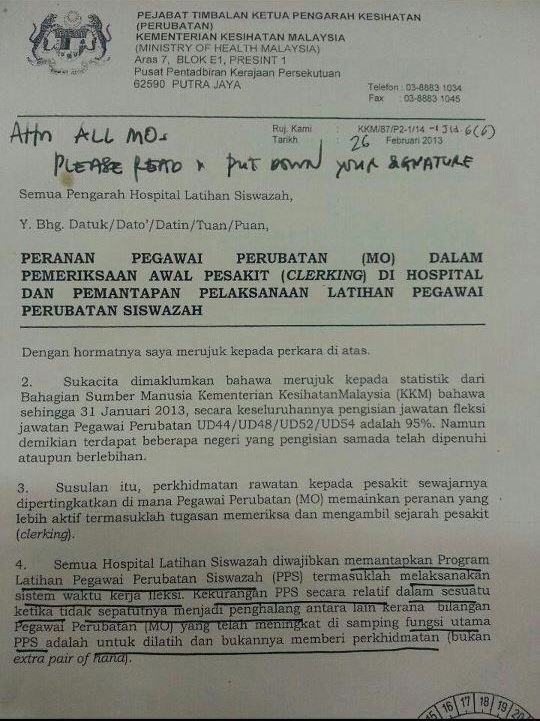
I received the following circular (see below) via a Facebook friend of mine. It is a very interesting circular from the office of the Deputy DG(Perubatan) of MOH. Again, didn’t I say so? Via this letter, it is confirmed that MOH is running out of post. It is clearly written that almost 95% of the MO post in MOH has been filled with some hospitals/kliniks being oversubscribed. I had a chat with some senior doctors in MOH and was reliably informed that all MO post in N.Sembilan, Malacca and Selangor is FULL. Many who finished housemanship in these states are being transferred out of the state. The district of Johor Bahru which has only 90 MO posts for health side are being filled up to 110 post. Where are these extra posts coming from? It is being borrowed from the upcoming Klinik Kesihatans which is being planned in near future or under construction. It basically means that the post for these upcoming KK has already been filled! How many more post can the government create? Pilot project has also been started in some KKs for shift duties till 10pm.

If you look at the letter carefully, MOH is now concentrating on improving the quality of care by asking MOs to become housemen. Housemen will eventually become a 6th year medical student who would not need to take any responsibility. It is also mentioned that shift system MUST be implemented in ALL hospitals. Any shortfalls should be covered by the MOs since there are enough number of MOs to run the service. There is nothing to cheer about for the housemen as you will become a MO soon and need to follow the same orders. Worst still, you will be under trained and underexposed. I can already see that happening around me. I have junior MOs who just finished housemanship who do not even know that ACE inhibitors can cause cough, Amlodipine can cause leg edema and Hydrochlorothiazide can cause rise in uric acid! These are information that I knew when I was a final year medical student! The “training” is getting bad to worst and many are being released with a “license to kill………….”. I just saw a 74-year-old lady discharged with Pottasium tablet 1200mg tds and Mist KCL 15mls tds after 1 day of admission in a hospital. Thank GOD she came to see me the next day! Do they know that Potassium can kill?

I was also informed that very soon, HO post will be given under temporary post. This means that you are not going to be guaranteed a job after housemanship. You also cannot choose where you want to work as you will have to go where the post is available. Remember what I said over here. Again, can anyone deny what I have been saying all this while? All evidence is pointing towards an oversupply and jobless doctors…………….

post full

Read Full Post »

Way back in October 2011, I wrote this. In just 6 years, the government reversed their decision from a 4 year compulsory service for pharmacist to 2 years ( including 1 year internship). The reason was obvious that the government was running out of post. Yesterday, our government has further liberalised the situation by allowing fresh graduate pharmacist to do their internship in private sector! It was reported here and attached below. It is a clear indication that the government is not being able to provide a job for all pharmacy graduates like before. Would the same situation happen to doctors soon? Only time will tell.

Personally, what are these pharmacists going to learn from private retail pharmacy stores? Who is going to guide them ? Are they going to become a mere shopkeeper? At least if they are given a job in a private hospitals, there are senior people and doctors who may be of help in their training. I seriously feel that our entire medical system is going down the drain with poor planning, inadequate training and with a “license to kill”………….. Would they soon ask private hospitals to conduct housemanship training? Well, being in bolehland, nothing is impossible!

Whatever said, we still need a lot of pharmacists in rural areas. This is the reason the government is mulling special incentives for pharmacies to be set up in rural areas. This was also reported 2 days ago over here ( see below). Right at the end of the news, it is mentioned that we will achieve the WHO pharmacy to population ratio of 1:2000 by 2016! Sounds familiar? what happens after that? Jobless pharmacist?

The Malaysian Pharmacy Society has already started the zoning system in preparation for the 1Care system. I had written about this over here and it is also mentioned below.

So, can anyone still deny that doctors can become jobless? We are just producing too many graduates in every field. The private colleges are having a field time producing half baked graduates for the sake of money……………. The realisation is simply tooooooo late!!


Ministry relaxes pharmacists’ training scope

KUALA LUMPUR: The Health Ministry has liberalised the training scope of provisionally registered pharmacists (PRP) with a view of increasing the pharmacist-people ratio of 1:2,000 by 2016, as well as increasing the number of registered pharmacists in the country.

Pharmaceutical services senior director Datuk Eisah Abdul Rahman said through the liberalisation process, pharmacy graduates can now go through their training outside of government hospitals and facilities.

“They can undergo their PRP training at private pharmacy facilities, such as private hospitals, industries, in research and development and community pharmacies,” she said at the opening of Cosway’s 100th pharmacy store in Bandar Sri Damansara, here, yesterday.

The compulsory training introduced in 2004 was also shortened from a three-year period to only one year and was made effective in September 2011.

The move, she said, was to encourage local pharmacists to get involved in the private pharmaceutical sector.

“We welcome applications from community pharmacies to be listed as training facilities for graduates.

“Those interested will have to get recognition through the accreditation of community pharmacy programme under the Malaysian Pharmacy Board.”

Eisah said the premises must also fulfil the rules and regulations set in the 2011 Community Pharmacy Benchmarking Guidelines.

As of Jan 31, the current pharmacist-people ratio stood at 1:2,947, with a total number of 10,250 pharmacists registered in the country.

The opening of the 100th Cosway pharmacy store was attended by Berjaya Group founder Tan Sri Vincent Tan and Cosway Corporation chief executive officer Al Chuah.

Read more: Ministry relaxes pharmacists’ training scope – General – New Straits Times http://www.nst.com.my/nation/general/ministry-relaxes-pharmacists-training-scope-1.224323#ixzz2M0yeMb6E

Health Ministry mulls incentives for opening community pharmacies

PETALING JAYA: The Health Ministry is considering providing incentives to encourage the private sector to set up community pharmacies in rural areas.Health Minister Datuk Seri Liow Tiong Lai said such incentives was necessary to overcome a shortage of pharmacies in rural areas.

“The Ministry views the situation (lack of pharmacies in rural areas) seriously as many such pharmacies are only mushrooming in the city and concentrated in certain regions,” he told reporters after opening the 100th Cosway Pharmacy outlet in Damansara, near here, on Sunday.

Liow in his speech text that was read by the Health Ministry’s Pharmaceutical services division senior director Datuk Eisah A Rahman, said according to the ministry’s statistics, there were 10,006 registered pharmacies and 1,834 community pharmacies throughout the country.

The concentration of community pharmacies is in Selangor (where there are 433 pharmacies), Penang (213), Kuala Lumpur (201) and Johor (157).

Realising the lack of pharmacies in rural areas and the inequitable distribution, the Health Ministry was looking into a zoning system to distribute pharmacies accordingly in urban and rural areas so that the people would not be deprived of such facilities, Liow said.

To ensure an equitable distribution of pharmacies in the country, the ministry and the Malaysian Pharmacy Association had developed the Malaysian Healthcare Providers Mapping Service.

Currently, the ratio of pharmacists to the population in Malaysia is 1:2,947 people and by 2016 it is expected to reach the optimum ratio of 1:2,000 people set by the World Health Organisation. – Bernama

Move to increase pharmacies in rural areas

By WONG PEK MEI
pekmei@thestar.com.my

Minister Datuk Seri Liow Tiong Lai said this would encourage the private sector to open more community pharmacies in these areas.

“This is to combat the problem of insufficient number of community pharmacies, especially in rural areas,” said Liow in his speech during the launch of the 100th Cosway pharmacy store at Bandar Sri Daman-sara yesterday.

His speech was read out by the ministry’s Pharmaceutical Services Division senior director Datuk Eisah A. Rahman.

Liow said statistics showed that there were only 1,834 community pharmacies in the country.

“The ministry views seriously the uneven distribution of community pharmacies, most of which are mushrooming in city areas,” he said.

He added that it had worked together with the Malaysian Phar-maceutical Society to develop the Malaysian Healthcare Providers Mapping Service.

The service, which displayed 10 types of healthcare service providers, would allow patients to find out the location of the nearest pharmacies as well as hospitals and clinics, he said.

The service, he added, was also used by the ministry to implement “zoning” as a way of improving the distribution of pharmacies in both urban and rural areas to make it easier for people to access medicine.

Later, Eisah told reporters that a community pharmacy was a retail pharmacy which also provided services such as a pharmacist offering consumer advice on proper medication, dosage and precautions.

“It could be owned by individuals or a group of companies,” she said, adding that through “zoning”, the ministry could better control the distribution of pharmacies by referring to the mapping service.

“Before anyone wants to open a pharmacy, he or she will need to get the division’s approval. So, if the particular location requested for has other pharmacies, we will advise them to consider different places,” she said, adding that there would also be less competition.

Read Full Post »

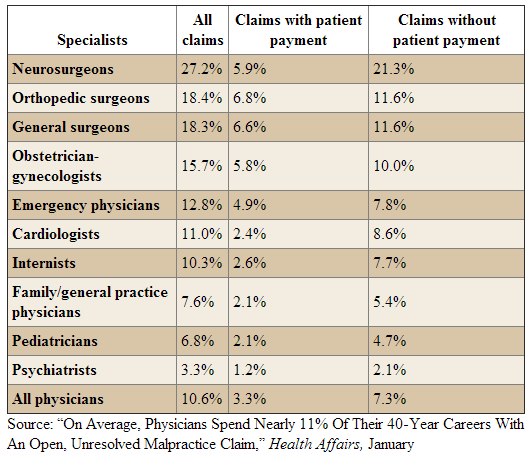
I had written on how a life of a doctor is changing gradually with increasingly demanding patients and patients who do not hesitate to take any action against you, over here and here . I had also written about doctor’s dilemma over here, here and here. I just had a chat with a medico-legal lawyer and what I heard from him is rather scary and I can see where the future is heading for medical doctors. The number of legal cases against doctors seem to be increasing by leaps and bounds. The number of complains against doctors to MMC is also increasing day by day. This could be the reason why the government is making it mandatory for doctors to have indemnity insurance in order to renew your APC from next year onwards. Whether this fee will be paid by the government for government doctors still remains to be seen.

In US, doctors spend almost 10-30% of their entire career on medicolegal claims as mentioned in the table below. The highest was Neurosurgeons followed by Orthopaedic surgeons and General Surgeons. Even though more than half of it may not end up with a claim but the hassle that you have to go through will affect your life, your reputation and your daily practise. That’s the reason some doctors retire early in many developed countries. This is also the reason why doctors in US practices CBM ( Cover Backside Medicine) by doing all sorts of investigations to cover themselves. The situation will eventually be the same over here as you can already see it happening in major towns especially in Klang Valley. The very patient that you tried to help will turn against you. This is despite a flat salary growth for physicians in US over the years as mentioned here and attached below. It is the same over here where most doctor’s income are gradually dropping, especially in bigger towns.

The medico-legal lawyer that I spoke to represent one of the largest legal firm which handles medico-legal cases. The sentence ” patients are your worst enemies” was mentioned by him! When you least expected, a letter will reach your doorstep for a claim! That’s when your nightmare begins……………..

Legal suits

Physicians See Relatively Flat Salary Growth

Damian McNamara

Nov 28, 2012

 Although physicians remain the top earners among healthcare workers, with a median annual salary of $157,751 between 2006 and 2010, their adjusted earnings did not change significantly between 1996-2000 and 2006-2010 (−1.6%; 95% confidence interval [CI], −5.4% to 2.2%), report Seth A. Seabury, PhD, from the RAND Corporation in Santa Monica, California, and colleagues in a research letter published in the November 28 issue of JAMA. During the same 15 years, adjusted earnings for pharmacists, for example, grew 34.4% (95% CI, 28.4% – 40.3%).

“Possible explanations include managed care growth, Medicaid payment cuts, sluggish Medicare payment growth, or bargaining by insurance companies,” the authors write.

Dr. Seabury and colleagues also analyzed trends in wages, calculated as annual earnings (total annual labor income plus business income minus expenses) divided by number of hours worked. Adjustments were made for age, sex, race, and state of residence. In the years 2006-2010, median physician wage was $67.30 (interquartile range [IQR], $43.30 – $80.10) per hour, but dentists made $69.60 (IQR, $44.80 – $97.50) followed by pharmacists at $50.60 (IQR, $40.40 – $58.60), registered nurses at $29.90 (IQR, $22.8 0 – $38.50), and physician assistants at $31.20 (IQR, $20.80 – $43.80).

At the same time, healthcare and insurance executives earned a median $100,000 (IQR, $63,100 – $144,461) per year and $42.50 (IQR, $29.30 – $62.30) per hour in 2006-2010.

These findings emerge from an analysis of the Current Population Survey database from 1987 to 2010, with multiple years grouped together to smooth annual fluctuations in earnings and wages. When comparing median physician income from 1987-1990 ($143,963) to 2006-2010 ($157,751), a significant increase of $13,788 (9.6%) was seen (P < .001).

A total 30,556 healthcare professionals responded to the survey during this period, including 6258 physicians (20.5% of the total). To avoid potential earnings bias from trainees, only data for workers older than 35 years were analyzed in this study. Information on physician specialty was not available. The data represent median figures and do not account for top earners in a particular healthcare field (US Census caps earnings to protect identities), which is a potential limitation.

One coauthor was supported by the National Institute on Aging. The authors have disclosed no other relevant financial relationships.

JAMA. 2012;308:2083-2085. Abstract

Read Full Post »

As the election comes closer, I seem to be getting nauseated every time I hear the mainstream news. The word 1 this and 1 that never failed to be portrayed in the news/commercials. I stopped watching the mainstream TV news and newspapers almost 5 years ago as I felt like a fool sitting in front of the TV box. No wonder they use to call it ” A fool’s Box”! However, sometimes I end up listening to the news while I am eating or drinking a cup of coffee at a tomyam shop. There is nothing educational in the TVs nowadays for the younger generations. It is either some rubbish news for idiots or entertainment to keep the population as dumb as possible. Just compare the news at CNN, BBC, Al Jazeera and our TV3 news !!

The latest series of 1 this and 1 that is SPP1M. Just when we thought we had enough of BR1M, KR1M, CL1M etc, here comes another genius idea from our government to anaesthetise the people. I simply don’t understand this scheme. With PTPTN being the biggest scam in this country, making some private colleges and universities rich by producing sub par graduates who instantly becomes a debtor, we now have another scam in the making. I wonder how this scheme suppose to help the people. As far as I am concerned, it will only create more debts which will take a life time to settle. Remember, the interest rate is BLR-1% during the study and BLR for the rest of the years ( the BLR now is 6.6%). The total repayment period is 15 years, excluding 5 years of education. You must start paying back the loan after 6 months of completing the study. The monthly repayment can range from RM 800 – RM 1300/month for 15 years, based on my calculation. For your information, house loan have a much lower interest rate of BLR-2%!

Are we creating a future generation who will be in debt for the rest of their life? Don’t forget the car loan and house loan that will come along the way. Why can’t the government invest more money to build more public universities and subsidise the education? Commercialisation of education should not happen. It will only make a few people rich in the expense of the rakyat who get poorer by the day.

Another interesting thing about this scheme is that it specifically mentioned postgraduate medical education! As far as I know, all Master’s students will be automatically given JPA scholarship on top of the monthly salary that they continue to get ( since they are working full-time during the course). So, why do they need the loan? Is it an election gimmick or is it a prelude for something that is coming? As you know, KPJ has started the first private postgraduate education for ENT which took in their 1st batch this month. I had written about this before over here and here. I was informed that 5 students has been enrolled, 2 being sponsored by MARA , 1 of their own chronic MO and 2 self sponsored. They will be given an allowance which will be equal to their last drawn pay! I think I had given enough views about this program in my above articles before. There is still a question hanging unanswered about their gazettement process and job after their Master’s. So, is this SPP1M a prelude for more private postgraduate education in the making? Knowing Malaysia, rumours will always come true!

Everyone, including the government knows that we will be having surplus of doctors by 2016/2017. So, the money-making business now is turning to postgraduate education. More money with low quality products is going to make our medical field equivalent to Indonesia. Their own people do not trust their doctors. Will the same scenario happen in this country 10-20 years from now? Almost all countries that privatised their medical education has gone to the drains. The same will happen to our beloved country. Unfortunately, I was sad to read the latest Berita MMA article written by the president of MMA. During the dinner with PM held in December 2012, our President has proposed that reputable private medical universities of long-standing should be allowed to run postgraduate courses!! He suggested that it should be done in the government hospitals but conducted by the private universities. I would only support this if we can have a common postgraduate exams like MRCP, MRCS etc. This exams should be conducted by the Academy of Medicine (AMM). When even our MMC could not conduct a common MQE exams, I can’t expect AMM to conduct such exams. It is a long way to go……….

The SPP1M scheme by the government does not seem to be receiving positive feedback from the people as mentioned here and below. Everyone with a correct state of mind knows that it is a 1CRAP scheme…………………….. vote wisely ………………….

Khaled: SPP1M scheme good for those in private institutions

By KAREN CHAPMAN and PRIYA KULASAGARAN
educate@thestar.com.my

PETALING JAYA: Higher Education Minister Datuk Seri Mohamed Khaled Nordin said the SPP1M scheme would be especially good for those studying in private institutions.

“Even if they have Higher Education Fund Corporation (PTPTN) loans, these (loans) are capped to a certain amount. So a top-up fund would be very helpful for students to pay for the rest of their course or other expenses.

“It would also reduce the burden for those studying in institutions overseas,” he said.

Sammie Goh, whose son is studying in Australia while his daughter is studying locally, said the scheme appeared to be very flexible.

“It really helps the rakyat and with the Government’s support, I hope it will be easier to apply for the loans,” he said.

However, Amira Ali, who has four children, said she was not keen on it as she and her husband already had a house and car loan to pay for.

“Some of us are still paying for our student loans. What I would like to see is proper budgeting and management of funds to ensure it focuses on education,” she said.

Amira said the Government should find a way to ensure free or affordable education for students.

Students had a mixed reaction to the scheme but all agreed that the interest rate was too high.

Graduate student Siti Ayesha Azlan, 27, said the scheme was a good initiative to help students fund their tertiary studies.

“I would like to know if the selected courses for the RM100,000 loans will only be limited to science and technology fields,” she said.

IACT College student Putra Muhamad Ashraf said that student debt was a serious issue being faced by his generation.

“If some students are having a hard time paying back their PTPTN loans, I don’t know if a bank loan is going to make the situation any better.

“The amount of debt a student faces will affect their mindset when they graduate; they expect a higher pay in order to pay off debts but employers will say they are demanding too much.

“I think the PTPTN loan is still all right because you can still make a minimum payment of RM50 a month. But will this new loan allow such arrangements?” asked the 24-year-old.

Read Full Post »

Finally, what I have been saying all this while has come true , yet again. I first wrote about having too many universities in Malaysia over here and here. I wrote the first part in Feb 2012, almost 1 year ago. I have said many times that education should never be commercialised, especially fields like medicine etc. The quality is sure to deteriorate as all private colleges are only interested in making money and will not be bothered about quality ( with PTPTN in their pocket). What happens to the graduates is none of their problems. I had written about this many times before. Our politician’s ambition of making Malaysia an “education hub” will only backfire with low quality products which in turn will affect the productivity of this country. Majority of the students are Malaysian anyway.

Today, our Higher Education Ministry has finally admitted that we are having surplus of universities producing surplus of graduates. Thus, 2 years moratorium is being implemented immediately , starting this Friday (please read here and below). Well, I think it is just toooooooo late. The existing ones will continue to produce thousands of graduates which will saturate the market with low quality products.  As of August 2012, we had 502 IPTS, not including the IPTA!! I had written about this over here, way too many for such a small country like ours.

When the government introduced moratorium of nursing colleges, I wrote this in April 2010. Remember what I said, that even if there is a moratorium, the existing schools will continue to produce thousands of graduates. Exactly as I predicted, in Oct 2012, it was made official that almost 8 000 nurses are jobless as I had written over here and here. In a knee jerk reaction, the government created 1600 nursing post in government sector, end of last year. What surprised me was the fact that the PSC chairman is saying that most of the nursing graduates do not qualify to enter civil service as they do not have 5 credits in SPM which is the minimum requirement by the government to enter nursing school and most of the nurses have only 3 credits ( please read here and below)!!! What the hell is MQA and Nursing board is doing? This is the reason I keep saying that MQA evaluation is pointless. I have sat through one and I can tell you that it is predominantly a desk audit. The college can hide a lot of facts and get away with it! The PSC chairman has got this to say “Zainal Abidin said what the government did was a short-term measure to solve the unemployment problem faced by nursing graduates, while for the long term, the Higher Education Ministry would be collaborating with the Health Ministry in setting entry qualifications”  WTH!! Do you mean there were no entry qualifications before this ? Any Tom, Dick and Harry can join any course in this Bolehland?

Of course, I had written enough about the medical schools. With 36 medical schools, we will definitely have surplus of doctors by 2016/2017. Let’s see what our great Minister will say then? The moratorium still remains a moratorium on toilet paper! It seems the Ministry is asking private universities to offer clinical postgraduate courses!! These universities do not even have enough lecturers to teach undergraduate students, how are they going to teach postgraduate students on clinical skills like surgery etc etc!!

Again, GOD save this country…………………..I am nauseated!


Two-year moratorium on new private varsities, colleges from Feb 1

 PUTRAJAYA: A two-year moratorium on new private universities, university colleges and colleges will come into effect Friday, the Higher Education Ministry announced Tuesday.

Minister Datuk Seri Mohamed Khaled Nordin said there were enough higher education institutions in the country to serve the current demand.

“The moratorium will not affect institutions that are currently having their applications processed, exisiting institutions that set to be upgraded and branch campuses of foreign universities that rate highly in international rankings,” he said during his New Year’s address to ministry staff here Tuesday.


1.1m applications received for civil service vacancies

January 23, 2013

MUAR, Jan 23 — Some 1.1 million applications have to date been received to fill the vacancies in the public sector, according to the Public Service Commission (PSC) data bank.

PSC deputy secretary (Recruitment), Zainal Abidin Ahmad said there were  832,701 new job applications recorded last year alone.

“Out of the 1.1 million applications, 46,000 new appointments were made last year to fill the various vacancies, including 36,000 for permanent posts and the rest on contract basis.”

He said this after an interaction session between the PSC chairman and  federal department and statutory body heads and representatives of associations and non-governmental organisations in Pagoh, here, today.

However, he added, there would be fewer job vacancies in the public sector this year following the government’s policy of extending the retirement age to 60 years.

Zainal Abidin said out of the new registered applications, 12 per cent or 99,385 came from Johor.

“But the number of applications from the Chinese and Indians is still small, especially from the Chinese who tend to focus on high-level posts while the Indians are less choosy.

“In this regard, we will establish better rapport with Chinese and Indian associations and the vernacular media to disseminate the relevant information and to encourage more people from this group to join the public sector.”

He also said that the government had created 1,600 new nursing posts in the public sector last month to provide job opportunities to 6,000 graduates from private institutions of higher learning.

He said most of them found difficulty to join the public sector as their entry qualification to study nursing at these learning institutions was lower than the standard set by the government, which was at least six credits in the SPM compared to only three set by some of the institutions.

Zainal Abidin said what the government did was a short-term measure to solve the unemployment problem faced by nursing graduates, while for the long term, the Higher Education Ministry would be collaborating with the Health Ministry in setting entry qualifications. — Bernama

Read Full Post »

My first part of this topic received tremendous amount of viewers, reaching almost 1500 views/day since 07/01/2013. That shows how many were interested in the topic. I am sure by now they would have got the true picture of the pathway to become a Cardiothoracic surgeon and why there are so few of them in the country. I am not sure how many budding doctors would still want to become one after reading the article. It is always better to decide after you start working when you know the reality of a medical life.

Now, let’s look at Neurosurgery. This is another common question that I am always asked by budding doctors. Again, TV programs showing glamorous and rich lifestyles of neurosurgeon get them carried away without knowing the reality. Whenever someone ask me about neurosurgery, I always ask them to take a walk into any neurosurgical ward in any state hospitals and let me know after that, what you felt when you were walking through. Personally, it is depressing. Many budding doctors think that they are going to be operating on brain tumors and do wonders! Well, that is not the reality. Recently there was a comment in my blog of a budding doctor (just finished SPM) who wanted to become a neurosurgeon just because she heard that neurosurgeon are the highest earners!! Gosh, what kind of students are we producing? They really got no idea about the world out there. In government service, all specialists are paid the same based on your grade.

Brain tumors account for less than 1% of all cancers and 1/3 of it are malignant cancers. Most of these malignant cancers have poor outcome despite surgeries. The incidences are also low with less than 7 per 100 000 population. So, from here, you will know that these are NOT the bulk of cases that neurosurgeons are dealing with. The major bulk is actually motor-vehicle accidents with head injuries! Malaysia has the highest number of road accidents in this region. Thus, head injuries contribute to almost 70-80% of patients in neurosurgical units. The remaining are contributed by Intracranial bleeds (bleeding in brain) and finally brain tumors. BTW, most surgeries involving brain tumors will end up with neurological complications like epilepsy, limb weaknesses etc, even in good hands. Brain tumours involving children is the most depressing. I know a Neurosurgeon whose own child died of brain tumour!

Most intracranial bleeds have poor outcome as well. That’s the reason when you walk into any neurosurgical unit, you will see many patients who are bedbound, speechless and comatose. Many of them end up going back as a “vegetable”. Very few survive and go back fully conscious. However, there are some intracranial bleeds such as Subdural, Subarachnoid and Extradural bleed that have good prognosis if early intervention is done. This is where most satisfaction occurs. The procedures involved are usually simple, like burr hole, craniotomy and EVD. To be frank, these procedures are done by neurosurgical MOs in government hospitals and sometimes by general surgeons. So, you really do not need a Neurosurgeon to do these simple procedures. Nowadays, even interventional radiologists are trained to do cerebral angiogram and clipping of aneurysm !

Neurosurgery involves a lot of training and skills. This is needed mainly for surgeries involving brain tumors and spinal surgeries. These are delicate surgeries. There are a lot of advancement in microsurgery involving the brain and spinal cord. However, most of the time there is nothing much that can be done and the outcome is generally poor. I remember once I was talking to a Neurosurgeon about a patient who had massive intracranial bleed. The GCS was below 7. The neurosurgeon said that ventilating and doing cerebral resuscitation could save him. I asked him what would be his neurological recovery. The answer: well not much, his GCS likely will remain low and he will go back bed bound! So, what is the point? I am not undermining neurosurgeons but the budding doctors should understand that being a neurosurgeon is not about doing wonders. I know many who even dropped out while in training as they felt it is not worth it.

The entire state of Johor has only 2 Neurosurgeons in private sector and that’s all you need. In fact, the 2nd Neurosurgeon just started 1 year ago. Since 1980s, there was only 1 Neurosurgeon in private sector for the entire state of Johor. There was only 1 Neurosurgeon in JB Government hospital till about 2 years ago when another 2 joined him. It is a stressful job and in private sector, you need to come and see the patient at any time of the day as long as the patient has head injury. Looking at the road accident rate in Malaysia, likely you would be called almost every other day. I also know neurosurgeons in private hospitals who do unnecessary procedures just to get some money even though they know the outcome/prognosis is poor. You can save lives in the expense of poor neurological outcome aka “going back as a vegetable” to the dismay of the relatives who had spent so much of money. That’s the reality in medicine.

Now, let’s come to the pathway. There are 2 pathways to become a Neurosurgeon in Malaysia, the shorter route and the longer route:

a)    Longer route

–       2 years Housemanship

–       2-3 years MOship

–       4 years Master’s in Surgery

–       6 months gazettment

–       1-2 years waiting period

–       4 years Neurosurgical subspecialist training

–       another 3-5 years experience before being able to perform surgeries on your own.


b)   Shorter route

–       2 years housemanship

–       2-4 years waiting period (min of 6 months experience in General surgery and 18 months experience in any other recognized field after housemanship)

–       4 years Master’s in Neurosurgery by USM

–       6 months gazettment

–       4-5 years experience before being able to perform surgeries on your own


Master’s in Neurosurgery by USM has a very limited number of posts offered, usually less than 10. So, the chances of you getting into this program are slim on first try. You also need strong cables and preference is given to those who are working in neurosurgical units.

Whatever said, we still need a lot of neurosurgeons in Malaysia. BUT, please remember that the working life is not as simple and grand as what is shown on TV programs. The reality is different. It is a hectic life, needs a lot of skills and training, depressing and generally have poor outcome except for some instances.

Read Full Post »

« Newer Posts - Older Posts »