Feeds:
Posts
Comments

Since I started this blog almost 3 years ago, one of the commonest questions I get asked from budding doctors is how to become a Neurosurgeon and Cardiothoracic surgeon. I have answered these questions many times in this blog but it keep being asked again and again. I am really not sure why most budding doctors only have these 2 specialties in their mind. Do they really know what these 2 specialties is all about or are they being carried away with what is portrayed in the TV programs? Many feel that these 2 specialties are the top most medical specialty, which comes with glamour, popularity and money.  Before I talk about the above topic, let me elaborate a little about what these jobs are all about.

In my entire batch of 180 graduates, only 1 became a Cardiothoracic surgeon and none became a neurosurgeon. Why?  It is always better to decide on what speciality you want to do after you start to work. I had many colleagues and friends who wanted to become this and that but ended up doing something else, many even resigned from medical field. Things will change along the way. Only when you get yourself into the working life, you will realize what medicine is all about. Also don’t forget married life and earning money for a living. You can’t be depending on your parent’s money anymore unless you come from a very rich family.

Not everyone can become a Cardiothoracic surgeon. That’s the reason why you don’t see many, out there. It is a very high-risk job and one of the most challenging surgical fields. You need good hands and master various techniques. Furthermore, with advancing techniques applied by cardiologist with various new stents, the need for cardiothoracic surgeons is declining. The entire state of Johor has only 1 Cardiothoracic surgeon in private sector because that’s all you need. There are about 3 in the state government hospital.  Most private hospital will only need about 1-2 Cardiothoracic surgeons. I also know a few “so-called” Cardiothoracic surgeons who can’t do any proper surgeries.  That’s the reason they remain in government service or in private medical colleges, doing teaching. They do not have the skills to become one but decided to do it anyway!! Probably, the glamour of being called a Cardiothoracic Surgeon is good enough for them. I also know of some cardiothoracic surgeons who have high morbidity and mortality, some even close to 50% mortality rate.

Somewhere in this blog, there was once a comment that claims that his/her relative who is a Cardiothoracic surgeon in a private hospital is earning close to RM 200K/month.  It seems many of these budding doctors are only looking at the money rather than the quality of life, skills and the risk involved. The earning capacity can be high but in order for you to earn that amount of money, you need to do at least 1 cardiac bypass surgery every other day. This means that you will be in the hospital for 24hrs/day and 7 days a week. You practically got no life and you will hardly see your children if you do have any. The stress level is extremely high. The same amount of time in any business will yield you the same amount of money.  The day you stop operating (e.g: met with accident or illness), your income is zero and no guarantee that you can come back and do surgeries like before!  Imagine if you fracture your forearm etc.

Now, let me tell you the pathway to become a Cardiothoracic Surgeon after graduating as a doctor:

1)   2 years Housemanship

2)   2-3 years of Medical Officer (assuming you get your Master’s on first try)

3)   4 years of Master’s in Surgery

4)   6 month’s gazettement process

5)   1-2 years of waiting period

6)   4 years Cardiothoracic subspeciality training

7)   at least another 5 years of experience, assuming you have done about 500 CABG surgeries and competent enough to go out to private sector and perform surgeries without any help from superiors.

This basically means that you will need about 15-20 years of government service and training before being able to be competent enough to perform surgeries on your own. When I first told this to a budding doctor, who has not even gone into medical school, she got a shock of her life. She admitted that she never realized that it was that long. Many are still clueless of the pathway, assuming that they can become a Cardiothoracic surgeon immediately after graduating. Again, don’t forget your married life, children etc.

By now, I am sure you know why there are not many of them out there. It is a difficult field, which need a considerable amount of skills and training. Not everyone can become a Cardiothoracic surgeon ………………. unlike our doctors that are being produced by our grandiose medical schools……………….

Next, pathway to Neurosurgery…………………

2012 was a year with a lot of surprises and sadness for the field of medicine. In my various articles published in this blog, I had mentioned the challenges that future and current doctors will and are facing. I had given a summary yesterday about the performance of this blog for 2012. It had almost 520 000 views last year with the highest views per day was 4 887 on 25th March. Every year, my peak is always in March. Anyone can guess why?  The answer: that’s when the SPM results are announced. Since I started this blog in January 2010, I always see a sudden increase of viewers to my blog about 2-3 days after the SPM results are announced. I hope I have given the budding doctors the true reality of the field of medicine. However, I always feel that many do not believe what I say. I still receive emails from many young doctors asking me how to quit medicine. They realised it too late! Anyway, I hope my total blog views will reach 1Billion mark by March/April this year (893 695 currently). Some of the articles that I wrote in September 2010 such as “General Misconception of being a doctor” and ” Housemanship, Medical officer and Postgraduate training” are still being viewed daily and has the highest number of comments.

It is not a public holiday in Johor for New Year. Thus, it is work as usual. Unfortunately, a death awaited me in the wards. A 63-year-old lady just died after a Massive Left MCA territory Cerebral Infarct. I use to say that doctors don’t save life’s all the time. It is ” to comfort always, to relive often and to cure sometimes”. Many at times we are just prolonging life. You do need a lot of luck to survive.

I wanted to write something about the screwed up education system of our country, initially but then I noticed that I had written enough about it before, like over herehere and here. I noticed that a lot of my friends have started to send their children to International schools this year. As like the mushrooming of the medical schools, there seem to be a sudden increase in the number of international schools since the government approved 100% local student intake since last year. Another money-making business. Our education system has gone to the dogs and it is creating a class and racial divide. The rich is going to International schools, private schools and across the causeway. The elites especially the Bumiputeras are going to MARA colleges, Boarding schools and agama schools.  The insignificant “poor” souls are going to the national schools. Why the public especially the non-Malays have complete distrust towards the national schools? The answer is very obvious when you ask anyone. Racial and religious discrimination is very obvious in these schools. My relative who is a teacher in a national secondary school in Malacca tells me that the top 2 classes in her school are only for the top Malay students. The Non-Malays will be sent to the 3rd and 4rd classes even though they are among the top students there. This is not something new. Many years ago, in early 2000, the then NUTP Sec-Gen Dato Siva Subramaniam did bring up the issue to the government. A special committee was formed and they quietly closed the case. This is an interesting letter to read. We seem to be producing the highest number of straight A students in the world with NO quality!

I just saw the pamphlet below that was given to Standard 2 Muslim students during a religious celebration in an all girls National school. I got NO issue regarding the fact that everyone should be properly dressed BUT the way it was done. Look at this sentence at the right lower end corner : “Ciri-ciri mengenal kera memakai tudung adalah seperti berikut: ” and ” Cuba perhati sekelling anda, Ramai tak “kera” ?  Is this what they are teaching a Standard 2 student  is a national school? Is the dressing issue so important to be thought in this way to a Standard 2 student?

Pulai-20121231-00046

GOD save this country………….. Happy New Year everyone. It is an election year for sure ……………

2012 in review

The WordPress.com stats helper monkeys prepared a 2012 annual report for this blog.

Here’s an excerpt:

About 55,000 tourists visit Liechtenstein every year. This blog was viewed about 520,000 times in 2012. If it were Liechtenstein, it would take about 9 years for that many people to see it. Your blog had more visits than a small country in Europe!

Click here to see the complete report.

I first wrote about Australian Internship Crisis in August 2012. Subsequently, few more places were created to absorb some of the graduates. Based on the data here, there are still about 50 students who have not got internship post for 2013, as of Nov 2012. As for Monash Malaysia, I was informed that only 7 students were given internship post in Australia, out of which, only 1 is an international student. The rest of the international students will be left in the limbo. I read an interesting letter posted in medicine.com which I have reproduced below.

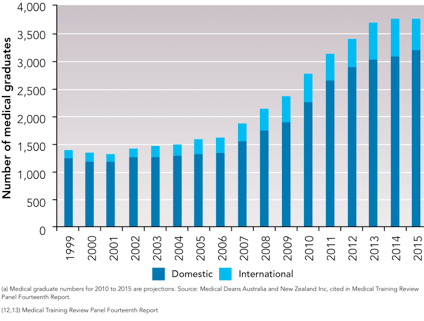
I also received an interesting email from a Malaysian self funded student in Australia. It seems the Malaysian students in Australia are planning to send a petition to our Government to ask the Australian government to give internship post to all Malaysians. I was informed that almost 50% of all international students doing medicine in Australia are Malaysians, majority under scholarship from MARA, JPA etc etc!! The graph below was taken from their petition and you can clearly see the sudden increase in the number of graduates in Australia starting this year. As I have said before, at only 3326 students (2012 graduates), they are in crisis. We have successfully produced slightly more than 4000 graduates (local + overseas) this year. Imagine when all our 36 grandiose medical school starts to produce graduates by 2016, we will be seeing close to 8000 graduates entering the market. Can we cope? You know the answer.

Untitled1

I know that the students are trying their best to get an internship post in Australia for presumable “better” training. They may be right looking at the total mess that we are in at the moment. I use to say that the practical training in Malaysia is better than developed countries but based on the current scenario, I don’t dare to say that anymore. However, it is still better to work in our own healthcare system as it is different from Australian healthcare system. Even if you do get an internship post in Australia, are you sure you will get a postgraduate training post? You will likely be thrown to a rural clinic or hospital for service. I have received several emails from doctors working there who want to come back home for postgraduate training as they could not get a training post of their choice. Well, the situation may be the same over here as well.

I ask the students the following questions:

1) why should our government ask Australia to provide job for sponsored students? Shouldn’t these students come back to serve the country? Of course, if our country can’t provide a job, it might be a different story all together.
 
2) As for self sponsored student, the government will not be bothered at all as they very well know that you will not return home anyway.
 
3) No country promises you a job. Thus, priority will always be given to their citizens and PRs, followed by international students.
 
4) How can a country (Malaysia) who do not provide internship to foreigners ask another country to do so?
Whatever it is, no university or country promises you a job. Whatever course that you do, there is no guarantee that you will get a job. Looking at the products nowadays, I can see why the employers are scratching their head whenever they interview a graduate. Year in and year out, we are seeing thousands getting straight As BUT we cannot see the real quality in them. I will write about our screwed-up education system in my next post.
I will also say this again: if you are planning to migrate, never do medicine!
Merry Christmas and Happy New Year.

The world has not ended (yet) – so, let us look at some pieces to pick up

By Dr L-F Ng, in private practice, Australia

Some days ago, a Malaysia-based specialist colleague who had sent his daughter
to the Monash University (Malaysia) Medical School wrote to me about the
difficulties she was facing in obtaining an internship posting in Australia after
her recent graduation in Medicine.

My colleague had paid high University and tuition fees for his daughter to qualify
with an “Australian” degree – albeit offshore. He and his daughter are now
disappointed and presumably mentally stressed. There will be many more.

It was stated that the Malaysian Monash school had distanced itself from this as
had the Monash Australian School.

The facts:

1. Australia is continuing to face a shortage of doctors and this is likely to be
for some time to come.
2. The rapid and increased production of doctors over the past decade
has produced a ‘tsunami’ of new graduates moving into internship and
resident training positions. These doctors will need supervision and
guidance.
3. Australian public hospitals cannot cope with the demand of intern
positions. The rural and remote ones may not have sufficient experienced
doctors to supervise them.
4. Alternative ways of intern placements (including GP ones) are being
thought out and implemented

What does all this mean?

The matter is complex and is one related to supply, demand, immigration policy,
politics, turf protection and the law.

From the simplistic view of the parent who has spent much money in fees to
empower a son or daughter to qualify with an Australian degree offshore, it
appears to be very disappointing. Some feel misled.

When Monash Medical School Malaysia was formed, it was promised that the
degree conferred would be exactly the same as the one conferred in Australia.
This sounds fair enough.

But, many did not (and do not) know about the intertwining systems in
Australian bureaucracy which leads to an outcome of an Australian medical
graduate (whether on or offshore) being allowed to practise medicine in
Australia.
Recently, in the Australian medical landscape was the publication of a Report
of a Lower House (Australian Federal Parliament) Inquiry into the Registration
Processes and Support for Overseas trained doctors
. The report was called “Lost
in the Labyrinth”

Malaysian (and other overseas) medical students – whether they qualify from
Australian medical schools inshore or offshore, will fall into the category of
Overseas Trained Doctors as defined in the Health Insurance Act 1973 the woes
of which had been thoroughly (but not completely) investigated in this Inquiry.

Initial scrutiny of this may not be important to Malaysian parents who have
invested millions in their children in an Australian degree – whether acquired
inshore or offshore. They only wanted the letters after the names. But this is now
different.

It does matter for several reasons:

1. The Australian law governing medical practice opportunities cover
local and overseas born graduates if they have not registered to practise
medicine prior to 1996. The law is called the Health Insurance Act 1973
and the section which applies is s19
2. The law subtly forces those in the above group into rural and remote
regions where doctors are needed most. It is a form of compulsory
service and the current Malaysian Government’s compulsory 3 year
service is nothing compared with the 10 year moratorium.
3. Postgraduate training in a metropolitan area does not count and the clock
only starts when a legally defined rural posting commences.
4. The level of supervision in the rural areas is different from that in the
metropolitan areas and the ‘high’ standards demanded of doctors are
applied and expected. Disciplinary action can follow investigation of
any case outcome or complaint irrespective of whether it is true or not,
frivolous or not, malfeasant or not.

Given this parents or those who already have children in the system should
be alerted to what the real scenario may be.

A formal perspective could be viewed in the Official Report itself “Lost in the
Labyrinth.” Disappointing, though the Government (of Australia) is mandated
to formally respond to this within 6 months, it has not done so. It may be that
it is in the ‘too hard’ basket.

The Author has privately published a personal response to the Report and
has recently written a short article in Independent Australia on
“Psychological False Imprisonment in Australia”

Opinion:

Graduates of offshore Australian medical schools – whether Malaysian
citizens or permanent visa holders are now in the same position as others
anywhere else who are outside Australia. There is a world wide shortage
of doctors but economic and immigration matters impinge on their
employability.

For example, in the UK, the scenario with available house jobs is bleak. UK
graduates attempt to get their internships offshore (but, are they recognised
later on for Full Registration?). The scenario with Australians who are
Australian medical graduates is the same. They may secure internships
offshore, but these are not recognised for General Registration – and they
will need to repeat these inshore if they wish to return – as the current law
stands.

The Malaysian Medical Council remains less administratively obstructionist
but the scenario may change. For the present time, Monash Malaysia
medical graduates will likely be accepted for internship training and postings
in Malaysia – and, that would be good for Malaysia. But, if it were their
parents’ original intent for them to obtain overseas letters in order that they
have an option to relocate to the country of their choice, this will continue to
be a disappointment.

There may be many medical graduates who cannot find a suitable internship
placement which is recognised in their chosen country of practice because of
administrative hurdles to be cleared. Without this they cannot receive Full or
General Registration and therefore cannot proceed with specialist or other
postgraduate training.

This only applies to medical graduates but what about Australia’s offshore
educational industry and the thousands of other graduates they have
produced and are producing? Do they enjoy and equal rating? I doubt it.

If so, this is alleged psychological false imprisonment and it allegedly
breaches the various United Nations Covenants signed by Australia. There
cannot be an easy domestic remedy in Australia because the aggrieved are
offshore residents and have no right of residence – thus having no locus
standii.

To the bureaucrats on both sides of the divide who had invented this scheme
– as the English say, “You have got your nickers in a twist”

To the rural and remote (and the voters) in Australia – nothing appears to be
changing significantly – the impediments remain.

When I first wrote this topic, it was about criminal accusations against doctors, especially molestation charges. No one knows what is the truth but the damage is done. In my second part, I wrote about the increasing litigation rate all over the world which is also creeping into our country. I have also mentioned several times that the “Forgive and Forget” generation is slowly disappearing and the current generation do not tolerate any errors.

Few days ago, I saw an interesting article from China Radio International’s English service. It does not surprise me, as doctors being killed for mistakes committed do happen in this country as well. I have had friends who were transferred out of a hospital within 24hrs due to death threats. Of course, some were due to personal matters rather than job related.

The article below also has some good advise for future doctors. I put up these articles to give a wake up call to all budding doctors that life is not as easy as you think if you become a doctor. On a daily basis I still hear the same story from many people that doctors have the best life out there. I even had drug reps who admitted that before they joined the pharmaceutical company, they never realised how difficult and risky a doctor’s life was. Many say that I only write negative things about medicine but these are the truths that people do not know and do not care to find out. Everyone knows the noble profession but no one tells you the challenges that lies ahead.

Hospital Killings Deter Prospective Doctors in China
   2012-12-15 19:37:38    Xinhua      Web Editor: Zhang Jin
Med school students who once dreamed of healing the sick and rescuing the dying are reconsidering their job options, as a spate of attacks targeting doctors have led them to fear that they could be targeted as well.A report in the China Youth Daily has illustrated the jitters medical students are feeling following two recent hospital attacks that left one doctor and a head nurse dead and several others injured.

Zhang Yan, a clinical medicine student at Fudan University, still considers practicing medicine to be a worthy goal.

“The meaning of life lies in serving the people,” he said.

Zhang, however, found that curing sickness is no simple matter after interning at local hospitals.

“It’s not only your expertise that matters. Your communication skills with different people also count,” he said, adding that he believes a lack of trust between doctors and patients has led to worsening relations.

Long waiting times, brief appointments and a lack of quality care and attention have led some patients to seek “a life for a life,” attacking doctors and hospital staff who they believe have wronged them or their loved ones. 

In one of the most notorious attacks, a teenager fatally stabbed an intern and injured three others at a hospital in Harbin, capital of northeast China’s Heilongjiang province, last March.

It is a stark departure from the ideal situation in which “doctors and patients become battle companions and stay in the same trench, fighting their common enemies,” said neurosurgeon Zhou Liangfu from Huashan Hospital, which is affiliated with Fudan University.

Peng Yuwen, a professor at the Shanghai Medical College of Fudan University, said doctor-patient tensions can erode medical workers’ morale and their willingness to take risks.

“Risk-taking is the most noble trait of a doctor, while tensions between doctors and patients can only create overcautious doctors, which in turn does harm to the patients,” Peng said.

“If doctors don’t dare to take risks when the patients are in a critical moment of life or death, it means they are giving the patients up,” he said.

Medical students and rookie medical practitioners are weighing their options, swaying between staying or leaving.

As a doctor who still conducts clinical rotations in Beijing, doctor Li Yifu earns a monthly salary of less than 3,000 yuan (about 480 U.S. dollars). 

Zhou Liangfu, an academic at the Chinese Academy of Engineering, said young doctors suffer from meager pay, which has led some med students to switch to related but different fields after graduating. 

Zhou usually tells his students that practicing medicine means letting go of materialistic needs and not thinking about how much money one can make. 

“They need to endure hardship and hone their skills first,” Zhou said. 

But for some who cannot stand to wait too long, this life and death hardship is wearing them out.

Medical schools are receiving students with lower college entrance exam grades compared with several years ago. This has led some schools to lower their enrollment thresholds, allowing students with below-average marks to attend prestigious medical schools. 

In China’s competitive national college entrance exam system, it is a signal that fewer top students have chosen to practice medicine.

This means the public may risk getting treatment from second-class students in the future.

“I do not object to top students going into finance or turning into civil servants, but if the best students can’t become doctors or medical professors, it is a tragedy for our nation,” Peng said.

Today, there was interesting article in the Star (see below). It was about Medical Indemnity Insurance and the increasing litigation rate in this country. I have mentioned several times in this blog that the litigation rate is increasing year by year especially in major towns. Even General Hospitals are being sued almost every month. I have an O&G specialist who just resigned from Government hospital who has at least 3 court cases waiting for him. He is doing free lance locum at other centres currently. Not only the litigation rate is going up but also the amount of compensation that are being put forward in courts. Please read the article below ( read the highlighted).

The indemnity insurance rate, on the other hand is also going up every year. As for my practise,  which is considered “low-medium” risk, the rate is going up almost RM200-300/year. The rate is the lowest for GPs and thus many GPs do not take Indemnity Insurance. They feel that it is not necessary and it is very unlikely for anyone to sue them. However, situation is changing. In some countries, patients are suing GPs for missing important diagnosis. For example, a diagnosis of DVT is missed and the patient land up in a hospital for Pulmonary Embolism! MMA has warned that almost 40-60% of GPs in this country do not have Indemnity Insurance.

Some budding doctors may say that since there is an insurance backup, why worry? I can tell you that it is not as easy as you think. The amount of stress, emotional challenges that you go through when such a legal case comes up can break you. I know a few who quit medicine when such a thing happened. In US, there are many doctors who resign after getting sued once or twice. Please read the speech below by Dr Krishna Kumar, the President of Malaysian O&G Society of the situation in Australia and New Zealand. The situation here will only get worst.

Under the new amended Medical Act 2012, all doctors must have Indemnity Insurance before they can renew their APC. This will come into effect next year . There is still a question on who will pay for the indemnity Insurance for government doctors. Will the government absorb the payment for each and every doctor or they have to take their own ?. Since a lot of the government doctors do locum outside, they still need to take their own indemnity insurance. Some medical insurance/defense providers have reduced rate for government doctors doing locum outside.

Sometimes, you not only have to battle it out in courts but also with MMC. If any serious negligent case is proven, MMC can also suspend you from working as  a doctor. Your income can drop to zero immediately if you do not have a backup income. That’s how high a risk that a doctor carries with him/her. The public do not understand all these issues before they send their children to do medicine. I know many doctors who paid the patients to settle the problem. I must say that we have a VERY ignorant society out there. IN my first part of this topic, I wrote about a few doctors who are being charged in court for criminal offences which could badly affect their practise. Whether they are found guilty or not, the damage is done.

This is how the field of medicine is changing day by day. It is NOT as easy life as many would like to think. With the poor quality of doctors being churned out and the poor training that they are receiving, the situation will only get worst…………………

Insurance for doctors

By TAN SHIOW CHIN
starhealth@thestar.com.my

To err is human, and for doctors, the cost of a mistake is not only mental and emotional, but also financial.

HAVING someone’s life and health in your hands is certainly no laughing matter. So, imagine doing this day in and day out, regardless of whether you are having a bad or good day, undergoing relationship problems or on cloud nine because you’re in love, or any of the normal daily trials and triumphs we all go through.

Mistakes are bound to happen sometime in a decades-long medical career, as doctors are only human.

If the doctor is fortunate, the mistake doesn’t harm the patient or anyone else; if he isn’t, the consequences can range from death or disability for the patient to financial and social ruin for the doctor himself.

Without doubt, we expect doctors to always do their best to be alert, cautious, up-to-date on the latest research and treatments, and treat their patients to the best of their abilities.

But what happens when the worst occurs and irreversible mistakes are made?

This is where medical indemnity comes in.

Seven-figure sums

Medical Defence Malaysia (MDM) executive director Dr Eddie Soo shares that the expenditure for medical negligence cases in the United Kingdom in 1974-75 was £1mil (RM4.9mil). By 2001-2, it had risen to £446mil (RM2.2bil).

“The highest (court) award for a birth-related injury during the period of 1995-2002 was £670,000 (RM3.28mil). Then in February 2003, a £5.5mil (RM27mil) award was given out.”

Dr Soo... Doctors should act according to the Medical Act 1971, which governs disciplinary procedures, conduct and registration of doctors, among others. Most doctors don’t read the act; they should.Dr Soo… Doctors should act according to the Medical Act 1971, which governs disciplinary procedures, conduct and registration of doctors, among others. Most doctors don’t read the act; they should.

He adds: “Last year, there was a (local) court award for a brain-damaged child for RM5.4mil. With the interest calculated from the date of the injury to the award, it comes out to be about RM7.4mil!”

Seven-figure court awards are becoming the norm for obstetric negligence cases, and with the precedent set locally, it is unlikely to go down in the future.

Invariably, one or more doctors will be named in these types of lawsuits, and it is they who have to pay up the award money, if the court decides against them.

And this does not even include the legal fees and expert witness fees that they also have to bear. Even if the case doesn’t end up in court, Dr Soo says that the minimal legal fees would be at least RM5-6,000 for correspondence.

Medico Legal Society of Malaysia (MLSM) president Datuk Dr NKS Tharmaseelan shares that doctors have gone bankrupt from paying up these kind of awards, while some – even if found innocent of negligence – have given up their practice due to the stress, suffered reputation and social standing, and pressures of being in the spotlight during the course of the court case.

It doesn’t help that doctors are not allowed to speak about their cases in public to defend their actions, as it is a breach of doctor-patient confidentiality, even if the patient himself is publicising his own case.

Says Dr Tharmaseelan: “Patients who are injured should be compensated, but it must be caused by breach of care and under the doctor’s responsibility.

“No doctor goes out to injure a person – it may not necessarily be negligence, but an error.

“We’re not saying doctors are angels, but there is often a lack of communication between doctors and patients.”

Insurance or medical defence?

However, just like regular insurance, doctors can protect themselves from having to pay out such huge sums of money personally by either taking out medical indemnity insurance from an insurance company, or joining a medical defence organisation.

There are a few critical differences between the two, according to Dr Soo.

Dr Tharmaseelan... Sometimes, it is difficult for the court to understand the minute-to-minute changes in the operating theatre, the labour room. Even though they can be told, or inform themselves of the situation, it is not always possible for them to grasp the full picture.Dr Tharmaseelan… Sometimes, it is difficult for the court to understand the minute-to-minute changes in the operating theatre, the labour room. Even though they can be told, or inform themselves of the situation, it is not always possible for them to grasp the full picture.

Insurance companies only cover the doctor for as long as the period covered by his last premium payment. If a patient were to sue him for medical negligence or malpractice after this period of coverage, he would not be covered by the insurance, even if he treated the patient during the time when he was still covered.

Medical defence organisations provide coverage for any cases that were treated within the time of subscription, even if the doctor had already stopped his subscription at the time of being sued.

Dr Soo shares that the statute of limitations – the time period within which legal action may be taken – is three years for incidents in all hospitals in Sabah and Sarawak, and public hospitals in Peninsular Malaysia, and six years for incidents in private hospitals in Peninsular Malaysia.

Insurance coverage is also limited to a certain sum based on the amount of premium paid, and the doctor found liable for negligence would have to fork out any extra money required to pay whatever is in excess of that sum.

Dr Soo gives the example of three recent cases: an ENT (ear, nose and throat) surgeon had to contribute RM50,000 to a court award of RM190,000, while two obstetricians had to pay RM100,000 for a court award of RM600,000, and RM150,000 for a court award of RM2.3mil respectively.

“The other difference is that we not only cover court cases, but also doctors who are hauled up by MMC (Malaysian Medical Council) or their employers for disciplinary hearings.

“We also help study their employment contracts,” he says, giving the example of a member who decided to sue his previous hospital for unfair termination, and MDM covered his full legal fees as they felt his case had merit.

Medical defence organisations usually provide unlimited coverage for their members, which includes court awards, legal fees and other associated expenses.

However, insurance company premiums are generally much more affordable than medical defence organisations, especially for specialists. (See Indemnity insurance)

And with the lack of tax exemption being one of the most common excuses among doctors for not taking up medical indemnity, cost is certainly a factor for doctors deciding between indemnity providers.

Not covered

Considering the potential costs of medical negligence, it might come as a surprise that many doctors are not actually covered by any indemnity insurance at all.

Dr Tharmaseelan, who is also the current Malaysian Medical Association (MMA) president-elect, estimates that around 20-30% of their members are not covered by either of the association’s indemnity programmes.

MMA has two such programmes: one run by the Malaysian branch of the British-based Medical Protection Society – another medical defence organisation, and the other by a consortium of local insurance companies.

Meanwhile, MDM board member Dr Milton Lum estimates that around 40% of doctors in private hospitals are uninsured.

Dr Lum... About 40% of doctors in private hospitals are not covered. Some are ignorant of the need for indemnity insurance, some don’t want to pay the fees.Dr Lum… About 40% of doctors in private hospitals are not covered. Some are ignorant of the need for indemnity insurance, some don’t want to pay the fees.

Some are ignorant, while some just don’t want to pay, he says.

This is soon set to change however, as the new Medical (Amendment) Act 2012 will make it legally compulsory for all doctors to “produce evidence of professional indemnity cover” when applying for their annual practising certificate. This Act is expected to come into force next year.

Says Dr Soo: “It is the private sector we are worried about, as public hospitals are covered by the Government.

“For example, if a doctor operates in UMMC (Universiti Malaya Medical Centre), he is covered by the university. If he operates in UMSC (Universiti Malaya Specialist Centre, which is private), they have to cover themselves.”

This is not only a problem for the uninsured doctor, but also for their patients, should anything go wrong, notes Dr Tharmaseelan.

“We find there are quite a few doctors without insurance, and this is not fair to the patient, because the doctor cannot afford to pay them (the court award),” he says.

Why not

The two main factors affecting the uptake of medical indemnity are probably awareness and a willingness by some doctors to play the odds.

Says Dr Soo: “Up to recently, medical students were not taught about medical negligence.

“When they start to practice and are faced with a medical negligence suit, they are completely taken aback.”

As such, both MDM and MLSM go out to medical faculties across the country to speak on the topic of medical negligence.

In fact. Dr Soo shares that some private universities have even asked the organisation to develop a medical indemnity programme for their medical students, as they are afraid their students might get sued in the course of their clinical studies.

“I think if we start early, medical students will be aware of this issue; they will be more cautious in their practice,” he says.

Many doctors, he adds, are ignorant of the professional and ethical guidelines stated in the MMC’s Code of Professional Conduct, which is given to all doctors upon registration to practise medicine after their housemanship.

MLSM, which is open to both doctors and lawyers, is also starting to focus on awareness for local law students.

“We are seeking to speak to law students as well, to give them a fuller picture. So that when patients hire them, instead of just filing, lawyers will consider the merits of the case.

“In some cases, patients don’t understand there’s only so much that can be done for that case,” says Dr Tharmaseelan.

There are also some doctors who are willing to take the risk that they will not need medical indemnity, and therefore, not buy any.

However, as mentioned above, all doctors will soon be required to have some form of indemnity before being allowed to legally practice in Malaysia, as soon as the Medical (Amendment) Act 2012 comes into force.

Certainly, Dr Lum believes that the incidence of medical litigation will only continue to rise.

“Doctors think, it won’t happen to me. But we are going to see more and more litigation cases, more and more complaints against doctors – it is the worldwide trend.”

He says that while there is no data available for the private sector, the Attorney-General’s office, which provides legal counsel for civil servants, set up a separate section to deal solely with medical negligence and personal injury cases about 10 years ago. “They don’t simply set up a different section,” he notes.

Meanwhile, Dr Tharmaseelan says: “I don’t know if I can say with any degree of certainty that there is any particular trend, either developed or developing in Malaysia.

“However, I think for sure, the modern-day patient in Malaysia is more willing to litigate, and less likely to accept adverse events without investigating the reasons for the adverse event, or attributing blame.

“In appropriate cases, indeed, patients ought certainly to ensure that their rights are protected, their grievances addressed, and their losses compensated.

“Responsible doctors, I feel, do not have a problem with that.

“The problem that we are more concerned about is whether some of the patients/litigants are getting the right legal advice, and whether the court dealing with a medicolegal dispute is sufficiently equipped to appreciate what one can reasonably expect of doctors.

“For the doctors, the message is clear. There is now the requirement of greater accountability.

“This cannot be wrong. Doctors only need to ensure that they are empathetic, their explanations are understood, and any problems should be dealt with according to law.

“Thus, communication between patient and doctors is essential. Both should understand one another.”


Drop in obstetricians as fear of legal suits rise, says group chief

By VANES DEVINDRAN 
vanes@thestar.com.my

KUCHING: Lawsuits against obstetricians are on the rise and if the trend continues, a bleak future awaits the discipline.

This is because fewer medical practitioners would be encouraged to specialise in the field of obstetrics for fear of being an easy target of a lawsuit.

Outgoing president of the Obstetrical and Gynaecological Society of Malaysia Dr Krishna Kumar Hari Krishnan said obstetrics was a litigious area and even if the doctors might not be at fault, the law would always be sympathetic towards babies.

“But in medicine, I cannot tell you that one plus one equals to two; I also cannot tell you that your baby will come out at exactly 11.40am. If all was that simple, then we all would know what to do. It’s not all science — lots of things are unpredictable.

“You try to anticipate problems but mishaps do happen. Doctors don’t wake up in the morning and say ‘I think I want to damage that baby or I want to make that mother bleed’.

“We don’t do this.

“We go around wanting to do our best but sometimes, things do happen,” he said at the 10th Royal College of Obstetricians and Gynaecologists International Scientific Congress here yesterday.

Instead, he said, doctors aimed to minimise the injury and loss as they tried to provide the best care to both mother and baby.

Dr Krishna said Malaysia could only hope that the fate of obstetrics did not turn out the way it did in Australia 10 years ago when people began suing obstetricians a lot.

He said it reached a point where the company which did the indemnity insurance decided not to insure the obstetricians because of the many lawsuits.

Following this, he said many chose to drop out of the field and soon the women did not have anyone to go to.

He said even mid-wives stopped their practice for fear of being sued.

Soon, he said, the Government had to step in to insure obstetricians to get the practice going again. Whereas in New Zealand, he said, it was a different thing altogether.

Midwives are paid the same rate as the doctors so they stopped doing obstetrics. People then delivered through midwives but they soon realised that they needed the doctors for complicated cases. So there is an interesting debate going on in regards to this.

“We need to find a balance to everything. Yes, you may need to sue sometimes but if you keep on suing and suing, people are going to give up on the practice eventually,” he added.

Dr Krishna said the Medical Protection Society might charge an obstetrician RM64,000 per annum for medical indemnity, but fees for a normal delivery dictates that one could only be charged RM800 for a normal delivery.

As such, he said, obstetricians in the private sector would need to do 80 free deliveries before he or she could start making money.

He believed Malaysia had about 700 obstetricians with most of them in the private sector.

While the number was low, it was not on a decline since the country was producing about 20 obstetricians every six months, he said.

The question, he said, was how many opted to stay on in government service given that they got better pay working in the private sector with lesser workload.

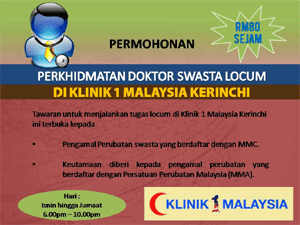
Well, the advertisement is out. I wrote about this almost 2 months ago over here . Then I wrote again about the bleak future of GPs over here. Today I noticed an advert at Jabatan Kesihatan Wilayah Persekutuan website regarding the application for GPs to serve in Klinik 1Malaysia:

Klinik 1 Malaysia

What was glaring is the fact that the service is needed from 6pm to 10pm only !! It basically means that a GP who works here is serving the people in the urban area during peak hours. The GPs is being paid RM80/hour by the government which total up to RM 320/day.

I have written before, that most GPs survive with “after office ” hour patients. With the extension of some Klinik Kesihatans to 10pm, GPs that were located near these KKs were affected. Now, with Klinik 1Malaysia having doctors till 10pm will only make the matter worst for the nearby GPs. I am sure the rest of Klinik 1Malaysia will follow soon.

The GP who takes up this offer on the other hand will be cursed by the rest of the GPs in the vicinity. It is a “catch 22” situation. The other interesting fact about this offer is the preference given to MMA members!! I got NO idea how this came about. Is MMA agreeing to this suggestion?

2 days ago, an interesting news appeared in Free Malaysia Today ( see below) . This news is not something new as I have mentioned it many times in this blog. In Malaysia, rumours will always end up becoming a reality. As I have written here, it is coming ……………..


PERMOHONAN

PERKHIDMATAN DOKTOR SWASTA LOCUM

DI KLINIK 1 MALAYSIA KERINCHI

Perkhidmatan ini adalah dikendalikan selepas waktu pejabat pada waktu berikut:-

Hari         : Isnin-Jumaat

Masa              : 6.00pm-10.00pm


Tawaran untuk menjalankan tugas locum di Klinik 1 Malaysia Kerinchi ini terbuka kepada

(1)          Pengamal Perubatan swasta yang berdaftar dengan MMC.

(2)          Keutamaan diberi kepada pengamal perubatan yang berdaftar       dengan Persatuan Perubatan Malaysia (MMA).

Bayaran Perkhidmatan adalah sebanyak RM80 per jam

Pengamal perubatan yang berminat boleh mengemukakan permohonan dengan mengisi borang pendaftaran (Lampiran 1) yang lengkap beserta gambar serta dokumen sokongan seperti senarai semak dan hantarkan kepada Unit Pembangunan Kesihatan Keluarga, JKWPKL&P.

Pemohon yang berjaya akan dihubungi melalui telefon apabila kelulusan Ketua Pengarah Kesihatan (KPK) diperolehi.

Berikut adalah syarat-syarat yang perlu dipatuhi oleh pengamal perubatan yang menjalankan perkhidmatan doktor swasta locum:-

  • Jika terdapat ketidakhadiran dengan sebab-sebab yang tidak munasabah setelah nama diletakkan didalam jadual, nama Pegawai
  • Perubatan tersebut akan dibatalkan dari perkhidmatan ini.
  • Jika atas sebab-sebab yang munasabah Pegawai Perubatan tidak dapat hadir,hendaklah mencari ganti sendiri dan pengganti itu hendaklah Pegawai Perubatan yang berdaftar untuk perkhidmatan ini.
  • Sebarang pertanyaan sila hubungi : Ketua Penolong Pengarah kanan (Primer), Unit Pembangunan Kesihatan Keluarga, Dr Wan Ahmad Razman b Wan Abd Salim  0326940701 ext 104 atau email drwanahmad@wp.moh.gov.my


New plan has private GPs fearing the worst

Jared Pereira

| December 10, 2012

Malaysia’s new healthcare plans are going to inconvenience private medical practitioners.

PETALING JAYA: Sources have revealed that Malaysia is about to pass a law which would lead to a significant change in the private healthcare industry.

The legislation’s main provision involved the controversial removal of dispensing rights from doctors, thus awarding pharmacists the sole right to dispense medication.

At present, doctors were carrying out the duties of both professions by prescribing and dispensing medication and this was not the standard practice in most developed nations.

The Health Ministry, according to reliable sources, wants to adopt the same approach for private healthcare here.

However, one private doctor thinks that our current healthcare system does not permit such a change.

“They do not understand that what might work for other countries… might not work for us… given the situation of our private healthcare system,” he said.

He pointed out that the majority of general practitioners (GP) make most of their income from the sales of medication, although many would not admit.

“These developed nations have national bodies which pay private doctors extremely well but here doctors have to rely on the sale of the medication they dispense to make ends meet,” he said.

Another private GP from Mont Kiara, who also refused to be named, felt that such a move would only trigger higher consultation fees and was not all bad news for doctors.

“The Malaysian Medical Association (MMA) has a schedule of fees which stipulates that there is a minimum amount in consultation fees to be charged to patients… but many doctors do not practice this,” she said.

She was implying that when the law fell into place, doctors would be more than happy to charge patients the minimum RM35 consultation fees for minor ailments as they too would need to generate a steady income.

The MMA’s schedule of fees also states that for visits after 5pm, an additional 50% is to be charged, thus confirming the GP’s statement that doctors would be in for a hefty monetary windfall.

Due to the cloudy situation regarding the exact details of the law, all sources either declined to comment or be named as the issue was sensitive and involved many parties.

It is a sad few months for the medical profession in Malaysia. Doctors have been appearing in the news for the wrong reasons. In fact, 2012 will go down in history as the year with most number of doctors appearing for wrong reasons in the newspaper. The year started with a news of an O&G consultant in a government hospital being charged in court for “molesting” a pregnant patient. I wrote about this over here. I heard many version of stories regarding this case but I am not sure what really happened. I think the case is still going on.

On 22nd of October, I read this article in the newspaper of a doctor who allegedly molested a 12 year old boy by buying him a handphone. He was subsequently charged in court on 7/11/2012. I know this doctor personally as he was my houseman and my medical officer. Again, I do not know what actually happened. Just 3 days later, I read another article in the Metro regarding a patient who made police report claiming that a specialist molested her by fondling her breast and hugging her. At first I thought that Metro was just trying to get cheap publicity by putting up this case as the news did not come from the police. Unfortunately, yesterday 3/12/2012, this specialist was charged in court for molesting the patient ! I also know this specialist and I can’t really believe that he did it even though there are many version of the stories. He has appointed Gobind Singh Deo as his lawyer.

Everyone knows about our DG’s news that appeared on the 2nd day of Deepavalli (14/11/2012). I have written about it over here. Being the highest office bearer for a doctor, he was suspended and demoted by one grade yesterday. He would probably become the shortest serving DG in our history. Remember that in 2008, our Ex-Minister who was a doctor himself resigned due to similar news. After this DG’s incident, some even started calling KKM as Kementerian Kuat Main!

In March 2012, there was also news of a foreign trainee doctor (Master’s student) in USM who allegedly molested a university student. Singapore was also not short of such news. In April 2012, a physician at Changi Hospital was being investigated for molestation claims.

Many times I had written in this blog that the generation who “forgive and forget”, give high regards for doctors and do not question doctors is slowly disappearing. The newer generation do not give a damn who you are. I am not sure how much of these allegations are true but the moment your name appears in the news, there goes your reputation, no matter how good you are in your field. Even if you are cleared by the court, the damage has been done and whatever good deeds that you have done will just disappear into thin air. Some may even give up practising medicine all together. Remember, it is a job to earn you a living.

There are many patients nowadays who do not hesitate to accuse you of all sorts of things. It is very easy to put a doctor in a very tight spot. Few years ago I had a MO of mine who called me late at night in a panic situation. He was doing locum in a GP clinic and saw a patient who had URTI. As per usual, he inspected her throat and auscultated her chest with a stethoscope. Immediately, the patient accused him of trying to touch her chest and breast and threatened to report him to the police. He had to settle it on his own (money!). This left him with a post traumatic stress, so much so he did not want to do locum ever again.

Since I started my private practise, I have seen many patients who accuse the doctor and the hospital of many things just to get discounts and free treatment. These are the type of patients who we are seeing nowadays. Public still believe that doctors are having a good life with good money but the reality is different. No matter how many patients/lifes that you may have saved, a single patient like this may take you to hell and your entire reputation will be blown away!

In many countries overseas, it is mandatory nowadays to have a chaperone to examine both male and female patients. This goes for both male and female doctor. A male patient can also accuse a female doctor of molesting him. This has happened before. Even if you have a chaperone, whose statement will the police listen to? Your chaperone is your nurse who is employed by you. They nurse could be bias towards the doctor who is her boss. Thus, the patient’s complain will be the main statement which the police will consider in charging the doctor, unless the patient’s statement is inconsistent. I have seen one case where the police did not charge the doctor because the accuser’s statement was inconsistent as she keep changing the story! On the other hand, the chaperone’s statement must also be convincing and consistent. A strong chaperone will get you out of trouble. And, whenever you want to examine the breast or genitalia, always ask for a verbal consent before examining. I have seen many doctors who just assume that they can examine whichever part of the patient’s body just because the patient came to see them. I also know of some clinics which have installed CCTV cameras in the room!! Patients may argue of privacy but who protects the doctors?

The world is changing and the litigation rate is going up exponentially. Newspaper reports like above will keep increasing day by day. This is one of the reason why many do not want to do medicine in developed countries. There will come a time where we need to take written consent for each and every patient just to examine them. When this time comes, medicine will be dead. Machines will take over and every thing will be diagnosed by scans and “Star Trek” like gadgets. Doctors will become puppets who administer or prescribe medicine only, similar to pharmacist. The human touch will be gone……………

I feel sorry for these doctors if they are being accused of something which they did not do. If it is true then it is an embarrassment to the medical profession and the most trusted profession by public will slowly become the opposite……………..

In September 2012, I wrote THIS article about the future of GPs in this country. I mentioned about the impending expansion of 1Malaysia clinics just before the tabling of Budget 2013 in the Parliament. As expected, more 1Malaysia clinics were announced in the budget. Today the Star  (attached below)reported that 70 more 1Malaysia clinics will be opened in urban areas next year under the so-called ETP. Medical Assistants and nurses will provide “quality” treatment in these clinics, according to our usual “foot in the mouth syndrome” guy. On October 25th, I wrote a post on “GPs in 1Malaysia clinics”. It was later confirmed by newspaper report in the Star , 2 weeks later. It was mentioned that 20 1Malaysia clinics will be opened by end of this year and another 70 next year. Out of 150 1Malaysia clinics operational, 22 already got doctors. With the expanding number of doctors, I am very sure as I predicted before that all 1Malaysia clinics will be occupied by doctors soon.

What is the role of these 1Malaysia clinics when the 1Care system is implemented ? This is a question that I was wondering. Somehow, I feel that the 1care system is slowing being implemented before the official announcement, which is likely to happen after the next general election. Today’s report  (attached below) on the “zoning” of pharmacies is another clear indication that it is inevitable. Once the pharmacy zoning is done, there is a high possibility that GP’s dispensing rights will be taken away as there will be pharmacies in each district and rural areas (please see the highlighted sentences below). The income of many GPs will continue to decline. Would these 1Malaysia clinics be slowly converted to 1Care clinics, providing cheap services to the “poor rakyat” without using their 1Care savings? Only  time will tell.

Now, just when you thought you had enough, our great “foot in the mouth” syndrome guy has come up with a great idea over here (attached below). So, the GPs not only have to compete with other GPs, doctors in KK, public and private hospitals etc but also with Traditional Healers placed at Klinik Kesihatans to provide primary healthcare services which will eventually become part of the 1Care system. Am I delusional ? God save this country……..

With the inevitable surplus of doctors in near future, the impending 1care system and limited post-graduate opportunities, future budding doctors should be aware that there is no such thing as good future, god life and good money in medicine anymore. Never do medicine for these wrong reasons. You will definitely be disappointed. However, you may still earn a decent leaving just like any other profession.

Soon, we may see doctors opening clinics like this :

Happy Holidays…………

More 1Malaysia clinics planned for next year, says Liow

Clinic for all: This picture shows the new 1Malaysia Clinic in USJ1, Subang Jaya.Clinic for all: This picture shows the new 1Malaysia Clinic in USJ1, Subang Jaya.

KLANG: Residents of Pandamaran and its surrounding areas received some good news with the soon-to-be-opened basic healthcare centre under the 1Malaysia Clinic initiative.

The clinic is intended to serve the middle and low income population in the area.

Minister of Health Datuk Seri Liow Tiong Lai said the setting up of 1Malaysia Clinics nationwide was a reflection of the Government’s aim to put the people’s interest first, especially those in the middle and low income groups.

“In ensuring the people’s wellbeing and easy access to quality healthcare, a total of 151 1Malaysia clinics are in operation this year nationwide and plans are under way to open another 70 clinics next year.”

“In line with the additional clinics, the rakyat, especially those in the interior areas will not have to concern themselves with access to basic healthcare.

“The clinics will be built in the vicinity of the chosen residential areas,” he said.

1Malaysia Clinics, which is an initiative under the Cost of Living NKRA, are community clinics located strategically around the country and are open daily from 10am to 10pm.

Nurses and medical assistants provide quality treatment for just RM1.

Health Ministry planning ‘zoning’ system for pharmacies

By NICHOLAS CHENG
nicholascheng@thestar.com.my

PETALING JAYA: The Health Ministry is looking into a “zoning” system to distribute pharmacies over both urban and rural areas to make it easier for the people to get their medicine.

Pharmaceutical services division director Datuk Eisah A Rahman said a Healthcare Providers’ Mapping Service was in the works to show the distribution of pharmacies.

“With this service, people will know the location of the pharmacy nearest to the hospital or clinic they have visited.

“More importantly, it can assist health policy makers in implementing the zoning of pharmacies to ensure equitable distribution and access to medicine for the public,” she said.

Health Minister Datuk Seri Liow Tiong Lai said there seemed to be an inequitable distribution of pharmacies, as there were more outlets in urban areas than in rural places.

Ministry statistics show that there are 10,006 registered pharmacists and 1,834 pharmacies in the country.

The concentration is in Selangor (where there are 433 pharmacies), Penang (213), Kuala Lumpur (201) and Johor (157).

About 1,000 new pharmacists are registered each year.

“Currently, the ratio of pharmacists to the population in Malaysia is 1:3,181 people.

“This is not far from the optimum ratio of 1:2,000 people set by the World Health Organisation.

“But most of them are situated in urban areas,” said Liow.

He called on the pharmaceutical community to open more outlets in less concentrated areas.

According to the Malaysian Community Pharmacists Association, about 30 rural districts in the country are without a private community pharmacy.

It said 49% of private doctors in the country as well as 54% of private pharmacists and 55% of private hospitals and nursing or maternity homes are based in Kuala Lumpur, Selangor and Johor.

Health Ministry looking at policies for traditional medicine use in primary healthcare

By RAHIMY RAHIM

Health Minister Datuk Seri Liow Tiong Lai said discussions had been held with Asean countries to produce comprehensive and effective regulations for implementation in the primary healthcare sector.

“Previously, such services are only provided in hospitals.

“It is time for us to introduce them at the primary healthcare as it is an effective preventative measure,” he told a press conference after launching the 4th Conference on Traditional Medicine in ASEAN countries on Monday.

It was reported 11 government hospitals in the country were offering traditional medicine alongside modern medicine.

Among them are Kepala Batas Hospital (Penang), Sultan Ismail Hospital (Johor Baharu), Putrajaya Hospital, Sultanah Nur Zahirah Hospital (Kuala Terengganu), Duchess of Kent Hospital (Sandakan, Sabah), Sarawak General Hospital (Kuching), Sultanah Bahiyah Hospital (Alor Setar), Port Dickson Hospital, Sultanah Hajah Kalsom Hospital (Cameron Highlands) and Raja Perempuan Zainab II Hospital (Kota Baru).

While I was slowly recovering from my viral URTI and conjunctivitis, I came through some interesting information which I felt worth mentioning over here.

Firstly, the number of Monash Malaysia’s graduates who manage to get an internship post in Australia increased to 7 after Australia recently increased the number of post available. Out of this, only 1 student was non-Malaysian. This means that the rest of the international students are left in the limbo. The situation will get worst next year as I have a feeling that none of the students from Monash Malaysia will get a place. Well, some will say I am speculating and misleading BUT didn’t I say it was coming almost 1-2 years ago? Similar to the issues that I discussed about Newcastle 1 year ago which was confirmed here, recently.

There was a lengthy comment in my blog under the pseudonym of “outright” who brought up certain interesting issues. Being a senior academic, he still feels that the situation of oversupply of doctors in this country is not beyond repair. Even though he admits that it is inevitable and a big mistake by the government, measures can be taken to merge some of the medical schools and limit the number of students intake. As it is, some of the medical schools are struggling to get enough students after MMC issued the minimum criteria in 2011. However, I feel it is easier said than done. The only time this will become possible is when the jobless scenario hits the country or MMC wakes up. Only then the government/politicians will act when the parents starts to complain after spending huge amount of money. Issues of discrimination will come into place when government sponsored students are given priority. What interested me more in “outright’s” comment was the fact that for the first time, graduates from IMU who graduated in September 2012 are yet to get their housemanship placement. This is rather unusual as it only takes about a month for SPA to offer a post, previously. Is this a sign that the number of post are becoming limited? A total of 4000+ graduates are expected this year and it will increase exponentially after this year when the remaining 50% of the 36 medical schools start to produce their graduates starting next year. What will happen when the numbers hit 6000-8000 graduates by 2016?

Thirdly, KPJ has started the first private postgraduate education. I have given my views about this over here few months ago. Some how I feel it is going to become another money-making business. It is probably the first postgraduate medical school in the world which do not have an undergraduate program, even though I heard they suppose to start one. Then I heard that KPJ decided to start the postgraduate school first as they realise that there will be surplus of doctors soon and starting an undergraduate program may not be economically viable. Smart move! The fee is RM 200 000 for 4 years, which is about RM 50K/year as mentioned here. How many MOs of 4 years in service will be able to afford this fee unless you are from a rich family and still shamelessly being supported by your parents? Are you going to be paid a salary by KPJ? I am sure eventually, MOH will end up sponsoring these students and you will end up being bonded with the government. Basically, the government is feeding a private entity, which is a GLC anyway! Similar to the Perdana University fiasco.

There are still a lot of unanswered questions regarding this Master’s program. Even though it is using the UKM curriculum, KPJ claim that it is their own degree. So, how are the selections and exams conducted, who does the quality control, where the exams will be conducted etc etc. Are the exams and assessment done in UKM? Well, we just have to wait and see. Whatever it is, a specialist who completes this Master’s program will still need to come back to MOH for gazettement. Finishing Master’s does not make you a specialist instantly without the 6 months gazettement process. KPJ obviously does not bother about this as it is not their problem. So, those “cash” paying PG students may get into trouble later if your intention is to go to private immediately after the 4 years.

Will we end up like India? I recently had an interesting email conversation with a doctor from India who was equally concerned about medical education in India. Here is what he said about medical education in India:

“In India, many private medical colleges have been opened within 10 years due to change in legislation because of greedy politicians of India. But now, Medical Council of India (MCI) has become very serious about the dilution of medical education.

In India, from next year who ever wants to take admission into UG or PG of Govt or private medical college has to appear for entrance test of MCI and has to secure minimum 50% and MCI will do the centralized counselling for admission in Govt or private medical colleges.Till now private medical colleges were taking whopping amount of money for admission of candidates who were not even fit for Bachelor of Arts (B.A.) (here B.A. is studied by the students who have never studied intermediate and are not fit for any other non professional bachelor degree).”

Now, does this statement by him sounds familiar? At least MCI is doing something about this. Remember that MCI did de-recognise Manipal once, few years ago? I still hope MMC will start to play their role in a more effective manner in controlling the standards of medical education in this country. Hopefully, with a new DG at the horizon, MMC will wake up and take necessary action.

I will stop here till further updates available……………..