Feeds:
Posts
Comments

Najib has created the so-called ” Talent Corporation”. Will it work? Will it bring back all our talents and “brains” that left the country over the last 40 years?  If you ask most of the people who left this country, it is not because of money! It is the system and politics of the country that pushes them away. Even for myself, leaving the country is something that I am keeping my options open. Too much of racial and  religious “sermons” everyday. Institutionalised discrimination. No freedom of speech, can’t question our leaders/policies in the name of ” Malay rights” etc etc. These are the factors that chases away our best brains.

How can a person call themselves a citizen and be proud of it if they are not treated as equal. Every form that you feel , you need to state your race and religion! Lately it has got even worst. If you notice that even bank account opening form has the race and religion in it!! WTH. Even our Malaysian Medical Council form for APC renewal has included race and religion. For what reason , I got no idea. I thought APC is just for us to be able to practise medicine in Malaysia. Worst still, even Ministry of Health disease notification forms has race! So what if the dengue patient is a Malay/Chinese or Indian? Does it matter?

Almost every form that you fill when sending your child to Standard 1 has this 2 important questions! When you ask the school, they will tell you that it is for statistics purposes. After 53 years of independence, we should all be known as Malaysians but this will never happen in Bolehland!

Unless and untill the government changes these policies, the Talent Corporation will be a big failure. UMNO chased away all the best brains since Mahathir’s era but beginning to realise their mistake and trying to make a U-turn.  History repeats itself!, the real history I mean, not BN’s history book.

Malaysia struggles to stem ‘brain drain’ as talent departs

When computer engineer Wan Jon Yew left Malaysia in 2005 for a job in Singapore, all he wanted was to work in the city state for a few years before going home. Now, he says, he will never return.

// CDATA[
/*// CDATA[
/*

With a family, a home and a car, he now plans to settle in Singapore for good — just one of the many Malaysians stampeding abroad every year in a worrying “brain drain” the government is trying to reverse.

“I wouldn’t consider going back to Malaysia, I won’t look back. If I were ever going to leave Singapore, I would migrate to Australia,” said the 28-year-old, who now has permanent resident status.

“It’s not about the money. I could have a better quality of life in Malaysia with my pay. I could have a semi-detached bungalow and have a maid there, but I would rather live in a government flat in Singapore.”

Wan, who is ethnically Chinese, is one of some 700,000 Malaysians — most of them highly educated — who are currently working abroad in an exodus that Prime Minister Najib Razak’s government is struggling to reverse.

The “brain drain” has a number of causes. Some have been lured by higher salaries, but others blame political and social gripes including preferential policies for Muslim Malays, who form the majority.

Many feel constrained by life in a country where the ruling coalition has been in power for half a century, and where progress on freedom of expression, the right to assembly, and tackling corruption has been slow.

A decades-old affirmative action policy which hands Malays and the indigenous groups privileges in housing, education and business, has been criticised as uncompetitive and improperly benefiting the elite.

As a consequence, many of those who have left are members of Malaysia’s ethnic Chinese and Indian minorities, who make up some 25 percent and 10 percent of the population respectively.

Najib in December launched a “Talent Corporation” with incentives to woo back these highly skilled workers, as well as foreign professionals, to live and work in his multi-ethnic country.

Malaysia, Southeast Asia’s third-largest economy with a population of 28 million, has ambitions to transform itself into a developed nation by 2020, but a lack of human capital is a barrier to reaching that goal.

World Bank data cited by the Malaysian press shows that while globally the number of migrants rose 2.4 times between 1960 and 2005, Malaysia’s diaspora registered a staggering 155-fold increase over the 45-year period.

“I don’t want my children to go through the unfair treatment,” said Wan, who believes Singapore offers “fair competition”.

“I’m not proud of being a Malaysian because I think the government doesn’t treat me as a Malaysian.

“I would rather be a PR (permanent resident), a second-class citizen in a foreign country, than to be a citizen in my own country.”

Wan said his wife, an IT analyst, renounced her citizenship in July this year, joining a queue of about 30 Malaysians lining up to do so on that day alone at the Malaysian embassy in Singapore.

Commentators are sceptical over whether the government’s latest effort to reverse the “brain drain” will be successful, warning it will be tough to persuade those in self-exile.

“Money does have a significant role but the most important factor, I think, is opportunity. Malaysia is too politicised and opportunities are not evenly available to everyone,” political analyst Wan Saiful Wan Jan told AFP.

In one example, he said academics are reluctant to work in local universities as they must sign a “loyalty pledge” barring them from, among other things, criticising government policies.

“In such an environment, obviously those with talents will find opportunity elsewhere,” said the chief executive of think-tank the Institute for Democracy and Economic Affairs (IDEAS).

Wan Saiful, who himself returned to Malaysia last year after living in Britain for 17 years, said the newly launched Talent Corporation will be “another expensive failure” if it does not tackle these structural problems.

“When I apply for a job, buy a house, register my children for school etcetera, why does it matter what my race or religion is? This should stop,” said the analyst, himself a Malay.

Ethnic Chinese and Indian professionals who have left the country commonly say they felt a sense of marginalisation in Malaysia.

“When I went back to Malaysia, it was a culture shock in terms of politically how they promote the rights of the Malays over everyone else,” said Chee Yeoh, a stock analyst who migrated to Australia three years ago.

Yeoh was educated overseas from the age of 10 and returned in 1998 to take up a position with a bank, but felt like leaving again “almost immediately”.

“I just didn’t feel at home in Malaysia. I can’t speak the Malay language — essentially I felt like an outsider even more,” said the 35-year-old analyst, who took a pay cut to move to Australia.

Najib has admitted the talent issues are “broad and complex”, and will not set a target on how many Malaysians he hopes to lure back under the new programme.

The initiatives include a “resident pass” which will give foreign skilled workers, and Malaysians who have gave up their citizenship, the long-term right to live and work in the country.

But Fong Chan Onn, Malaysia’s former human resources minister who was instrumental in previous “brain gain” efforts, said the government must tackle the issue holistically.

“The government needs to rectify this sense of marginalisation. We also have to improve the mechanism so it can be more effective to ask these talents to come back,” he told AFP.

“We have a long way to go. It is better late than never.”

// CDATA[
/*
This is an interesting write-up by Ahmad Mustapha Hasasan, a person who had worked with 4 Prime Ministers. Please read his book ” The Unmaking of Malaysia”  which clearly illustrates how Mahathir single-handedly destroyed our forefather’s vision of Malaysia. We are heading towards destruction. Our politicians are more interested in taking care of their own interest and thus the racial and religious “sermons” everyday in the newspaper. Everytime I see the headline of Utusan Merapu, I feel like puking! Anyone with a sane mind will not even bother to read Utusan! It is what I call ” the Malays cheating the Malays”. Keep the Malay minds under the “tempurung” and make them artificially look good. I feel sad for people who fall for all these propaganda……………….

The future!! Happy people!? Beautiful country!? — Ahmad Mustapha Hassan
December 22, 2010
DEC 22 — In the 50s and the early 60s, when I was actively involved in the struggle for independence, I was more than convinced that with independence the country would experience a future full of promise, stability, prosperity, with a happy  and united nation.
During the colonial period, economic activities had been segregated by race. The British were only interested in making as much as possible from the country. The arrangement that they had created had served them well.
Independence would mean the integration of all these activities, and as such, there would be interactive relationships among all. The breaking down of these segregated economic walls, however, did not materialise in a systematic and speedy way. Thus conflicts occurred.
Remedial measures were carried out but it was hijacked by greedy and self- centred politicians. Instead of moving forward, the country went backwards and more acute problems arose. The vision and goals of independence had been thrown into the gutter. We thus moved towards a failed state status.
This is the problem faced by all former colonies. Leaders after tasting power, instead of taking care of the welfare of their people, took care of themselves first and forever. The people remained poor and neglected. Just see the conditions in the African states. See what is happening in Myanmar. Malaysia is no better. See the palaces built by politicians in power.
In Malaysia, to remain in power and continuously rape the wealth of the country, race is used to frighten the followers, that if they abandoned this (greedy) leadership, their future will be in jeopardy.
In fighting for independence, the people were cajoled to support the cause but after the achievement of independence, the people are again coerced into fear of their future if they abandoned the current leadership.
Race is the menacing factor that is being used to their personal advantage, that it will threaten the stability of the country. Not only that, it will also bring about intense communal feelings.
For failure to improve the lot of the Malays, the powers that be encouraged the phrase emphasising the supremacy of the Malays — “Ketuanan Melayu”. This never cropped up during the struggle for independence, nor was it ever used after independence. Only now suddenly it rears its ugly and venomous head, to frighten the non- Malays.
Naturally, a much wider chasm is created and the authorities simply have turned a blind eye to what it has unleashed. The agenda is to create divisions as done by the British colonial powers for self enrichment. But it must be remembered, this is the 21st century and not the late 19th or the early 20th centuries.
The environment and the scenario have changed and the situation is now wrought with all kinds of happenings that can become examples for fear and suspicion. Killings and ethnic cleansing in the name of race have become common occurrences.
The world too has become a smaller place and with that people are no longer incapable of sizing things up. People turn to emigration to escape what they feel may be an impending catastrophe. Even the Malays have no hesitation leaving the country as they feel things have gone too far in this mania of seeking wealth without regards to the welfare of others. The country is suffering from brain drain and only the corrupt are happy with this.
The situation cannot go on like this indefinitely. It is bound to proceed towards disaster. Children in schools have already been made familiar with racial profiling. Teachers are no longer dedicated in their professions. Instead of showing good examples to the students, they have become the source of creating tensions among the students with their brainless comments about the races in the country. But the authorities have shown reluctance in meting out stern action against these recalcitrant so-called teachers.
As long as they are Malays, they can commit these hideous acts and the government will try to provide excuses for their unpardonable acts.
The non-Malays will fall into a different category. Any slight excuse, they will be hauled up as what had happened to the young man Namewee. The young man will be persecuted for all kinds of reasons. This is done to satisfy and pacify the Malay communal extremists.
That racism has been on the increase in the country cannot be denied. Evidence is everywhere, be it in the social sphere, economy or even education.
The activities of the Malay ultra group have only pushed the other racial groups to emphasise more on their own well being and not that of the country. This is the direct result of not stopping the actions and utterances of those advocating the supremacy of the Malays.
The government only talks of racial unity but very little positive action has taken place. Even the governing political party has not moved towards integrating all the parties into one single political entity.
Of greater danger, however, is not the racial element but the religious aspects. This is a much more vicious and serious threat to the country. Unless the country maintains its secular nature and eliminates the dominating character of the religious authorities, the future does not augur well.
Although Islam is the official religion of the country, it does not mean that Islam overrides the interest of other religions in the country. The unwarranted religious conversions have to stop and the episodes of body snatching will have to be put to an end.
These incidents have caused a lot of family sufferings and the government must not condone such acts. The government will have to be bold if it wants to safeguard the future of this country. The Syariah courts now seem to be having the upper hand in every family dispute. The courts will naturally support the Muslim member of the family at the expense of the other members. The civil courts have been reluctant to play its role in all these conflicts.
This only brings about a sense of injustice to the aggrieved parties. They have no recourse to correct the injustice that they suffer. The government has not acted on these conflicts for fear of antagonising the religious zealots.
A church that was erected by the Orang Asli who professed the Christian faith was demolished on reasons that could easily had been overcome and the word “Allah” has been banned from use by Christians although in East Malaysia, the word had been in use for a very long time.
The Fatwa Council has become very powerful. Their approach is always negative in nature. Instead of trying to bring about the understanding of Islam to a wider circle, it functions as if everything about Islam is its prerogative to interpret and nobody else’s.
It also takes on the role of seeing that the unfortunate Muslims, who it believes being ignorant and stupid, are not led astray by the non Muslims. Thus non Muslims cannot quote from the Quran as this will confuse the Muslims. There are other major issues which have passed the scrutiny of this wise and able council.
All these are trends that will create greater suspicion among the people in the country. There is no attempt to make each understand the others’ religion and beliefs. The Muslim authority has kept away from associating itself in the interfaith group as this will affect Islam’s standing in the country. This is arrogance of the highest order.
The two most critical factors that will determine what the future of this country will be are race and religion. The government must act fast to counter the ruinous nature and the possible catastrophe that can be brought about by the uncontrolled and emotional makeup of these two elements.
The ugly writings are on the wall.
* Ahmad Mustapha Hassan is the author of “The Unmaking of Malaysia” and a former general manager of state news agency Bernama. He was also the press secretary to prime minister Tun Abdul Razak Hussein and the then deputy prime minister, Tun Dr Mahathir Mohamad.
* This is the personal opinion of the writer or publication. The Malaysian Insider does not endorse the view unless specified.

When I was teaching in Monash, I  always tell my students that taking a GOOD history and physical examination is the key to making a good diagnosis. Some students felt that my history taking is too deep/detailed and not worth doing it. I had proven them wrong at many instances during bedside teaching and they will always look surprised and shocked when I come to a diagnosis just from the history without even looking at the patient!

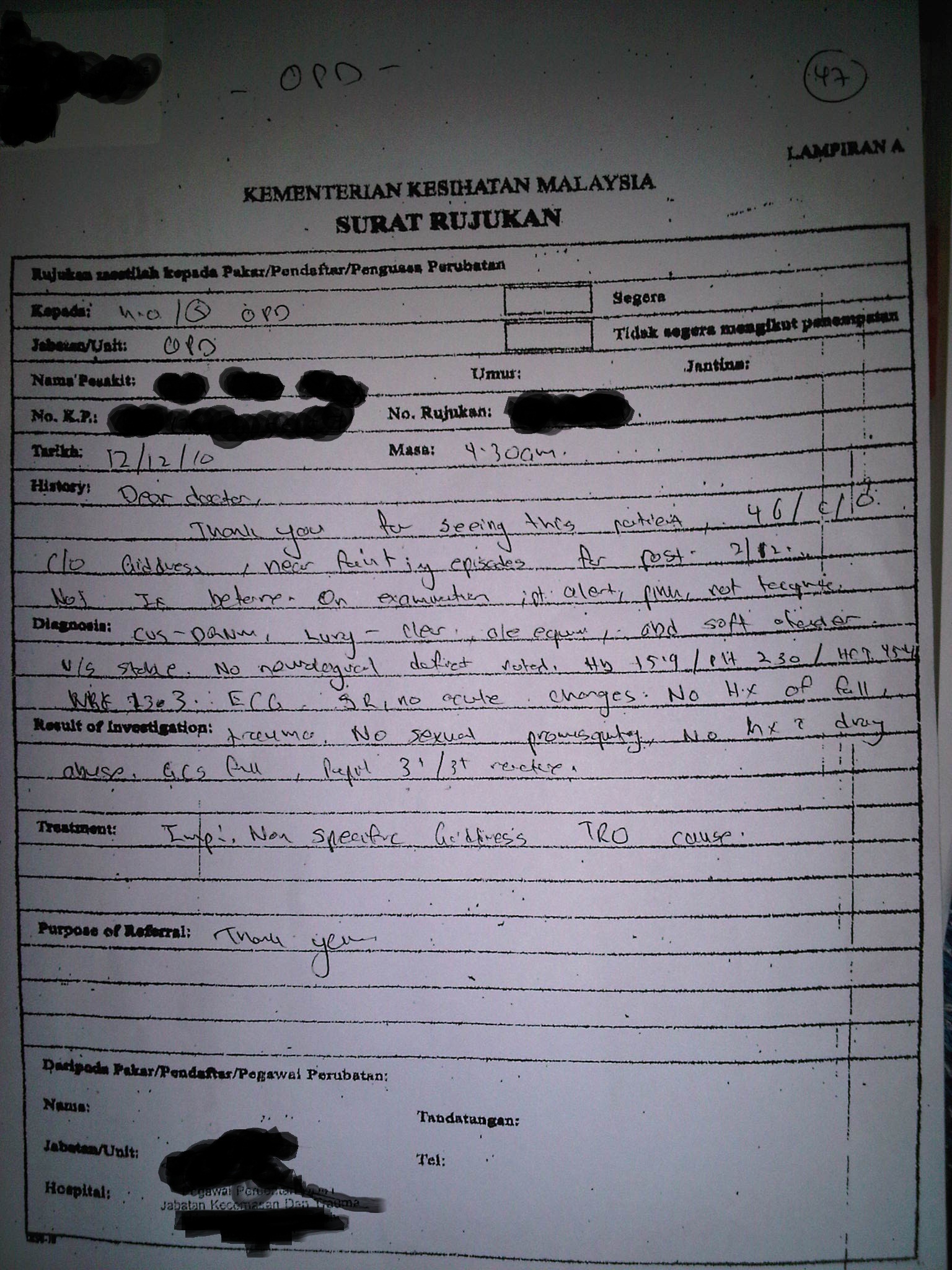
Yesterday, I had an interesting patient who came to see me. This 47-year-old Engineer was seen in the A&E department of a very famous general hospital a day earlier. He was discharged as another case of “giddiness” and was asked to go to the general Outpatient Department the next day. I attach the referral letter here:

    The first thing that striked me when I saw this young patient is when he was wheeled into my room on a wheel chair! Why a young 47-year-old need to use a wheel chair ? When I took the history from the patient, I notice something is not right. He stopped working as an engineer in Singapore 2 years ago and since then, has been doing some small time business in town. Last 2 -4 months, he has stopped working all together, so much so, that he has gone bankrupt, he had to sell his house and currently staying in a low-budget hotel with his wife!!. He has no children. When I asked him why he stopped working, his answer was ” feel tired/weak and no mood?”  The family members who accompanied him said that over the last few months, he was seen to be very quiet, keeps to himself and mentally very slow.

In fact, the family came in requesting for a scan!!. On examination, I noticed that he’s unable to walk properly, his gait was unsteady. He could not even climb up the couch by himself. Power of the lower limb was reduced to about 3-4/5. Mentally he was slow in response. He did look depressed as well.

Surprisingly, in the letter of referral to OPD , it is stated that ” no neurological deficit” . Any one would have noticed that this guy is NOT well. If not an organic disease, atleast he has major depression. Even if they have referred to a psychiatry clinic, it is still excusable.

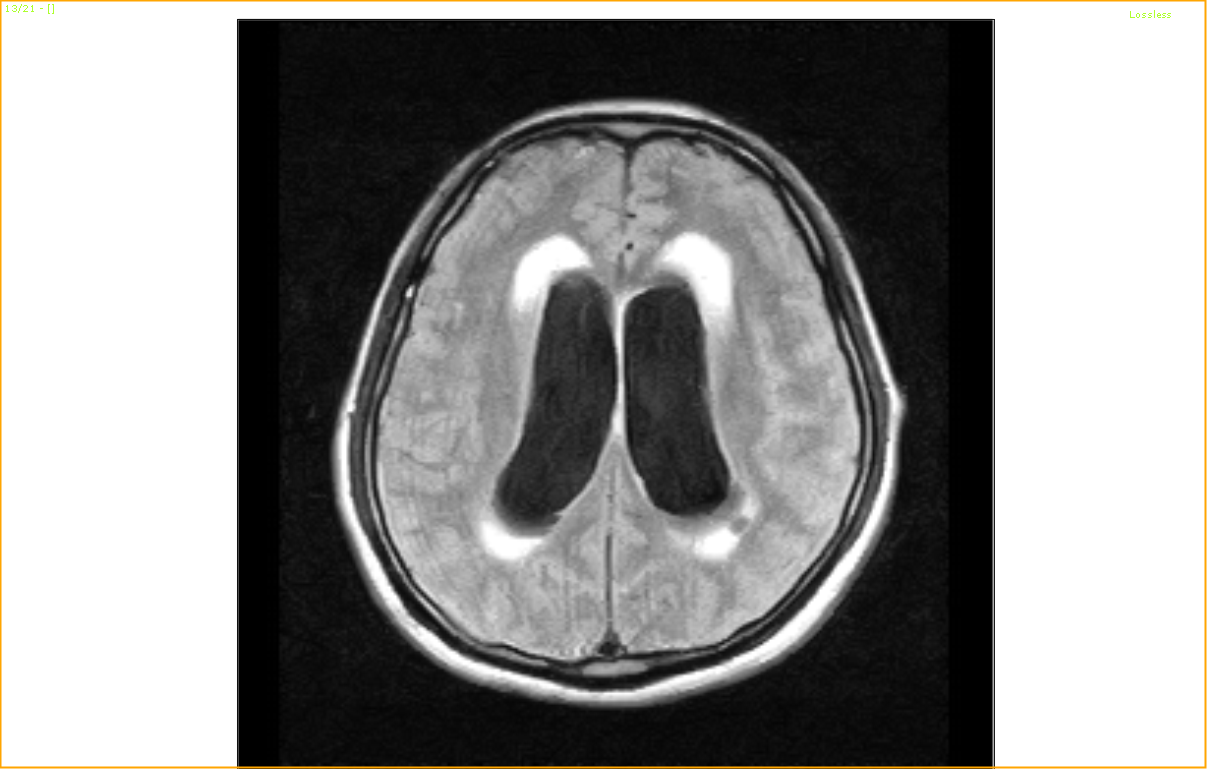
I proceeded to do an MRI of the Brain:


What’s the DIAGNOSIS????

A huge Mass over the upper part of Midbrain causing Obstructive Bilateral Hydrocephalus………………………….

As I said, a good history taking and asking yourself “WHY”  is the best way to solve a problem.

Ironically, I had to refer this patient to the same hospital again for neurosurgical intervention.

Finally, the government is putting a stop to any new medical schools for the next 5 years but would this stop the glut? My answer is a big NO.

The current existing schools are just too many and they will keep increasing the number of students to make more money. Thus the number of graduates will continue to rise and whatever I have said in my blog postings will come true. Trust me!

I think it is important, especially for parents that medicine is not a guaranteed life anymore in the next 2-3 years time. I really hope parents and students will stop thinking about glorified life by doing medicine. I thought the figure for new housemen will reach 6000 by 2015 but based on what is written in The Star today, we have already hit 6000 this year! so , will it hit 8000 by 2015? Remember, almost half of the current 32 medical schools in Malaysia have not produced their graduates yet.

Cleaning house

By RICHARD LIM and LOH FOON FONG
educate@thestar.com.my

Concerns persist regarding the quality of medical graduates and the Government is preparing a number of initiatives to finetune the system.

HOW hard is it to tell the difference between a sleeping patient and a cyanosed one who is on course to meet his maker?

Observing the simple rise and fall of one’s chest would be a good start. Checking for a pulse would be another and observing that the patient has turned blue is an absolute must.

However, the obvious did not happen in the case of one Pak Abu, who was deemed to be sleeping by house officers.

Fortunately, an observant doctor on his last rounds came into the picture and Pak Abu was resuscitated.

The three house officers in charge, who graduated from Russian and Ukrainian universities, were reprimanded for negligence, and things went from bad to worse when it was discovered that they did not know the basics of resuscitation or what an oxygen face mask was.

Mohamed Khaled says agents are not appointed or recognised by the ministry.

The doctor who blogged about this was among the many who had been highlighting the urgent need to ensure the quality of housemen vis-a-vis their increasing numbers which was highlighted in The Star’s front page report two weeks ago.

The phenomena stemmed from the large number of medical students – at home and abroad – as well as the Health Ministry’s decision to increase the duration of housemanship, from one year to two years.

An overcrowding of housemen has occured at some of the nation’s 39 training hospitals, and senior Hospital Kuala Lumpur (HKL) consultant physician Datuk Dr S. Jeyaindran said that a houseman would normally look after four patients now — down from 10 five years ago.

“The concern is that these interns are seeing fewer patients and hence, have fewer opportunities to carry out adequate procedures.

“In some hospitals, there are more housemen than patients,” said Dr Jeyaindran, who is also the head of medicine at the Health Ministry.

 Liow says housemen would be trained at six new hospitals.

Different worlds

Following the influx of housemen, senior doctors have sounded the alarm that an over-emphasis on numbers could come at the expense of quality.

They were particularly concerned with medical graduates from Russia, Ukraine, Indonesia and India, whom they said lacked core knowledge and basic expertise in treating patients.

Although all medicals schools should share a universal purpose – saving lives – differences in pedagogy and clinical procedures put some graduates on the back foot when they return to Malaysia.

And this was the case for a Ukrainian university graduate who endured a torrid time in his attachment at a local hospital.

“Many doctors were unhappy that we (housemen from Russia and Ukraine) don’t follow the British system,” he said.

“The terminologies we used were not accepted although they denote the same meaning. This led some to develop the misconception that graduates of Eastern European medical schools lack the necessary knowledge to perform,” he said.

A source said that the emphasis on the study of diseases was also different to a certain extent, as medical schools in a particular country would naturally cater to the common ailments of its citizens.

 Dr Quek has blogged about quality concerns at private medical schools in Malaysia.

He added that housemen who studied medicine in Eastern Europe lack exposure to tropical diseases and had to brush up on their theoretical and clinical knowledge upon their return.

If there are already so many problems with accredited foreign universities, what should we expect of unaccredited institutions — with poor living conditions, inadequate facilities and lecturers of suspect quality?

And there is the eyebrow raising issue of foreign medical schools accepting students with Arts backgrounds.

The problem is not a new one. In 2005, the Crimea State Medical University was de-listed by the Malaysian Medical Council (MMC) for doing exactly that, among other things.

Giving credit where credit is due, the MMC acted upon complaints by whistle-blowers and the problem was rectified.

Task forces were sent out to check on errant medical schools overseas and warnings were served to foreign medical schools which were found wanting.

Shady dealings

The adage goes, “When the going gets tough, the tough get going.” But who are the tough and where do they go?

A houseman who spoke to The Star on condition of anonymity joked that the tough are those who are hell-bent on receiving an MBBS even though they lack the necessary grades.

 Prof Radin Umar says the NOC is only issued to students who will read accredited medical programmes.

And in that advent, there would only be one logical place to go to – an unrecognised medical school abroad.

This process normally involves the services of agents who talk parents into parting with hundreds of thousands of ringgit to enrol their child into a shoddy institution – pocketing a fat commission fee in the process.

It must be noted that many parents are often fooled by a ruse, and this was the case for one Ukrainian graduate.

“The agent told me that the university would be recognised ‘soon’, but I’ve graduated and it still hasn’t happened,” he said.

Hitting out at the unscrupulous practice, Higher Education Minister Datuk Seri Mohamed Khaled Nordin urged potential medical students to tread with caution whenever agents come into the picture.

“The ministry does not appoint or recognise agents,” he told The Star. “We have no link with them and we are not responsible for their activities in sending low quality students overseas.

 Dr Jeyaindran says in some hospitals, there are more housemen than patients.

“Continuous reminders to the public are given through the ministry’s website.”

Back to the shady world of wheeling and dealing, agents are often identified by their insistence that students would not need to obtain a non-objection certificate (NOC) – a certificate issued by the ministry to qualified students – in order to study at various medical schools overseas.

In the past, such advertisements were even seen in papers, and agents made a killing by preying on unsuspecting – and often the uninformed – parents.

Shedding light on the topic, Higher Education director-general Prof Datuk Dr Radin Umar Radin Sohadi said that the NOC, in effect for the past eight years, was a mechanism to prevent parents from getting cheated by agents.

“The NOC is only issued to students who will read accredited medical programmes overseas.

“Additionally, it is a mechansim for sponsors to award scholarships or loans. In most countries, the NOC is also needed for visa renewal,” he said.

Review of criteria

Although greater understanding of the NOC’s significance has helped matters over the years, a recent case involving Mansoura University in Egypt showed that agents are still very much in business.

A taskforce that was sent to the university discovered that a sizeable number of Malaysian students did not possess the NOC.

 A houseman would normally look after four patients now, down from 10 five years ago, raising concern that interns have fewer opportunities to carry out adequate procedures.

The findings were alarming and the Higher Education Ministry was particularly concerned as Mansoura – fully accredited by the MMC – receives government-sponsored students from the Public Services Department (JPA) and Mara.

It was later disclosed that the students had enrolled with the help of agents, and concerns were raised as agents now had accredited universities in their clientele.

Commenting on the case, a source in the MMC said the agents were pushing their luck by hoping the Government would not reject the graduates as the universities are accredited.

There are currently 926 Malaysian students in Mansoura. The varsity’s homegrown medicine programme has 493 students while the remainder are reading a twinning programme involving the University of Manchester.

Mohamed Khaled said that a joint working group between Malaysia and Egypt had already been set up to discuss and review the criteria of students that would be sent to Egypt for medical programmes in the future.

Under the new ruling, only qualified students – those who possess the minimum academic results and NOCs – will be considered for medical programmes in Egypt.

The ministry’s swift action appears to have effectively countered the movements of agents in Egypt and the establishment of similar committees with other nations might just nip the problem in the bud.

But as they say, change is the only constant and one wonders whether it is a case of check or checkmate for the agents.

The home front

Although foreign universities took most of the brunt, local higher education institutions did not escape unscathed.

A private provider was alleged to have lowered entry requirements in order to fill its initial student intakes, and others were alleged to lack experienced teachers and adequate facilities.

Other concerns include the increasing number of medical programmes offered by private providers, with some offering up to two intakes a year instead of the usual one.

In his blog, Malaysian Medical Association president Dr David Quek said that private providers prioritise public demand over the capacity of delivery in terms of teaching staff and appropriate standards.

Dr Quek said that the increasing number of private institutions had resulted in a shortage of experienced senior clinical staff, and junior specialists who lack experience are hired to teach students.

He added that non-clinical teachers, who cannot be registered as doctors in Malaysia, were imported from neighbouring nations to fill the quota of teaching staff.

As for students, Dr Quek said that many were left on their own to muddle along.

A senior consultant who declined to be named also said that the establishment of private medical schools – at an average rate of one or two a year – over the last decade had lowered the entry requirement of students since these schools required numbers to be profitable.

Others experessed concern that the promotion of Malaysia as a medical hub would add further strain on public hospitals as talent was expected to move to the private sector.

Concerned senior doctors are urging the Government to intervene before it is too late.

Many advocate amending the Medical Act 1971 to make the Medical Qualifying Examination compulsory for all students, as students from recognised schools could also fall short of expected standards.

The removal of the list of recognised basic medical degrees – in the second schedule of the Act – was also proposed.

However, the doctors are divided when it comes to implementation.

Some propose that only graduates from foreign schools should be affected as the entire procedure would be easier to monitor.

However, a consultant said that the standard of final exams in local universities varied widely, and some varsities attempt to pass as many students as possible to look good on paper.

Currently, the exam is only administered to students from unrecognised foreign medical schools.

A senior doctor said the idea of the amendment has been discussed with the Health Ministry, but a solution had not been implemented because local universities wanted to be exempted and prestigious universities in Britain and Australia would likely object as well.

A medical lecturer who declined to be named said that the criteria of the qualifying examination should be made known in advance so that students know what was required of them.

Highlighting the case of a top student from a Ukrainian university who failed the exam, the lecturer said that the different methods of training was an obstacle too big for some.

“No matter how diligent and conscientious students are, the chances of them passing the exam seems next to impossible,” he said.

He said that different examination formats, a student’s unfamiliarity with local practices and the lack of training in medical school were possible causes of their failure.

Concerted efforts

The Government has taken note of the grouses and Mohamed Khaled confirmed that a five-year moratorium on medical programmes in Malaysia was being prepared by the Higher Education and Health Ministries.

“The moratorium is in the final stage of preparation and it will reduce or stop higher education institutions from offering new programmes as the current capacity will be able to meet national targets,” said Mohamed Khaled.

The move is similar to the Higher Education Ministry’s freeze on the number of nursing colleges in the country.

And the moratorium isn’t the only catalyst for change.

The debate on the quality of housemen has made it to the Dewan Rakyat and Health Minister Datuk Seri Liow Tiong Lai said last Monday that six hospitals — in Kuala Krai and Tanah Merah, Kelantan; Segamat, Johor; Lahad Datu, Sabah, Bintulu and Sarikei, Sarawak — would be upgraded to specialist hospitals which train housemen.

With the new avenues, house officers could be deployed in a more efficient manner. Liow said measures had already been taken to ensure quality.

The minister said that the ideal specialist to houseman ratio was 1:5 and each houseman should take care of 14 hospital beds, depending on discipline.

Liow also said that his ministry would be getting 58 contract specialists from Egypt, India and Pakistan next month to supervise housemen.

Liow added that his ministry would look into the possibility of amending the Medical Act 1971 to make the Medical Qualifying Examination compulsory for all medical students.

That said, the relevant ministries have responded with strong statements of intent in the past week and the challenge now is for the Government to strike the right balance.

A balance which ensures that the pursuit of national goals – achieving a doctor to patient ratio of 1:400 by 2020 and the rise of Malaysia as a medical hub – does not compromise the quality of healthcare service in any way.

The road ahead will be tough and if the number of grouses pertaining to the houseman glut are anything to go by, the balancing act will be a fine one indeed.

This is another interesting circular that was sent by the Head of Cardiology of the particular hospital to the state Health Director. For the last 2 month, the angiogram machine is down. The Hospital was using the facilities from a private hospital for their cases. It seems that, even that fund is finishing and there are no more stents and balloons, thus from 29th November onwards, no elective angio cases will be done!! More people will ” Mati Katak” in this famous hospital!

This was an interesting letter written in Malaysiakini yesterday regarding the same critical situation that I have mentioned in my earlier blog entry.
 
 
Empty coffers crippling Johor Baru’s largest hospital
//
A worried citizen
Nov 23, 10
3:15pm
 
On a recent visit to a friend admitted to the largest hospital in the south, Hospital Sultanah Aminah in Johor Bahru, I fell into conversation with several other patients and hospital staff in the ward.

Many of them were saying they felt at a loss. They had been told the hospital budget had run so low that, over several weeks, treatment had been suspended for many common illnesses because there was “no more budget” to buy basic medicines.

Several patients reported that they had been forced to buy their own medicines in private pharmacies.

One patient said she had been asked to pay for a standard blood test to measure calcium, because the hospital laboratory had no more money to run the test.

According to a staff member, the hospital had suspended up to twenty different basic blood tests, including tests for the kidneys and liver function, thyroid hormones, and blood markers to detect heart attacks, over the past few weeks.

A patient told me that ‘non-emergency’ operations had been cancelled because of a lack of resources. One staff member said the hospital had run out of money to buy the inhaled gas medicine needed to make patients unconscious for surgery: the operating theatre had literally “run out of gas”.

Another care-giver said the operating theatre was also experiencing severe shortages of gloves, plastic tubes for giving drips, and even tubes that allowed patients to breathe when they were asleep during surgery. All the resources had to be saved for emergency operations.

As a result, a number of patients with cancer said they had had their cancer surgery postponed indefinitely. When the patients asked when their surgery would be done, they were unable to obtain a firm date, because it was unclear when a new budget would become available.

One patient said her doctor offered her an operation in Seremban instead of Johor Bahru.

A member of staff mentioned that such budget shortages are commonplace at the end of every year, in most government hospitals around the country.

But this year’s problems were particularly severe because of drastic budget cuts. The patients and staff were extremely unhappy, but apparently felt helpless.

I understand the hospitals must be facing a squeeze because of our national budget deficit. But is there not some way to ensure our resources are prioritised appropriately?

Can we not ensure some safeguard so that our government hospital patients are not put at risk, and forced to seek treatment or blood tests in private medical facilities? Many of the patients I saw on the ward were elderly and poor.

Why have our medical and nursing professions failed to speak up against these injustices? Why has our mass media failed to highlight these problems faced by ill patients?
 

Well, the situation down here is getting rather critical. I just received another info from a friend of mine that ALL elective surgeries for this particular hospital has to be cancelled and postponed due to lack of medications and consumables!! WTH !! And mind you, this is one of the biggest hospital in Malaysia and supposedly a major referral centre for a big state in Peninsular Malaysia. Other then the inability of doing a lot of important blood test, the angiogram machine is also down for the last 1-2 months!

Is this pure mismanagement or lack of fund from the government? I got no idea, as I am not working there anymore. But one thing for sure, many poor souls are going to die, ” Mati Katak” .

My humble advise to the public, please get yourself a medical card! I even tell this to all civil servants as well. Many pensioners regret for not taking a medical card as they trusted the government will take care of them during their golden age. I have many retired civil servants coming to see me in my private clinic as they have given up on the government hospitals, the lack of passion and poor quality of younger doctors! It’s always who you know!

 Are we heading to a developed nation or the opposite direction!!

In June 2010, I wrote an article in MMA Magazine “ The Place That Shall Not Be Named: Welcome to the world of Wizardry“. Many who read this article were puzzled that something like that is happening in Malaysia. Of course, I did not mention the name of the place but those who know me and know where I have worked before, will know which hospital I am talking about. A week ago, I received another info from a friend of mine who mentioned that there are many blood tests that cannot be done in the same hospital, till further notice. I have attached a copy of the list that was distributed to the doctors in that hospital.

Najib wants to build a 100 storey tower when the government can’t even provide basic simple healthcare to the public. Some of these blood test are simple routine blood test that should be available easily in any hospitals. I was also made to understand that the “Pengarah” of the hospital was transferred out to Putrajaya in September 2010, not sure whether my MMA article was the culprit!

Worst still, I heard some of the OTs are being forced to close down as there’s not enough consumables such as drip set, branullas etc. Please feel free to add-on if you have further info.

For Future Doctors: Housemanship, Medical Officer and Postgraduate Training (Part 3)

 It has been more than 1 month since I last wrote on this topic, the last being on rural postings. I have been extremely busy for the month of October with increasing load of patients in my hospital as well as some domestic house renovation. My house kitchen renovation has been successfully completed but I am yet to complete the painting works, which I am doing myself!

Let’s look at the postgraduate training in Malaysia. I have written about housemanship, district/rural postings and problems of oversupply of doctors in the near future. The issue of oversupply of doctors by 2015 will lead to another very big issue: postgraduate training. Many of the budding doctors and medical students are not aware that the postgraduate training in Malaysia has many limitations and problems. At this point of time, most postgraduate trainings are dependent on Master’s programme conducted by the local universities. Once upon a time, we were totally dependent on UK-based exams and training but unfortunately we lost it along the way. Currently, only MRCP (UK) – Internal Medicine, MRCPCH (UK) – Paediatric and MRCOG (UK) can be done in Malaysia. FRCS (for surgeons) used to be available to Malaysians but not anymore. None of our hospitals are recognised as a training centre for FRCS, which is now known as MRCS. Thus, for any surgical field in Malaysia, you will need to do Master’s programme!

MRCP (UK) – Internal Medicine

Membership of the Royal College of Physicians (UK) is a well-known exam all over the whole. It has a very strong reputation as an entry exam for speciality training in UK as well as in other parts of the world.  It is conducted regularly, usually 3 times a year in various countries. Malaysia is one of the centres for the MRCP exams, all 3 parts.

MRCP Part 1 can be taken about a year after your graduation. It is a theory paper. After passing your Part 1, you need to clear your Part 2 (written paper) and Part 3 (clinical) within 7 years. It is usually coordinated by University of Malaya, where the exams are usually held. Just for your info, the passing rate for MRCP (UK) is always around 45-50% worldwide! You need to have a proposer to sit for these exams, who can verify that you have undergone sufficient training to sit for the exam. If you fail miserably, your proposer will be notified.

Since MRCP (UK) is not a specialist exam in the UK, the Ministry of Health, Malaysia only recognises and gazette’s you as a specialist after undergoing further training of 18 months post MRCP (UK). You will need to submit a log book and recommendation by your HOD before being gazetted. This rule applies for all other overseas degrees which include MRCPCH and MRCOG. You need to undergo this gazettement process in order for you to be recognised as a Physician by the National Specialist Register (NSR).

MRCPCH (UK)

MRCPCH is similar to MRCP (UK) but meant for those who wants to become a Paediatrician. It‘s examination structure is similar to MRCP (UK).

MRCOG (UK)

MRCOG has 2 parts but the second part has both written and clinical component. However, you need to undergo training in O&G department for at least 4 years before being allowed to sit for Part 2 exams. One of the major issues in sitting for MRCOG is the fact that there are not many MRCOG holders in MOH to sign as a proposer for you!

Master’s programme

Now, this is where a big problem is going to appear soon. For all other fields, you are totally dependent on Master’s programme. This includes all surgical fields. Master’s programme is a fixed 4 year programme.

In order for you to be eligible to apply for the Master’s programme, you should have completed at least 3 years of service with good SKT marks of at least 85% and above, recommendation from Head of Department and confirmed in service. You also need to attend an exam or an interview before being selected for certain disciplines.

The major problem that I foresee in the future will be the number of places that are being offered. As of this year, the total number of places available is only 600, all disciplines included. Imagine, with 6000 new doctors coming into the market every year from now onwards, only 10% is going to get into the Master’s programme annually. Furthermore, you must understand that the selection process is never transparent, the typical Malaysian scenario as well as the quota system! Most of it is done by the Universities.

The government is planning to increase the number to 800 next year but the situation is rather critical in the Universities as there are not many Senior Professors to supervise the programme. I must say that the standard of Master’s graduates have dropped significantly over the last 5-10 years. We have Master’s graduates who can’t do surgery but have passed the exams! I just hope that the Master’s programme do not become another “specialists mill” like our undergraduate medical schools!

There are 2 types of Master’s programme, the open and closed system. In the closed system, you will do the entire 4 years within the university, like in UKM Hospital, UH and USM Hospital. The open system may have various programmes, like 2 years in MOH hospitals and another 2 years in the Universities etc. You may even do the entire 4 years in MOH hospitals for some of the fields.

After completing your Master’s programme, you need to undergo another 6 months of gazettement process before being recognised as a specialist. Furthermore, you will be bonded for 5-7 years for receiving scholarship during the programme, which is compulsory!

Subspecialty training

With the advancement in medical field, every discipline now has subspecialty training. As such, everyone will try to do certain subspecialty after gazettment as a specialist by MOH. Generally, the subspecialist training is about 3 years except for certain field like Cardiothoracic and Urology which may take 4 years. Again, whether you get a place or not depends on availability of post and demand for that particular field. For example, the waiting time for Gastroenterology training can even go as far as 1-2 years.

Recently, to overcome this major problem, MOH has taken another step backwards. You can only apply for subspecialty training 1 year after you have been gazetted as a specialist. For MRCP holders, this means 2 and half years after passing MRCP (UK)!

Usually, the subspecialty training is divided into 2 parts, the first part (the first 2 years) will be done locally and the 2nd part (remaining 1 year) will be done overseas. The MOH will provide a fully paid scholarship for overseas training of 1 year but you will be bonded for 3 years. If you have received undergraduate scholarship and Master’s scholarship, you will be bonded a total of 20 years in service!!

Singapore

One good advantage that we have is Singapore. Unfortunately, only UKM and UM undergraduate degrees are recognised in Singapore. Our Master’s degrees are NOT recognised elsewhere. Thus, we would not be able to work in Singapore with any other medical degrees or even with our Master’s degree.

However, Singapore does recognise MRCP, MRCPCH, MRCOG and MRCS. Thus, if you have any of these degrees, it supersedes the undergraduate degree and you should be able to get a job in Singapore. Singapore is also a recognised centre for MRCS Part 3 training, which you can’t do in Malaysia. So, if you have MRCS Part 1 & 2, you can go to Singapore to finish your MRCS training and sit for the Part 3.

I must say that Singapore’s postgraduate training is more structured and organised with their BST (Basic Specialist Training) and AST (Advanced Specialist Training) programmes. I have written about this in my MMA article “Back from the Future: From 1st world to 3rd world”.

For all of you out there; budding doctors, medical students, houseofficers and medical officers;  the future is very bleak for the medical field in Malaysia. The oversupply of doctors will get to you sooner or later. My advice to those who insist on doing medicine for passion is to choose an undergraduate course that is recognised internationally. Then, pursue a postgraduate degree that is also recognised internationally. If not, you will end up with a lot of frustration in the future. Jobless doctors in the future will be a reality!

If you have any questions or comments, please feel free to respond.

LIST OF CONSULTANTS:COLUMBIA ASIA HOSPITAL NUSAJAYA


INTERNAL MEDICINE & RHEUMATOLOGY


DR PAGALAVAN LETCHUMANAN

MBBS(Mal) MRCP(UK) FRCP(Edin) AM(Mal.)

Dr Pagalavan secured a place to do medicine in University of Malaya (UM) in 1992 after becoming the top STPM student for the state of Negeri Sembilan in 1991, scoring 5A’s. Upon graduating from UM, he underwent his Housemanship training at Ipoh Hospital after which he was transferred to Pontian District Hospital in 1998. After passing his MRCP Part 1 in 1999, he was transferred to Hospital Sultanah Aminah for further training. He underwent training in several specialities including Nephrology, Cardiology, Neurology and Respiratory medicine. He passed his MRCP Part 2 in 2001 and subsequently left to Edinburgh, UK to complete his MRCP Part 3 clinical exams. He obtained his MRCP (UK) in June 2002.

He worked as a Clinical Specialist at Hospital Sultanah Aminah from July 2002 till June 2005, during which he was put in-charge of ICU and HDU patients for almost 2 years. He also covered as a specialist in Nephrology, Respiratory medicine and Neurology during this period of time. He published a paper on “Melioidosis: The Johor Bahru Experience” in 2005 (MJM Dec 2005; 60(5): 599-605), the first data on Melioidosis from the Southern Region.

In July 2005, he left to continue his subspeciality training in Rheumatology at Selayang Hospital. He was the first to publish a paper on “ Systemic Sclerosis” (Demography, clinical and laboratory features of Systemic Sclerosis in a Malaysian Rheumatology centre. Medical Journal of Malaysia June 2007; 62(2): 117-121)  from Malaysia, during his 18 months stay in Selayang Hospital. He resigned from government service in 2006 and joined Monash University Malaysia as a Lecturer. To complete his training in Rheumatology, he went to Singapore General Hospital under the guidance and supervision of A/Prof Julian Thumboo in March 2007 and completed in August 2008. During his stay in Singapore, he published 3 papers in high-ranking International Rheumatology Journals. He was subsequently promoted as Senior Lecturer in Monash University in 2009. He received his Fellowship of Royal College of Physicians of Edinburgh (FRCP) in May 2010. He left Monash University and joined Columbia Asia Hospital Nusajaya (CAHN) in July 2010 as Consultant Physician & Rheumatologist. He is also the Chief of Medical Services for CAHN

GENERAL SURGERY


1)    Dr Kumar Hari Rajah

MBBS (Manipal), M.Med Surgery (UM), MRCS (Ire)


2)    Dr Zulkarnain Hasan

MD (USM) M.Med Surgery (USM) AFRCS (Ire)

Dr.Zulkarnain Hasan joined Columbia Asia Hospital Nusajaya since October 2010 as a fulltime Consultant General Surgeon. He has extensive experience in the field of surgery having performed more than 500 appendicectomies, more than 200 open inguinal hernia surgeries throughout this career as both trainee and surgeon.

DrZulkarnain’s special interest includes upper gastrointestinal (GI) surgery, endoscopic and laparoscopic procedure and surgery. He also has experience working in thoracic unit to handle non-cardiac thoracic conditions. Two (2) years in surgical training abroad allowed him an opportunity to work with experienced surgeons in upper GI surgery in Ireland. He is able to perform minor, major and laparoscopic surgery such as laparoscopic appendicectomy, laparoscopic cholecystectomy and laparoscopic hernia repair procedure.

Dr.Zulkarnain is well-trained and expert in performing diagnostic and therapeutic endoscopic procedure such as endoscopic ligation of esophageal varices, control of peptic ulcers, snare of polyp, PEG tube insertion and etc. 


OBSTETRICS & GYNAECOLOGY


1)    Dr Rajesh Mahendran Radha Krishnan

MBBS (India) M.Med O&G (UKM)


2)    Dr Teh Jin Teik

MBBS (India) M.Med O&G (Mal)

ORTHOPAEDIC


Dr Yoga Raj

MBBS (Mal.) MS Ortho (Mal.) M.Med Sc (Otago) AO Fellow (Milan)

Fellowship in Arthroplasty (NZ)(M’sia), OHD (Niosh)


PAEDIATRIC


Dr. Muhammad Izzuddin Poo

MBBS(Mal.) M.Med Paeds (UM)


ANAESTHESIOLOGY


1)    Dr Norezalee bin Ahmad

MBChB (Bristol) M.Med Anaes (UKM) AM (Mal.)


2)    Dr Tan Kok Hui

MBBS(UM) M.Med Anaes (UM)


RADIOLOGY


Dr Siti Suhaila Ismail

MBBS (USM) M.Med Rad (USM)