Feeds:
Posts
Comments

History HD channel


History HD channel


SONY LCD KLV-46EX400 with National Geographic HD


Over the weekend I have been playing with my new Sony 46″ LCD TV and my new blue ray player. The Blue ray player came with just an additional RM500 (Sony promotion till 28/02/2010). I went over to Kip mart Tampoi to get a “ciplak” blue ray DVD and I must say that these guys are good in making pirated DVDs. I bought “Independence Day” blue ray for Rm 12 and played it on my blue ray player and I must say it was excellent!! Damn clear. I wonder how an original blue ray will look like.   

Then, came the Astro guy on saturday 20th Feb to install my Astro Beyond service. Quite fast I must say. I applied online on Wednesday (17/02/2010) night and the installer came on Saturday!    

WOW, the new HD channels were excellent on my TV. Just look at the clarity!    

This is the way to watch TV guys……………………..    

Well, I just came back from a long holiday. I was also busy playing around with my new SONY LCD TV and blueray DVD player which took me the whole of yesterday.

 
Back to my blog posting today, I read this interesting article by Mariam Mokhtar in Malaysiakini which says exactly what i have been trying to tell my Malay friends who support UMNO like their god.
 
NEP had no flaws when it was first introduced but unfortunately it should have stopped after 20 years, as planned. Any policy that is not carefully monitored will fail as it will be misused for people’s  own greed.
Under the leadership of Mahathir, who was a “man in a hurry” , wanted to see as many Malay millionaires in the shortest time possible, decided to use or rather “misuse” this policy for his UMNO cronies………………
 
Barry Wein’s  book ” Malaysian Maverick” explains this is great detail. Please read!, buy one from Singapore!.
  
Malays are their own worst enemy
//
Mariam Mokhtar
Feb 18, 10
 
A new year, a new beginning. Or so it should be, except many Malays prefer to cling on to their old world, where nothing changes and where they are the only victors.They are duped into the government’s “social engineering” drive which gives preference to only one race. Like it or not, the ordinary Malay is the most oppressed in the country.

The Malays who claim supremacy call the shots. The ordinary Malay hopes one day to call the shots too, but the reality is that most of them never will. Malays suffer from crab mentality.

Why, and for how long, should we continue with these exclusive ‘Malay rights’? God gave us natural talents and ability, coupled with a brain with which to shape our own destiny.

Instead, we conjured ways to avoid making full use of available opportunities. A muscle that lacks exercise becomes weak.

Rising to the challenge

In a similar fashion, we’ll waste away because we lack motivation and aspiration. We are spoon-fed and breed generations of Malays blaming other races for our under-achievements.

We repeatedly gravitate to the stereotypical image of ‘laid-back civil servant Malays corrupted by hard-working, business driven, money worshipping Chinese’. How about rising to the challenge?

The pioneering spirit of our forefathers which took them to northern Australia, the Cocos Islands, and South Africa to establish colonies is lost.

Being ‘bumiputras’ is like scoring an own-goal. It transformed us into close-minded people.

Instead of the world being our oyster, we seek refuge under the tempurung (coconut shell). We adopt the parochial, rather than a global outlook.

We are junkies, addicted to the ganja of NEPs and the like. We become violent when we are denied our fix.

The government acts as a dealer and uses it to control or subjugate the masses.

We are ‘conditioned’ to depend on government hand-outs, accept government inspired platitudes, and told ‘to stop other races gaining the upper hand lest they overpower us and sell our country to the foreigners’.

Ironically, little bits of Malaysia have literally been sold to Singapore to increase the island-state’s lucrative land reclamation and development projects.

Who were the perpetrators of this illegal sale and smuggling of sand? Low-level Malay officials.

Persecution complex

Sadly, we swopped an enquiring mind for a persecution complex. We remain in denial, and exude self-pity. Being cocooned in our self-importance limits progress.

Moreover, our extreme sensitivity to criticism restricts growth. Adopting discriminatory Malay/bumi rights is like a community that practices in-breeding; defects are pronounced.

Malays wonder why they should work; they want riches obtainable with little effort. Rather than being productive, they get lazy.

It is similar reasoning that drives millions in Britain to depend on welfare aid, rather than work; where girls deliberately get pregnant because as a single mother, they are first in the queue for a free council house. Privileged bumi rights eroded our self-respect.

We must dispense with preferential treatment in education, jobs, banking, housing, etcetera.

Would your child learn to tidy his room if the maid cleans it for him? If you complete his schoolwork, he gets top marks but is eventually ‘exposed’ when he fails his examinations.

This dependence is wrong. It is like undergoing a nose job. The reflection may be good, but it is not the ‘real’ you.

You may be proud of your cute retrousse nose, but the truth will be revealed when you give birth to a child with an enormous conk – if the genetic trait of bulbous noses runs in your family.

The NEP and other perks, is like the surgeon with the knife. He shapes you into what you desire, but he can’t alter what you really are. Isn’t it better to capitalise on what you have? It’s all a question of attitude.

Misplaced pride

Modern Malays have misplaced pride. Their arrogance with Ketuanan Melayu and brandishing the keris look infantile and repulsive.

They show contempt of others by fire-bombing non-Muslim places of worship, and desecrating the cow’s head.

Will the Malays be able to shake-off their complacency? The political elite will not relinquish their share of the economic pie.

And as the Malay population increases, the proletariat will each have a smaller share of the pie, thus the poor will become poorer.

That is why we see increasing numbers of dirt-poor Malays.

Many have finally realised that they are a pawn in the political machinations. They are aggrieved that the politicians are destroying their children’s future.

Only last week, a friend told me that his son had applied for a job, for which he was well-qualified.

The job went to the son, of another Malay with political clout, who called-in a favour from the boss of the company. He was employed despite being unqualified.

Some Malays refuse to accept a vision of Malaysia for all Malaysians. They also undervalue the concept of earning respect.

The ethnic Malay believes he is a first-class citizen; the Chinese, Indians and other races are immigrants.

So are the few Malays who dare question Malay rights considered persona non-grata, perhaps?

Despite all the claims of supremacy, we fail to acknowledge that Malays constitute the highest percentage of drug addicts, divorce rates, incest, domestic abusers, abandoned babies, HIV/AIDs sufferers. These are nothing to be proud of.

If Malays want a united Malaysia, then they must boost their self-confidence.

You don’t need special privileges to succeed. And forget race-based politics – they only serve to divide and conquer.

For decades, we were brainwashed into thinking we were not good enough. Low self-confidence is self-destructive.

It manifests itself as negativity. Self-confident people are more positive and believe in themselves and their abilities.

They are successful and happier. Isn’t it time for a change so we can hold our heads up high in public and the wider world?

//


MARIAM MOKHTAR is a non-conformist traditionalist from Perak, a bucket chemist and an armchair eco-warrior. In ‘real–speak’, this translates into that she comes from Ipoh, values change but respects culture, is a petroleum chemist and also an environmental pollution-control scientist.

This is an interesting piece of e-mail that i received today. I must admit that every word in the email is the truth.

Many of my friends and family friends are not here with me anymore.

 They have left the country. Sometimes I wonder what am I doing here?

夢醒時分 The moment when dream is awakened…

鄭丁賢•夢醒時分
2009-12-02 20:49

你是否和我一樣,發覺身邊的親戚和朋友,似乎少了許多。
I wonder you feel the same as me, all the sudden I realized friends and relatives around me seems to get less and less.

以往接近過年時,各種聚餐排得滿滿的,而今年,似乎沒聲沒息。
Those years when the New Year drew near, all sorts of gathering appointments almost completely filled the diaries, but this year seems so quiet.

即使是平常日子,電話少了,與大家見面也少了。
Even in normal time, phone calls become less and less, face to face meet up also become much less.
 
也許,大家各忙各的;或者,目前流行“宅生活”,儘量避免出門。
Perhaps, everybody is busy with their own things, or perhaps, nowadays people prefer to stay in.
 
也不盡然如此。再想一想,很多老友和親戚,已經不在了。嗟!大吉利是,他們都還好好的,只是離開了馬來西亞。
However, it is not entirely like this, thinking further, actually old friends and relatives are not around any more. God bless, they are still alive and well, they just left the country, Malaysia.
 
去了中國大陸開工廠;王子不做工程師,移民到澳洲開小食檔;阿風離開本地大學,去香港做講師;青蛙去了台灣,開展事業第二春;還有的到了美國、英國,唔,還有去印尼的……。
They have gone to China to set factory; ah Wang quit his engineer job and migrated to Australia to set up his little food store business, ah Fong left the local University went to Hong Kong as a lecturer. ‘Frog’ went to Taiwan to pursue his second career life. Others went to Americia, England, even Indonesia…
 
起初,以為這只是個別現象,逐漸的,旁人也有同樣發現;原來,這不是個別現象,而是社會現象;這不是少數,而是相當大的數目。
At first, I thought these are individual cases, but gradually, people around me realized the same, these are not individual cases but a general symptoms of our society. they are not small numbers but the pretty big indeed.
 
外交部早前披露了一個數字,說明這個現象是多麼真實,多麼貼近。
Department of Foreign Affairs released the figures earlier, it confirmed the situation is real.
 
從去年3月到今年9月,已經有30萬大馬人移民他國;其中20萬人是今年1月到8月出走的數目。
From March 2008 thru September 2009, a total of 300,000 Malaysian migrated to other countries, among them 200,000 left between Jan – Aug 2009. (in 8 months)
 
累積下來,已經有超過200萬大馬人移民,接近今天印尼外勞在大馬的人口。
Cummulatively, there are 2 million Malaysian migrated, this figure is close to the number of Indonesian workers in Malaysia today.
 
不同的是,移居他國的大馬人,多是專業人士、中產階級。
The difference are, those migrated are mostly professional and middle class people.
 
他們有很多出走的理由,追求事業發展,為了孩子前途,尋找個人更大空間……,概括一句:對馬來西亞失望。
They have many reasons to leave: pursue career development, for the future of their children, in search of better life and environment… In one sentence, they lost hope of Malaysia.
 
50年前,大家說,馬來西亞真好,好過香港,甚至日本。
50 years ago people said: Malaysia is very good, better than Hong Kong and even Japan.
 
30年前,大家說,馬來西亞還不錯,比得上韓國、台灣(不提香港和日本了)。
30 years ago people said: Malaysia is not bad, comparable to S. Korea and Taiwan. (No mention of Hong Kong and Japan any more).
 
20年前,大家說,馬來西亞還可以,至少超越中國、泰國(不能和台、韓比了)。
20 years ago people said: Malaysia can do la, at least better than China and Thailand (Cannot compare with Taiwan and Korea lah)
 
10年前,大家說,馬來西亞再差,還不至於像越南、印尼(中國已是不同級別)。
10 years ago poeple said: No matter how bad Malaysia is, cannot be worse than Vietnam and Indonesia ko-ah. (China is already in a different category).
 
今日,越南和印尼的經濟成長率遙遙領先大馬,社會活力和知識發展也勝過一籌;距離愈來愈近了。
Today, the economic growth rate of Vietnam and Indonesia already far exceeded Malaysia, Social activity and intellectual development of the country is also better, the gap between us and them is closing up.

怕甚麼,還有菲律賓和柬埔寨、緬甸。
Why worry? there are still Philipines, Cambodia and Myanmar behind us.
 
但是,一位經濟學家最近到菲律賓考察之後,認為再過20年,大馬可以取代菲律賓,出口馬籍女傭到全世界了。
However, according to an economist who recently surveyed Phillipines, he think in 20 years’ time, Malaysia can replace Phillipines to become the World exporter of Malaysian maids.

半個世紀以來,馬來西亞是在大宅院裡,用封建方式,分配祖宗家業,消耗社會資源,浪費和逼走人才;不談競爭力,忽略生產力,討厭績效制。
Over half the century, Malaysians live in the big old imperial housing complex, closed up and survive on properties left behind by the ancestor; continue to consume up social resources, wasteful, and drive away talents; they never talk about competitiveness, totally neglect productivity, and hate meritocracy.
 
亞洲金融風暴來襲時,大馬把門關起來,以為避過一劫,有人還自我陶醉,自以為是天才策略。
When Asia economic storm hit in 1997, Malaysia closed their doors, thinking we beautifully avoided a disaster, there even think of themselves as genius, being able to handle the situation so well.
 
然而,其它國家面對風暴,走出風暴,進行體質改革,跨步向前,登上另一個水平;大馬卻還在原地踏步。
However, just look at other countries in our neighbourhood, they stand up, face the storm, and walk out of the storm. They overhaul the system, improve the processes and march forward, they moved up to a new level. And Malaysia, still walking on the spot.
 
馬來西亞,該醒一醒了。
Dear Malaysia, it’s time to wake up! We are very very late now!
For original article, please see link below:
http://opinions.sinchew-i.com/node/12566

The letter below was written in MalaysiaKini today. In my MMA articles I have also deliberated about the state of affairs of our education system. In this blog I have also written about few issues surrounding the Malaysian education system such as my post on “High performance Schools????? : https://pagalavan.com/politics/high-performance-schools/ and “1Malaysia Education : https://pagalavan.com/politics/1malaysia-education/“.

This letter just reemphasized what I have said before. The disease is spreading fast and infecting our education system from the schools to the higher education.

The disease is also currently infecting the Health system of the country.

Sadly, it looks like the disease may not be able to be cured and it is turning malignant and cancerous. Mark my word!


Disease has infected national education system

Ganesh Asirvatham
Feb 11, 10

There has been a lot of discussion about Professor Khoo Kay Kim’s remarks about the Chinese school system and how it’s potentially detrimental to nation-building. It’s obvious that a single school system which caters for the all the races would be an appropriate outcome but the current political climate does not allow for such a solution.
The current crop of teachers who are joining the government schools are not interested in teaching. They see it as an ‘easy way out’. You go to university and you can’t get a job when you graduate but there’s always the teaching profession which is somewhat rewarding.
The pay is decent, and you work for only half-a-day and get a lot of leave. No one really cares about moulding the leaders of tomorrow. What I’m saying is that you can change the curriculum and the syllabus all you want but if the teachers themselves are not committed, then what is the point?
I’m not saying that every teacher is like this but most of them are. The really good ones are nearing retirement age. They grew up in a different era and had different ideals. They are dedicated towards ensuring excellence in education but their time is up.
The checks and balances in today’s education systems is highly politicised. No one actually believes that government schools can provide an adequate education for our young which is why you see our over-reliance on tuition.
If the education system is successful, the tuition centres would be the exception instead of being the norm. Have we not seen tuition centres proudly proclaiming their achievements when their students get all ‘As’ in the PMR and SPM examinations? Should not that the be the sole domain of the national schools?
As parents, we recognise that a disease has infected our education system. Most of us have no option but to continue with the government school system and hope that with tuition, our children make it to university and a better life thereafter.
Those of us who have the means, resort to vernacular schools or international schools or even home schooling. It’s all a matter of trust. We want to safeguard our children from the ever declining standards in education.
We want them to be educated overseas because we know that even our universities are infected with the same disease. What that disease is, I leave it to your imagination.
When you do not trust the government to provide your child with the education that he or she deserves, then as parents you must do what you can. Fostering ‘1Malaysia’ is not just about racial politics – it’s about putting trust in the hands of others so that your children are able to reap the same benefits as everybody else.

Again, I predicted this will happen few years ago. While the government was boasting that we are not going to go into recession and our fundamentals are strong, many people including myself who do not trust the main stream media predicted that our economy was not doing well at all. Yet the government went on a spending spree just because they had all the money from Petronas to feed their cronies…….. The petrol price shot up in 2008 and Petronas was providing all the money to the government. Instead of saving the money for the future of the country, they decided to spend it all, of course filling a lot of people’s pocket……….. Now, when other countries are picking up fast, we are falling down fast. Not only the schools are getting into trouble, the healthcare budget are also being cut to as much as 40%. Yet they can spend RM 50 million for 1Malaysia clinic for political reasons. We are the only country in the region that have had a budget deficit for the last 11 years!!!! What happen to all the money????   

Schools, services hit as public expenditure cut by up to 15pc

By G. Manimaran

KUALA LUMPUR, Feb 11 —  The education system is suffering cuts in subsidies for school uniform supplies and canteen food while teachers forgo training courses as attempts to reduce government expenditure begin to bite. An estimated 5,000 contract workers have also been asked to go and civil servants may soon have to see a reduction in overtime pay.  

The Congress of Unions of Employees in the Public and Civil Services (Cuepacs) has revealed that government agencies have had their expenditure reduced by between ten and 15 per cent since early last month, with some even having to reduce their expenditure by up to 20 per cent.  

The budget cuts come as the government, which is grappling with bringing down a budget deficit of over seven per cent of the Gross Domestic Product (GDP), re-introduced an apparent austerity drive after the prime minister unveiled the 2010 Budget last year.  

Cuepacs President Omar Osman told The Malaysian Insider that no formal memo has been circulated since the expenditure cuts began last month but he understands that on average, the cuts have been between ten and 15 per cent.  

“For some government departments, the cuts could be above 15 per cent depending on the role and function of the agency,” he said. “Based on meetings with public service departments, we were told that the steps taken to be thrifty was to reduce costs as what was done more than ten years ago during the Asian financial crisis.”  

Omar believes that many agencies have started cutting down on the use of contract staff as a result.  

“These contract workers have been working for a long time, some for as long as ten years or more but they are being let go,” he said. “Up to December 2009, about 5,000 contract staff have been suspended and their services not renewed because of the need to cut operating costs.”  

According to Omar, there are also agencies that have reduced their overtime pay.  

“There are agencies that are giving replacement off days instead of money for overtime work,” said Omar. “In these situations, we request  

that staff that are not paid overtime allowances to do part time work instead of unpaid overtime work.”  

The reduction of courses and training have apparently also begun and in some agencies it is being done internally as compared with hotels  

and other off-site locations previously.  

“In fact, there are some organisations that do not prepare drinks and snack food except for mineral water when they have meetings… in fact the number of meetings have also dropped,” he said.  

In a memo circulated early last month, Treasury Secretary General Tan Sri Wan Abdul Azi Wan Abdullah directed finance officials in each agency to ensure public expenditure is done carefully, with wisdom, and that they get value for money.”  

Wan Abdul Azi says that this is because the allocations for 2010 experienced a drop of 11.2 per cent as compared with the allocation for 2009. The execution of programmes , activities or projects now need to be in line with the total approved allocation. All expenditure has to be planned carefully so as not to exceed the allocation and prevent wastage, he said.  

Wan Abdul Azi also said that any expenses last year that have not been paid for or any new expenses need to be borne through savings from the current year or done as a trade-off with the “Dasar Sedia Ada” policy.  

“Any requests for additional allocations will not be approved except in pressing cases,” said Wan Abdul Azi.  

Omar’s views were shared by the National Union of the Teaching Profession (NUTP).  

NUTP President Hashim Adnan said that while the average cuts in expenditure ranged from ten to 15 per cent, some organisations suffered cutbacks as much as 50 to 100 per cent.  

“I say 50 to 100 per cent because, for example, in some schools, the uniforms for uniformed bodies was reduced by a lot, in fact, in some schools, it was not supplied at all,” he told The Malaysian Insider.  

“This has resulted in some students not receiving uniforms, for example, for the Scouts, because the schools  have cut 100 per cent of the allocation… these are some examples of the impact the expenditure cuts are having.”  

Hashim also claimed that the allocations for food on Saturdays and Sundays at school hostels have also been trimmed.  

“Students are encouraged to go home on the weekends. The situation has caused some parents to be uneasy,” he said.  

The most serious impact, says Hashim, is that courses and seminars for teachers have been either reduced or frozen.  

“Some of the courses that were advertised recently were cancelled at the last minute due to the directive to reduce costs,” he said.  

Hashim sees the cuts in expenditure as a temporary measure but said that at the same time the Education Ministry is spending a lot, citing as an example the allocations announced for the 20 high performance schools recently.  

“Even though this is a positive step, but it is not suitable for the current situation where the economy does not permit it… it would be better if we use the allocations for the 20 high performance schools to assist all schools that need the financial help,” he said.  

This article which was published in Star on Sunday 08/02/2010 is a clear and simple explanation of the state of our country’s economy. It is well-known that our economy is in bad shape. From being the “emerging economy” in the 80s, we are now one of the worst economy in SEA.

In case you don’t know, even Indonesia’s economy is doing far better than us over the last few years. FDI into Indonesia is far more than Malaysia. Recently, even Toshiba has set up their production hub in Indonesia whereas all automobile giants have chosen Thailand and Indonesia.

We were one of the best economy in Asia in 1960s and 70s. In fact, we were at par with Korea, Singapore and Hong Kong. Where are we now?

I am currently reading the book written by Berry Wein “Malaysian Maverick” about Mahathir in turbulent times. I would recommend this book to everyone. Even though it is still not approved in Malaysia (sometimes the government treats us like school kids), you can get a copy from Singapore. This book clearly explains what actually happened to our economy during Mahathir’s era, all with facts and figures.

Mahathir’s obsession in creating Malay millionaires and billionaires in the shortest time possible by creating shortcuts has made the country to lose billions. This is a fact. All the best brains were chased out of the country by discriminatory policies in civil service as well as in general government policies. Thus, we are now left with no brains and low quality workers. This coupled with screwed up education has made this country a laughing-stock.

Oil,gas and oil palm are the only reason our economy is still holding on, but not for long. When we become net importers of oil by 2012 and Indonesia overtaking us in oil palm production, these 2 life line will be terminated.

Najib may go around begging other countries to invest over here but to me, we have taken a part of no return. The country has to go down first before waking up and realising that no special rights going to bring you anywhere. If you belive in GOD, then you know why GOD is punishing the country. Ask yourself?

Caught in middle-income trap

By Dr FONG CHAN ONN

A graduate teacher starts at RM2,500 per month in Malaysia, compared to RM6,196 in Singapore and RM15,661 in Hong Kong. Malaysian wages have fallen behind partly due to the gross divergence between the suppressed Malaysian CPI and that of the world. OVER the last few months, there has been much discussion on the issue that Malaysia has been caught in the middle-income trap. In this article, I will discuss the rationale on why Malaysia has been caught in this dilemma, and some of the steps we need to take to emerge as a high-income economy. “Many countries caught in the middle-income trap have deliberately jump-started their economy through a high wage policy” DR FONG CHAN ONN

From independence to the 1980s, Malaysia progressed rapidly. From an agricultural society in the 1950s, it evolved into an Asian Tiger Economy by the 1980s, mainly through labour-intensive industrialisation. However, subsequent attempts to further deepen our industrialisation process met with mixed results; and Malaysia’s economic well-being generally remained stagnant, while many other countries galloped away under the scenario of a rapidly expanding world trade. This is because of the following factors: Price controls In 1946, the colonial government enforced price controls in Malaya to avoid economic hardships after World War II. This policy holds until this day. Price-control items include basic necessities such as rice, flour, sugar, fertilisers, milk, chicken and even bus and taxi fares. Because of controls, these commodities are much cheaper in Malaysia compared to outside. For example, as of December last year, a kilo of raw sugar in Malaysia was RM1.35, while the world price was RM2.20; that of rice is RM2.75 per kilo compared to world price of RM6.75. Since basic necessities constitute a large component of the Malaysian CPI, the cumulative effect of price controls for over 60 years has been a gross suppression of our CPI compared to world CPI (see Figure 1). Workers’ annual pay raises are linked to the nation’s CPI. The gross divergence between the (suppressed) Malaysian CPI and that of the world has also led to a corres­ponding significant divergence of Malaysian wage rates compared to that of the world. This, in reality, is the major reason why since the 1980s, Malaysian wages have fallen behind wages of the rest of the world (see chart on Page 28). As an example, a graduate teacher starts at RM2,500 per month in Malaysia, compared to RM6,196 in Singapore, and RM15,661 in Hong Kong. Besides restraining Malaysian wages, price controls also severely distort the domestic economic factor proportions, resulting in many factories using non-efficient economic production processes. With diesel and fuel prices controlled, and workers’ wages suppressed, manufacturers choose to use more fuels and labour as inputs – instead of more machines – resulting in low-quality Malaysian products and, of course, low productivity growths.

Subsidies.

 Subsidies began in 1961 under the Control of Supplies Act 1961. Subsidised items include petrol, gas, sugar, rice and other basic items. In the 1970s, when the price of oil was under US$12 per barrel, petrol subsidy was a bearable cost to the Government. However, with the present high oil prices (over US$75 per barrel), this has become a disastrous predicament for the Government to continue bearing. As Figure 2 shows, the cost of subsidies has ballooned from 3% of government operating expenditure in 1998 to almost 30% in 2008! The high cost of subsidies in turn restrains the Government’s ability to upgrade infrastructures such as public transport. It also retards the Government’s ability to provide competitive incentives for attracting high-income activities into the country.

Agriculture sector drag .

The dominance of oil palm and rubber in the agriculture sector is unfortunately a significant drag on the nation’s ability to leapfrog into a high-income economy. Given the plantation terrain, oil palm harvesting and rubber tapping remained manual in nature and (unlike grape or wheat harvesting) not easily mechanised. Up to this day, they remained as low-wage activities, fossilising our dependence on foreign labour (about 300,000) for the continued “vibrancy” of the plantation sector. The unavoidable presence of these foreign workers in plantations also meant that many labour-intensive manufacturing operations could still continue to exist in the countryside (even in face of local worker shortage) because of the easy “mobility” of these foreign workers from estates to factories. This also means that it is very difficult for the Government to disallow or curtail foreign workers in non-plantation sectors, when it sanctions such a large presence of foreign workers in plantations. The cumulative effect is that there are now about 2.3 million low-skill foreign workers in Malaysia, making up about 20% of the workforce. They are in the manufacturing, petroleum, construction and domestic-help sectors. Lately, they have also penetrated into retailing, food and beverage, tourism and hotel industries. The foreign-based Electrical and Electronics (E & E) firms have already declared, in their dialogue sessions with the Government, that they would be forced to move out if foreign workers were to be limited or stopped! This argument, if accepted, will mean that our economy could remain in the middle income trap for the foreseeable future.

Where do we go from here?

South Korea’s GDP per capita is US$16,450, Singapore US$34,346, Hong Kong US$29,559, while Malaysia is still at US$7,469. It must be remembered that in the early 1970s, we were at parity with these countries. In five years’ time they would be even further ahead. What are the bold steps we need to undertake to enable us to leap out of this middle income trap? I will attempt to elaborate on some of these steps: Phasing out subsidies and price controls Price controls and subsidies have created artificial market prices that distort the domestic factor proportions and impede economic efficiencies. The Government has to be bold to find ways to phase out price controls and subsidies; maybe not all at once but over a time frame of say five years. Malaysia is a small country and we cannot live in isolation from the rest of the world economy. Petrol subsidies, in particular, should be removed within one to two years; while extensive information campaigns are carried out to enable motorists to adjust to living within the context of petrol prices being set in accordance with the world crude prices, as is the practice in many other countries. In conjunction with the phasing out of subsidies and price controls, the Government must introduce a transparent system of social safety net, providing welfare assistance to the needy, the disabled, the aged, the unemployed and the poor. A coupon-system (together with MyKad) can be introduced where those in need are given subsidies for basic necessities and other essentials such as petrol. Of course, this implies the need for the Government to create a nationwide data-base of those in need, not unlike the registration system for welfare payments, but more comprehensive in nature taking into account employment status and also proving channels for verification and counselling.

High wage policy .

Malaysian wages have been suppressed by market factor distortions for too long. The Government should encourage our wages to be pushed up in line with the rest of the world. When the rakyat can take home more pay, they are then better enabled to adjust to the reality of world prices that will be felt when controls and subsidies are phased out. Many countries caught in the middle-income trap have deliberately jump-started their economy through a high wage policy. Singapore is a good example; in the 1980s, its economic progress stagnated and the Singapore Government deliberately compelled companies to increase their wages by 50% or more. Though painful at first, this ignited “a second industrial revolution” in Singapore when companies became much more capital-intensive and focused on high-end manufacturing and financial activities. Today, it is a vibrant economic hub of Asia. We could introduce a similar high wage policy by initially requiring vulnerable sectors such as plantation and agriculture, labour-intensive manufacturing, construction and services (such as restaurants and hotels) to have decent minimum wages. The plantation companies, in particular, should be required to pay higher wages to attract more Malaysians to work in this sector. As an example, the 2008 Annual Return of the Asiatic Group – a typical mature plantation company – shows that its total wage payment (RM83mil) constituted only 18% of its before tax profits (RM456mil); and it can certainly even double its wage bills and still remain extremely profitable! Employers would then have to use more equipment in the new scenario; many of our skilled workers who are now in Singapore can then be enticed to return to these higher skill positions, and in the process uplift the productivity of our economy. The multiplier effects of this would be translated into higher wages for the supervisors, managers and other professionals as well. Innovative incentives for high-tech activities The traditional incentives offered by Malaysia in the form of pioneer status and capital investment allowances are not attractive anymore. High-tech start-ups are risky ventures; they need large capital, and hence access to venture capital and government assistance. They also need speedy Internet access and rapid logistics. They cannot work in an environment where restrictions are placed in terms of equity ownership or employment of expatriates. They, most of all, expect rapid decision-making by us in processing their applications. In early 2000, the Indian information giant Infosys wanted to invest in Malaysia and sought approval for their expatriates to work here; our hesitancy and delay in decision-making caused them to relocate to Mauritius! We should follow the world trend, and be rapid, decisive and agile in our engagement with high-tech entrepreneurs. We have to introduce innovative incentives to attract them to come here. This includes the offer of cash grants (as a form of venture capital), and R & D research grants to companies to set up their bases here. In keeping with the common practice of many other countries, the Government must also be willing to offer work permits and permanent resident status to highly qualified scientists and other highly educated individuals to entice them to work in Malaysia not only as a second base but also as a second home.

IT infrastructure and public R & D centres Malaysia was among the first to recognise the importance of IT by the establishment of our Multi-Media Super Corridor in 2001. But other countries have since superseded us in IT infrastructure. Consider this: our Internet download speed is only 2.2 Mbps, compared to South Korea’s 23.6 Mbps and Singapore’s 8.0 Mbps; our broadband penetration rate is only 30% compared to South Korea’s 97%! Entrepreneurs now expect to be able to work through their notebooks while commuting in rapid trains and cars. They expect to be able to do video-conferencing while on the move. Our current download speed does not allow for these, and more importantly does not allow the functioning of many of the new IT applications. The Government needs to quickly bring the state of our IT infrastructure up to parity with the global standard as a precondition for pushing Malaysia towards a high-income economy. Further, one of the most effective methods for rapid societal debuts of new scientific ideas and innovations is the availability of public R & D centres for niche areas, where high school and university students can be encouraged to experiment with their ideas. This was how Steve Jobs was stimulated to design the first Apple personal computer in the 1980s in Silicon Valley. And a major reason for the success of the present Korean film industry is the Seoul Animation Center; a centre where Koreans who have interest in animation for movies, computer games, or digital advertising could drop in, play around with their scripts and hopefully end up with viable commercial products. The Government should follow this trend by setting up R & D centres in 3-D Animation, Computer Accessory Inter-face, Micro and Nano-Technology, Horticulture, Aquaculture and others deemed suitable to our resource endowment. With the proper involvement of schools and colleges, this could lead to the formation of interest groups focusing around the availability of facilities at the centres. Ultimately, this will lead to more passion for science and technology among the young, and the germination of new ideas for products and services.

Leverage on Malaysian professionals and experts overseas.

 According to an estimate by MEF, there are at present more than 500,000 Malaysian professionals working abroad; and they are in major cities such as New York, London, Paris, Tokyo, Beijing, Hong Kong, and Singapore working and doing research in areas like medicine, financial services, engineering, accountancy, logistics, construction, venture capital and other services. In my interaction with many of them, they said that they very much want to contribute to Malaysia’s progress. Given the right conditions, I feel that they could be persuaded to set up base here. Unfortunately, often times, we have not engaged them sufficiently. As an example, the renowned UK liver transplant surgeon Datuk Dr Tan Kai Chah wanted to set up base in Malaysia but could not do so because, as a Malaysian, he was required to do a compulsory three-year government service. Singapore, having gotten wind of this, headhunted him. His liver centre in Singapore is now very much sought after by patients near and far. Learning from this, we should attract our Malaysian professionals to return to Malaysia, by the Government setting up a Special Group to identify them and then engaging those who are interested to return or at least set up base here. This engagement should be done discreetly so that their individual requirements can be assessed and met, and their problems resolved. If their foreign spouses want to work, if their children need special education, if they need R & D grants, etc, all these we should be able to resolve. Then and only then can we gain leverage on the large pool of brainpower that we already have. We should act quickly in this respect, for such talents are being aggressively headhunted by other governments. The Government should do all it can to ensure that our professionals, with their wide international exposure, will end up on our shores and not become other societies’ assets. Strategic location Kuala Lumpur’s location at the heart of Asean and its multi-cultural environment enhance its attraction for many emergent high-income activities. We have often forgotten that KL is only 300km away from Singapore and it also has access to deep seaports and airports. Fortunately, AirAsia did not forget this and, riding on the wave of budget air travel, has developed KL as the low-cost air hub of Asia-Australia. With our current lost-cost structures, KL could similarly be developed into the low-cost shipping and logistic hub of Asia. The Government should also aggressively promote KL as the focal centre for business transactions between East (China, Korea and Japan) and West (India and Middle East) Asia. A few enterprising Taiwanese direct-sale companies have already established processing centres and warehouses in Malaysia for export of their products to the Middle East because Malaysian-labelled products are more easily accepted in these markets. This is only the beginning of a new wave of opportunities, as East and West Asia get better connected. Green energy Flooded with sunshine, strong winds and free from natural disasters, Malaysia is an ideal location for green renewable energy R & D and manufacturing. Renewable green energy has to be promoted to be Malaysia’s new strength. The world’s top three solar companies have now located themselves in Malaysia. One of them (Sun Power) is building the world’s largest solar power manufacturing plant in Rumbia, in my constituency in Malacca. The Malaysian Industrial Development Authority (Mida) must work hand in hand with the solar companies to come up with incentives and a strategic policy to match that of China, which is currently the world leader in solar power. We must seize this opportunity to nurture a cluster group of ancillary suppliers to provide materials and supporting services to the solar companies, just as we did when we started with E & E in 1972. We must not miss this boat to build a “Solar-con” manufacturing base to equal that of the silicon hub of Penang.

Medical care and pharmaceutical trials.

 With an aging population all over the world, high quality medical care has become an emergent high-value economic sector. Highly-trained Malaysian medical specialists are working by the hundreds in Singapore, London and Dublin. More importantly, they are highly respected in their fields. They could and should be encouraged to set up base here and transform Malaysia into a world-class international medical centre. The big advantage is that our cost is half that of Singapore, and one-third of that of Hong Kong, the United States and London. If we reorganise ourselves, we can be among the top in this area. The urgent necessity is for the Government to reconsider compulsory government service for recognised Malaysian medical experts. Isn’t it better to allow them, already in their late 30s, back to create employment and build up our medical base, as opposed to rigidly requiring them to work for three years in government service at great personal and family sacrifice to themselves? Malaysia, with our multi-ethnic population and extensive bio-diversity, is an ideal place for R & D in pharmaceutical products, particularly in the conduct of trials for new drugs, before their formal acceptance by the authorities. This can be in the area of cancer, Alzheimer’s, osteoporosis, bone conditioning, and heart diseases. The Health Ministry and Mida should quickly formulate a new strategy to attract pharmaceutical companies to seriously consider Malaysia as their new destination for R & D and trials.

Oil and gas activities.

 Petronas is known worldwide for being a successful national petroleum company. Petronas has done really well for the country in terms of generating oil and gas revenue from both Malaysian and non-Malaysian fields. Unfortunately, unlike the E & E sector, up-stream oil and gas production has not resulted in the emergence of a corresponding vibrant downstream oil and gas sub-sector. We are still very dependent on foreign oil and gas ancillary suppliers for many of the specialised downstream services, such as rig and platform maintenance and repairs, safety training, search and rescue, and other related R and D activities. Kemaman, Miri and Bintulu are now vibrant oil-related towns. Petronas can play a more significant nurturing role and spin off more of these related activities (which are now sub-contracted to foreign suppliers) to independent Malaysian entrepreneurs of all races, so that we can begin to transform these towns into mini Houstons. Besides its economic benefits to the country, this would also greatly endear Petronas to the hearts of the average Malaysians.

In this article, I have argued that Malaysia has been inhibited from fulfilling its true potential by distortions (in the domestic economy) caused by various policies since independence; by phasing out these distortions and focusing on our strengths in new areas, we can and would emerge as a high-income economy in the not too distant future.

Datuk Seri Dr Fong Chan Onn was Prof of Applied Economics and Dean of Faculty of Economics and Administration, Universiti Malaya. He served in the Government as Deputy Minister of Education (1990-1999) and as Minister of Human Resources (1999-2008). Currently, he is the MP for Alor Gajah.

This is an interesting article which was written by AB Sulaiman in Malaysiakini today.

Discrimination in civil service has been going on since the initiation of DEB or NEP. Dr. Mahathir’s informal rule is that the government service should be run by the Malays irrespective what power sharing concept you have among the politicians, which is of no value.

One of my “old” friend said about 2 years ago that the non-malays are not interested to join police force and military as they are not interested to serve the country. I objected to this and argued with her, over emails. I have personally seen many poor Chinese and Indians applying for civil service including police and military but they never received even a reply. I am sure many of you who have non-Malay friends or neighbours would agree with me. This is the reality.

Furthermore, discrimination in promotion and career prospect like master’s application etc etc are a known fact among the non-Malays. When my father was  a senior assistance in a secondary school, he was never given the post of Headmaster despite the post being vacant. He was asked to be an acting headmaster for almost 2 years, after which a new headmaster was appointed. The sad part is , this new guy was 10 years junior to my father!

This article below clearly tells you the reality, written by a Malay himself. Not only we have a bloated civil service but also a racially imbalanced one which is definitely not good for the long-term prospect of this country.

Malay-dominated civil service no good to no one

AB Sulaiman
Feb 4, 10

Shagul Hamid Abdullah, director-general of the national civics bureau wrote a sobering article in the Star (Jan 30) about the Malaysian civil service.

He claimed that in our history non-Malays had shown little interest in working in this sector due to two factors: the relatively low pay, and the perception of them having discriminatory career prospects.

I happen to have some direct and personal experience in government employment being a clerk in the Ministry of Finance in the mid-60s, and some three years later a civil servant in another government ministry. Based on this I feel qualified to dispute his twin contentions.

At the Treasury, I remember that the office staff had a good ethnic mix. Looking back, I’d venture the racial composition to be at about 30 percent Malay, another 30 percent Indian-Malaysian, 30 percent Chinese-Malaysian and the remaining 10 percent of other races.

Yes, ‘1Malaysia’ had been with us before.

Many ethnic Indians were the descendants of the early indentured labourers from the estates. Government employment was their first stepping-stone of escape from the relative poverty of rubber estates.

In the case of the Chinese-Malaysians, they were also the children of struggling tin-mine labourers and yes, estate workers. Their parents or grandparents came into this country with hardly anything at all beyond a bundle of clothing.

The fact of the matter is that before Independence, most if not all of our parents and grandparents – the early Malaysians – were living in relative poverty.

In other words, everybody came from poor families. There was hardly any middle class then. The salary level might not be comparable to the private sector but was ‘adequate’ and there is the coveted pension at the end of the day.

In any case beyond the tin mines and estates, the private sector was limited in size and offering limited employment opportunities. Getting a government job was a highly favoured dream for all ethnic segments for it provided stable and secure employment.

The contention that non-Malays shunned government employment is not quite apt. Look at Sabah and Sarawak as the modern day example of this matter: these two states still have a good number of ‘non-natives’ running the government bureaucracy.

Three years later at the other ministry, I noticed the racial composition was more or less the same, but perhaps with a 40 percent Malay and 30 percent Chinese-Malaysian ratio. There was a dwindling non-Malay employment.
Differing fortunes

Chinese-Malaysian tenacity, far-sightedness, hard work and entrepreneurial spirit have carried them into the business and professional classes and on to the upper echelons of the economic ladder. Many of them became very successful businessmen and professionals.

The Indian-Malaysian did not fare as well. Perhaps their limited experience being brought up in the estates has given them limited vision and energy. Many faltered.

Again I have no definite figures to support my contention. Enough it is for me to say that while in my own latter career I had on several occasions conducted recruitment exercises.

Each time, my interview committee members and superiors goaded me to select and appoint people of my own type. The reason given was: ‘Malays are not yet ready for the highly competitive private sector employment. They won’t be able to survive out there’.

In any case, I was indoctrinated with the cliché ‘kalau kita tak tolong Melayu, siapa lagi (if we do not help the Malay, who else would)?

Some social commentators went to the extent of stating that the birth of the Hindraf movement was a consequence of this disappearing escape valve.

To surmise, in this case Shagul is right only to the extent that there has been no overt and formal policy for the government to employ only Malays at the expense of the non-Malays. But the covert and informal policies have been there all along.

He then mentioned that there has been equal opportunity for career advancement for non-Malays, or to put it the way around, non-Malay contention that they were denied equal opportunity for career advancement was not correct. Again I look back to my own experience here to refute this contention.

Career advancement blocked

Career advancement has been a problem for the non-Malays since the 70s and early 80s, ie the period of the NEP.

I’d say that this period saw the birth of the ‘Malaysation’ programme of the political leadership, later known by the label ‘Ketuanan Melayu.’ This era saw the marginalising of non-Malays in government employment.

This self-proclaimed label has turned out to be the premise for the government’s lower recruitment of non-Malays to government employment and sidelining those already in its employment.

Consider the following: 100 percent of vice-chancellors of public universities are Malays. 90 percent of University of Technology student enrolment is Malay. 90 percent of nurse and teacher intakes are Malay.

In short virtually all government or government-related bureaucracies and agencies were manned and meant for Malays, for their employment levels are in the higher 90 percent level.

Surely this collective situation is the direct result of the preferential treatment given to Malays in government recruitment. These figures are indicatives, but I believe not too far away from the actual, give or take a few percent.

Worse, I read sometime back that the government has made it a habit of even putting application forms from non-Malays into the dustbin.

As for the case of career discrimination, I take the case of David Chandran (not his real name to protect his privacy) who was my colleague at the Treasury.

He worked himself out of the poverty spiral of rural Penang, a true-born patriot, a loyal Malaysian, a conscientious worker, and obviously loved his job. But when it was time to consider him for promotion to executive office, he was often passed over for his Malay juniors.

Many of my other colleagues suffered similarly from this shattering indignity and in later years many of them landed in Australia and elsewhere. I believe this trend was the norm for other government departments ever since then.

Take other segments in civil service, such as the military. I have plenty of cases illustrating the very real existence of career-busting government informal policies.

Today many of my peers and friends were once upon a time military officers with the ranking of major and above. They were again loyal citizens, loyal to the constitution, the Agong and the country, and very competent.

They knew from the trends they witness around them that they’d never ever reach the ranking of general. And similar to the case of David Chandran they saw many of their juniors some of questionable competency, doing a humiliating leapfrog over them.

They had to retire or resign early from the services that they love when they saw their rather dim career prospects. These are not isolated cases either, they reflect the reality of the situation.

I hope to have made my case. But why am I saying all these? I have many reasons.

First, Shagul’s articulations remind me so much of the government tendency to deny the existence of problems when the evidence and reality of the situation clearly indicates otherwise.

Surely this amounts to intellectual dishonesty. Civil servants should be truthful to the people they serve.

Second, sweeping problems under the carpet is not a good way of solving a problem. It could even make the whole thing worse.

Nobody becomes wiser by sweeping problems under the carpet. The country will not ever mature when advancing to the future with problems littering the path in the long run.

Third, Shagul has rightly pointed out that the civil service ethnic composition is reflective of that prevailing in the country. In the spirit of muhibbah, 1Malaysia and other cheerful slogans, he should have capitalised on this realisation. He should push for the integration of the civil service. His high position would mean his words would carry a lot of clout.

Fourth, the Malay mind has been used to receiving aid and assistance from the government in order for them to become strong and be at par with the non-Malays. But the result so far has not been encouraging.

There are even the unintended consequences of the Malay becoming weaker than before. I do believe the Malay collective entity is getting weaker rather than stronger.

‘Solve the Malay problem, and you solve the nation’s problem’ says the conventional wisdom. So how will the Malay problem be solved when the leadership nurtures them to remain weak and uninitiated?

Here we go again……………….

Whatever Najib is trying to do, whether it is sincere or not will never go down well with the UMNO warlords and ultras. This is a fact. Here, we can see his own aide saying things that is opposite of what our PM has said.

To me, the 1Malaysia slogan is a total crap, purely rhetoric in nature to hoodwink the people to believe that they will change. I don’t think this government will ever change their mindset…….

As long as UMNO is in power, things will never change as their survival depends on racial issues. They will bring up these issues from time to time to increase their Malay support. You can clearly see this trend from all the events that took place in this country since 03/2008.

The country has been robbed by them left, right and centre. Now the government got no money and Najib knows this for sure. His attempt in going to many countries to get investments is a clear sign of the government’s desperation. Hospitals got no money to do even simple test, all ECHO machines in the biggest hospital in Johor are down and got no money to repair and infact they don’t even have enough A4 size papers!!!! hospital budgets has been cut by 40%!!!

Recent announcement of only 20% gratuity for those who opted optional retirement and PTPTN loan for only tuition fee are all examples of how our financial situation is doing.

God help us!!!!

PM aide’s ‘racist’ remarks spark outrage Feb 2

The stinging remarks made by a special officer to Prime Minister Najib Abdul Razak during a seminar titled ‘Rapat 1Malaysia’ in Malacca this morning prompted scores of MIC and MCA members as well as representatives from non-governmental organisations to stage a walkout.

According to a source who attended the meeting, Nasir Safar had ruffled feathers when he labelled the Indians and Chinese in this country as ‘pendatang’ or immigrants. “He was saying that the Indians and Chinese came here as immigrants and are now enjoying life in this country. “He also remarked that the Chinese, especially the women, come here to ‘jual tubuh’ (flesh trade),” added the source who requested anonymity.

He claimed that Nasir also credited Umno for being solely responsible in drafting the constitution, “sidelining the contribution of the other parties in the Alliance back then.

” ‘Revoke their citizenship’

Apart from this, the source said the officer also threatened to ‘revoke’ the citizenship of those who were vocal about the subject cap for the SPM examination. “He was telling us of how he visited several MIC branches to explain the government’s stand on this issue and expressed regret that the branches remained steadfast in their call for the cap to be scrapped. He accused them of making an ‘extreme’ demand.” “He said, ‘How can they talk so much about the Tamil language when Bahasa Melayu is the official language. If they continue to make such demands, we could revoke their citizenship’.”

“Who is he to revoke their citizenship?” asked the irate source. Following this, he said “some 60 to 70” MIC and MCA members as well as the NGO reps present decided to leave the room. “The organisers tried to coax us to stay but we were too upset,” he said, adding that the seminar was organised by Jasa, the Information Ministry’s special affairs division. Meanwhile, the source said MIC Youth is expected to file a police report on the incident. Furthermore, a memorandum would also be submitted to Najib when he visits Malacca on Feb 4.

Samy: Punish him under Sedition Act

In an immediate reaction, MIC president S Samy Vellu, who was briefed on the issue by the party leaders who attended the seminar, expressed outrage and demanded that Nasir be punished under the Sedition Act. Describing the remarks as being “racist of the highest order”, he urged the premier to take the appropriate action against his aide. Confirming that a police report would be lodged, he said: “MIC condemns the colonial attitude of this person for degrading the Indian Malaysians.” “His views are entirely the opposite of the goodwill shown by the government and the prime minister under the ‘1Malaysia’ concept,” he added. Samy Vellu said Nasir must realise that the present generation of Indian Malaysians in this country were born in Malaysia and are also the sons of the soil. “As such, who is he to suggest that their citizenship should be revoked merely because they have been fighting for their rights.

“In my 29 years of service as a cabinet minister, I have not come across such a person who felt fit to question the loyalty of Indian Malaysians. Shame on you!” he said, expressing confidence that the prime minister would do the right thing. ‘Feelings of all M’sians have been hurt’ MIC deputy president G Palanivel was saddened that such “uncalled for” remarks were made following Najib’s historic visit to Batu Caves during Thaipusam. “All the Indians who listened to the prime minister (during Thaipusam) would have noted the goodness coming from his heart. “Soon after the whole tempo has been disturbed. The feelings of all Malaysians have been hurt. “Such remarks would definitely put back efforts to build national unity,” he told Malaysiakini.

‘Destroy the fabric of nation building’ MIC vice-president SK Devamany told Malaysiakini that if Nasir had uttered those remarks, then it would be nothing short of “detrimental”. “If true, then he owes an apology and action should be taken against him. Every citizen has to be respected. “Statements like these are irresponsible and could destroy the fabric of nation building,” added the deputy minister. Devamany also stressed that Nasir’s views do not reflect the stand and views of the prime minister. “The ‘1 Malaysia’ concept comes from his heart. I followed him to India and Batu Caves. He meant what he said,” he noted.

MIC information chief P Kamalanathan lambasted Nasir as an “enemy within.” “While the prime minister is going through the country and all over the world propagating ‘1Malaysia’ and talking about the importance of Indians and Chinese, we have an officer who works in his department and says racist remarks. “The person should not be sitting anywhere near the building (the Prime Minister’s Department). “To ensure that ‘1Malaysia’ is successful, we have to eradicate characters like these from the system,” he added. ‘What’s the point of visiting Batu Caves?’

Also expressing regret over the “insensitive” remarks was MIC Youth advisor S Vell Paari. “Whatever hard work done by the prime minister in fostering closer ties among the people has been destroyed by this act,” he told Malaysiakini. “What is the point in Najib visiting Batu Caves for Thaipusam and visiting Tamil Nadu to talk about the close ties with the Tamils here when his own officer failed to understand the concept of ‘1Malaysia’,” he asked. He added that the police should investigate the officer for sedition and hoped the government would act soon to alleviate any fresh fears among the Indians and the Chinese.

In a related development, Malaysia Indian Youth Council (MIYC) president A Rajaretinam demanded that Nasir be suspended. He warned that if no action is taken by next Monday, MIYC, which had five representatives present at the seminar, would mount a massive protest. Nasir could not be reached for comment.

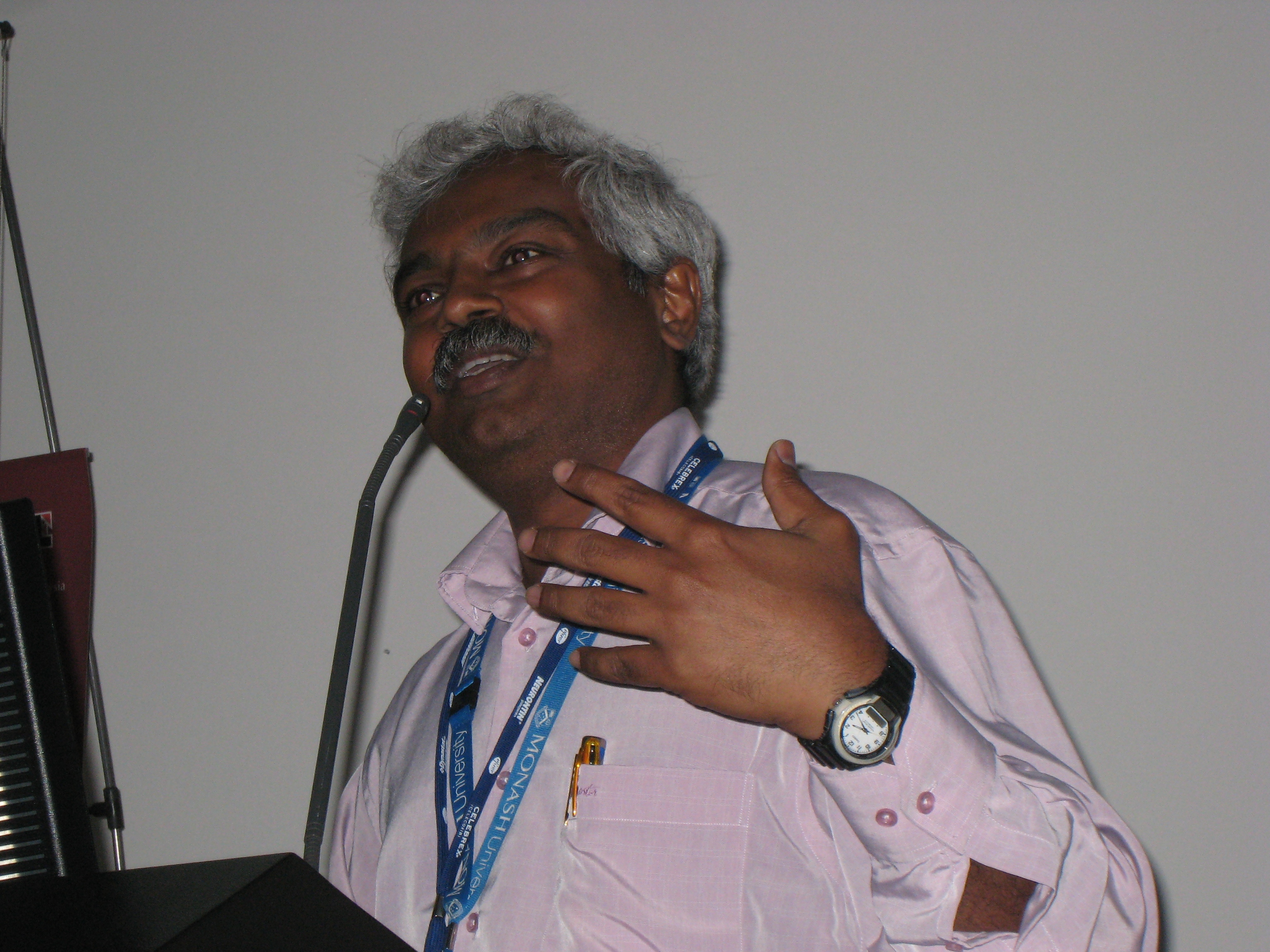
" What is SLE" by me


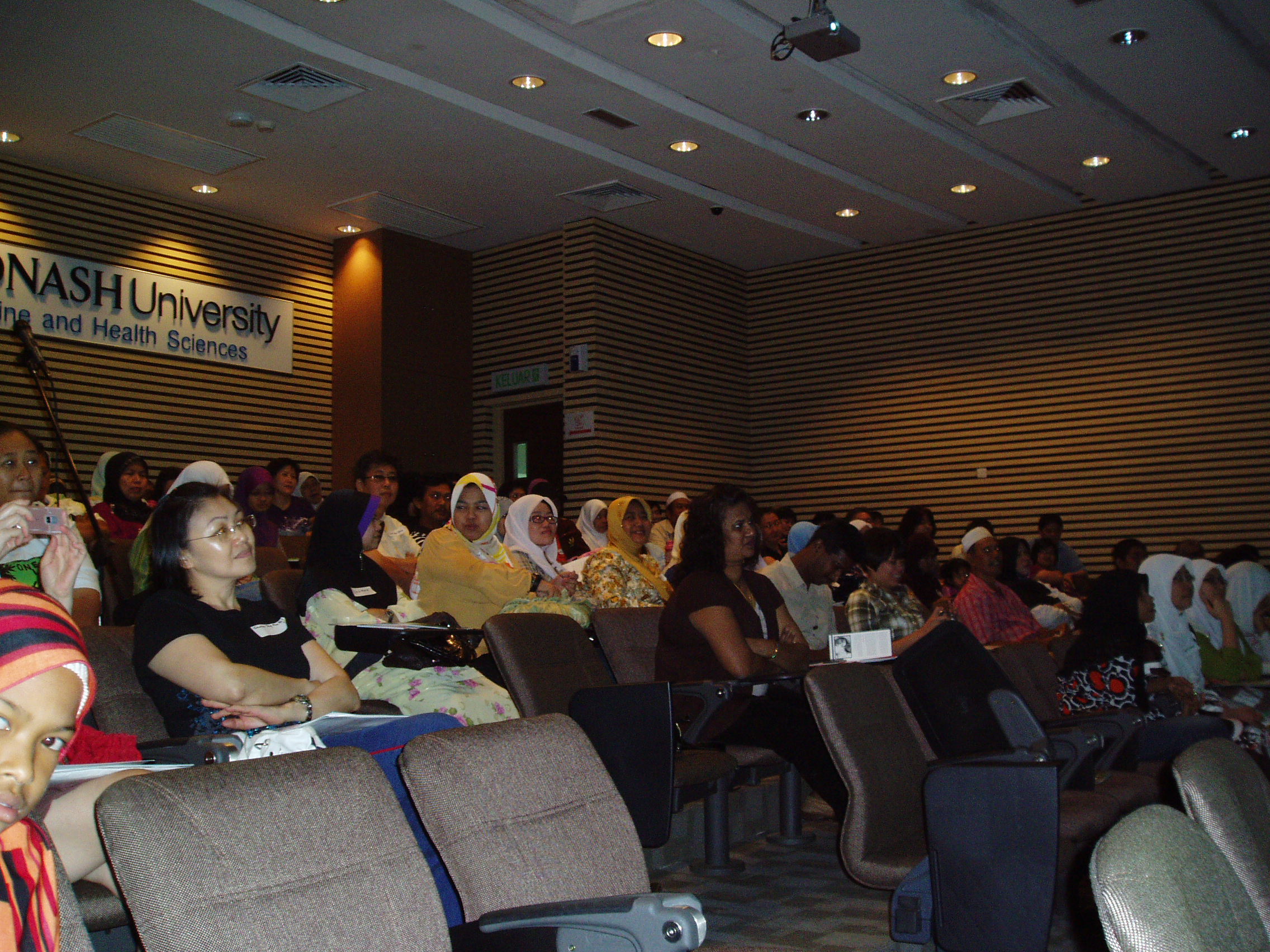
Listening to my talk


Video Show
Registration of participants

 Malaysian SLE Association has been in  existence since 1994 but their activities are only based in KL. Recently over the last 2 years they have tried to expand their membership drive and activities to other states.            

They asked for my help 2 years ago to set-up the Johor chapter. Unfortunately I was doing my training in  Singapore then and was unable to help. When I came back to JB in 2008, I decided to set up the Johor chapter. I enrolled one of my patient as the coördinator for Johor chapter and together we planned for the 1st Johor SLE public forum as well as Johor Chapter AGM.            

We conducted this on 30th January 2010 from 12-5pm at the Monash University (Johor Clinical School) lecture hall and we received overwhelming response with over 110 participants. I gave a talk on “What is SLE?” and Dr. Fauzi(nephrologist) on ” Kidneys and SLE“.           

I became the Johor rep for Malaysian SLE association about 3 weeks ago as well as  the Johor chapter adviser. We manage to get about 8-9 members to become committee members for Johor Chapter and I hope we can continue from here to set up the Johor chapter.            

This association is actually “by the patient, for the patient” and thus I will leave it to the patients to run this association.            

Well done, everyone…………..             

I  found this news from Malaysian Insider. We all know about this land smuggling issue which occurred few weeks ago. What was interesting is the fact that action was only taken when our ex-PM wrote in his blog sarcastically. Do we all really think that this started to happen only recently??

Eventhough sand export to Singapore has been banned since late 90s, if I am not mistaken, I think everyone knows that it is still being exported to Singapore. Now you know why Singapore is not begging Malaysia to sell sand to them!!

Bribery is rampant in many government agencies especially in customs. There are so many jobless custom officers at the check point that they don’t even bother to check on anything. For 2 years I was travelling between Singapore and Malaysia weekly and not even once I saw an immigration officer even looking at my face (comparing with the passport photo) or scanning my bag, a matter of fact  for any of the travellers. You can smuggle anything if you want to. The scanning machines installed in both JB and second link checkpoints are just for show. Infact, at times you will see the officers sleeping at the machine or facing the back against you. Sometimes they will be reading Utusan Malaysia at the scanning machine area. occasionally, for courtesy sake, they will ask some of who are carrying big bags to scan.

UMNO keep instigating the Malays to go against the non-Malays by saying that the Chinese wants to take over the country etc etc. If you read Zaid Ibrahim’s book ” I too am Malay“, he said that the Malays seem to be so concerned about the non-malays but have forgotten the fact that there are millions of foreign workers in this country who are taking away all the jobs that the Malays suppose to do!! Well, he said it right. Of course , smart people will know that this is UMNO’s politics. Without Malay support, they are gone, thus use non-Malays as punching bag!

Well, in this news you can see who is selling Malaysia. When you take people without merit and of low intelligence, corruption is bound to occur.

No doubt, even the smart and intelligent Malays are also leaving the country…………………

Sand-smuggling scandal, two charged

JOHOR BARU, Jan 29 — Two men pleaded not guilty to charges of accepting bribes in connection with the smuggling of sand to Singapore, at two separate Sessions Courts here today.

A Customs Department officer was charged with accepting bribes amounting to RM5,600 while an officer of the state Land and Mines Department director’s office was charged with accepting RM800, according to a report by The Star Online.

Syahrol Md Zain, 31, with the Customs’ Prevention Unit in Johor Baru, was accused of accepting a RM2,400 bribe from Sendry Anak Ugi, 44, at a room in the Zon Hotel at 1.15pm on July 10 last year.

According to the report the bribe was in exchange for not taking action against four lorries which were found to have smuggled sand to Singapore.

He was also charged with accepting a RM3,200 bribe from Sendry at the Bar Trevi Lounge at the Grand Blue Wave hotel here at about 7.37pm on Aug 5 last year in exchange for not taking action against four lorries which had smuggled sand to Singapore.

Sessions Court Judge Muhammad Jamil Hussin set bail at RM5,000 in one surety and March 9 for mention.

In another Sessions court, Johairi Ahmad, 41, was charged with accepting a RM800 bribe from Sendry at a room in Grand Blue Wave Hotel at 4.09pm on Aug 6 last year.

The bribe was also for not taking action against four lorries which were found to have smuggled sand to Singapore.

Smuggling sand is classified under Section 135 (1) (c) of the Customs Act 1967.

Sessions Court Judge Aliman Musri fixed bail at RM6,000 in one surety and set March 26 for mention.

Deputy Public Prosecutor Noorfazlin Hamdan prosecuted both cases while both accused were not represented.

The charges were classified under Section 17(a) of the Malaysian Anti Graft Act 2009.

The men face not more than 20 years’ imprisonment and a fine of not less than five times the amount of bribe or RM10,000, whichever is higher, upon conviction.

They posted bail.