Feeds:
Posts
Comments

Archive for July, 2010

An excellent speech from K u LI
 
We were once ‘Malaysians’
//
Razaleigh Hamzah
Jul 31, 10
2:36pm
Share 55

The following keynote speech was given by Gua Musang parliamentarian and former finance minister Tengku Razaleigh Hamzah at the 4th Annual Malaysian Student Leaders Summit (MSLS) today.

I have played some small role in the life of this nation, but having been on the wrong side of one or two political fights with the powers-that-be, I am not as close to the young people of this country as I would hope to be.

History and the 8 o’clock news are written by the victors. In recent years, the government’s monopoly of the media has been destroyed by the technology revolution.

You could say I was also a member of the United Kingdom and Eire Council for Malaysian Students (UKEC). Well I was, except that I belonged to the predecessor of the UKEC, by more than 50 years, the Malayan Students Union of the UK and Eire. I led this organisation in 1958/59.

asli forum tengku razaleigh economy 150109 02I was then a student of Queen’s University at Belfast, as well as at Lincoln’s Inn. In a rather cooler climate than Kota Bharu’s, we campaigned for decolonisation. We demonstrated in Trafalgar Square and even in Paris. We made posters and participated in British elections.

Your invitation to participate in the MSLS was prefaced by an essay that calls for an intellectually informed activism. I congratulate you on this. The youth of today, you note, “will chart the future of Malaysia.” You say you “no longer want to be ignored and leave the future of our Malaysia at the hands of the current generation.” You “want to grab the bull by the horns… and have a say in where we go as a society and as a nation.”

I feel the same, actually. A lot of Malaysians feel the same. They are tired of being ignored and talked down to.

You are right. The present generation in power has let Malaysia down. But also you cite two things as testimony of the importance of youth and of student activism to this country, the election results of 2008 and “the prime minister’s acknowledgement of the role of youth in the development of the country.”

So perhaps you are a little way yet from thinking for yourselves. The first step in “grabbing the bull by the horns” is not to require the endorsement of the prime minister, or any minister, for your activism. Politicians are not your parents. They are your servants. You don’t need a government slogan coined by a foreign PR agency to wrap your project in. You just go ahead and do it.

At ease with himself

When I was a student, our newly independent country was already a leader in the post-colonial world. We were sought out as a leader in the Afro-Asian Conference that inaugurated the Non-Aligned Movement and the G-77. 

The Afro-Asian movement was led by such luminaries as Zhou En Lai, Nehru, Kwame Nkrumah and Soekarno. Malaysians were seen as moderate leaders capable of mediating between the more radical leaders and the West. We were known for our moderation, good sense and reliability.

We were a leader in the Islamic world, as ourselves and as we were, without our leaders having to put up false displays of piety. His memory has been scrubbed out quite systematically from our national consciousness, so you might not know this or much else about him, but it was Tunku Abdul Rahman who established our leadership in the Islamic world by coming up with the idea of the OIC (Organisation of Islamic Conference) and making it happen.

tunku abdul rahmanUnder his leadership, Malaysia led the way in taking up the anti-apartheid cause in the Commonwealth and in the United Nations, resulting in South Africa’s expulsion from these bodies.

Here was a man at ease with himself, made it a policy goal that Malaysia be “a happy country”. He loved sport and encouraged sporting achievement among Malaysians. He was owner of many a fine race horses. He called a press conference with his stewards when his horse won at the Melbourne Cup.

He had nothing to hide because his great integrity in service was clear to all. Now we have religious and moral hypocrites who cheat, lie and steal in office, who propagate an ideology that shackled the education system for all Malaysians, while they send their own kids to elite academies in the West.

Days when we were on top

Speaking of football – you’re too young to have experienced the Merdeka Cuphe 60s and 70s. Teams from across Asia would come to play in Kuala Lumpur: teams such as South Korea and Japan, whom we defeated routinely.

We were one of the better sides in Asia. We won the bronze medal at the Asian Games in 1974 and qualified for the Moscow Olympics in 1980. Today our FIFA ranking is 157 out of 203 countries.

That puts us in the lowest quartile, below Maldives (149), the smallest country in Asia, with just 400,000 people living about 1.5 metres above sea level who have to worry that their country may soon be swallowed up by climate change. Here in Asean we are behind Indonesia, Thailand, Singapore, whom we used to dominate, and now only one spot above basketball-playing Philippines.

The captain of our illustrious 1970’s side was Soh Chin Aun, R Arumugam, Isa Bakar, Santokh Singh, James Wong and Mokhtar Dahari. They were heroes whose names rolled off the tongues of our schoolchildren as they copied them on the school field. It wasn’t about being the best in the world, but about being passionate and united and devoted to the game.

It was the same in badminton, except at one time we were the best in the world. I remember Wong Peng Soon, the first Asian to win the All-England Championship, and then just dominated it throughout the 1950. Back home every kid who played badminton in every little kampung wanted to call himself Wong Peng Soon.

There was no tinge of anybody identifying themselves exclusively as Chinese, Malays or Indian. Peng Soon was a Malayan hero. Just like each of our football heroes. Now we do not have an iota of that feeling. Where has it all gone?

Capital flight troubling


I don’t think it’s mere nostalgia that makes us think there was a time when the sun shone more brightly upon Malaysia. I bring up sport because it has been a mirror of our more general performance as a nation.

When we were at ease with who we were and didn’t need slogans to do our best together, we did well. When race and money entered our game, we declined. The same applies to our political and economic life.

Soon after independence, we were already a highly successful developing country. We had begun the infrastructure building and diversification of our economy that would be the foundation for further growth. We carried out an import-substitution programme that stimulated local productive capacity.

From there, we started an infrastructure build-up that enabled a diversification of the economy leading to rapid industrialisation. We carried out effective programmes to raise rural income and help the landless with programmes such as Felda.

Our achievements in achieving growth with equity were recognised around the world. Our peer group in economic development were South Korea, Hong Kong, Singapore and Taiwan, and we led the pack. I remember we used to send technical consultants to advise the South Koreans.

Bmalaysia stock exchange market klse 141008 05y the late 90s, however, we had fallen far behind this group and were competing with Thailand and Indonesia. Today, according to the latest World Investment Report, FDI into Malaysia is at a 20-year low.

We are entering the peer group of Cambodia, Burma and the Philippines as an investment destination. Thailand, despite a month-long siege of the capital, attracted more FDI than we did last year. Indonesia and Vietnam far outperform us, not as a statistical blip but consistently. Soon we shall have difficulty keeping up with the Philippines.

This, I believe, is called relegation. If we take into account FDI outflow, the picture is even more depressing. Last year, we received US$1.38 billion in investments but US$8.04 billion flowed out. We are the only country in Southeast Asia that has suffered net FDI outflow.

I am not against outward investment. It can be a good thing for the country. But an imbalance on this scale indicates capital flight, not mere investment overseas.

Time to wake up

Without a doubt, Malaysia is slipping. Billions have been looted from this country, and billions more are being siphoned out as our entire political structure crumbles. Yet we are gathered here in comfort, in a country that still seems to ‘work’ – most of the time. This is due less to good management than to the extraordinary wealth of this country.

You were born into a country of immense resources, both natural, cultural and social. We have been wearing down this advantage with mismanagement and corruption. With lies, tall tales and theft. We have a political class unwilling or unable to address the central issue of the day because they have grown fat and comfortable with a system built on lies and theft.

It is time to wake up. That waking up can begin here, right here, at this conference. Not tomorrow or the day after but today. So let me, as I have the honour of opening this conference, suggest the following:

1) Overcome the urge to have our hopes for the future endorsed by the prime minister. He will have retired, and I’ll be long gone, when your future arrives. The shape of your future is being determined now.

2) Resist the temptation to say “in line with” when we do something. Your projects, believe it or not, don’t have to be in line with any government campaign for them to be meaningful. You don’t need to polish anyone’s apple. Just get on with what you plan to do.

3) Do not put a lid on certain issues as ‘sensitive’ just because someone said they are. Or it is against the ‘social contract’. Or it is ‘politicisation’.

You don’t need to have your conversation delimited by the hyper-sensitive among us. Sensitivity is often a club people use to hit each other with. Reasoned discussion of contentious issues builds understanding and trust. Stress test your ideas.

4) It’s not ‘conservative’ or ‘liberal’ to ask for an end to having politics, economic policy, education policy and everything and the kitchen sink determined by race. It’s called growing up.

5) Don’t let the politicians you have invited here talk down to you.

Don’t let them

Don’t let them tell you how bright and ‘exuberant’ you are, that you are the future of the nation, etc. If you close your eyes and flow with their flattery, you have safely joined the caravan, a caravan taking the nation down a sink hole.

If they tell you the future is in your hands, kindly request that they hand that future over first. Ask them how come the youngest member of our cabinet is 45? Our Merdeka cabinet had an average age below 30.

You’re not the first generation to be bright. Mine wasn’t too stupid. But you could be the first generation of students and young graduates in 50 years to push this nation through a major transformation. And it is a transformation we need desperately.

You will be told that much is expected of you, much has been given to you and so forth. This is all true. Actually much has also been stolen from you. Over the last twenty five years, much of the immense wealth generated by our productive people and our vast resources has been looted. This was supposed to have been your patrimony.

The uncomplicated sense of belonging fully, wholeheartedly, unreservedly, to this country, in all its diversity, that has been taken from you. Our sense of ourselves as Malaysians, a free and united people, has been replaced by a tale of racial strife and resentment that continues to haunt us. The thing is, this tale is false.

Reclaim your history

The most precious thing you have been deprived of has been your history. Someone of my generation finds it hard to describe what must seem like a completely different country to you now.

Malaysia was not born in strife but in unity. Our independence was achieved through a demonstration of unity by the people in supporting a multiracial government led by Tunku Abdul Rahman.

That show of unity, demonstrated first through the municipal elections of 1952 and then through the Alliance’s landslide victory in the elections of 1955, showed that the people of Malaya were united in wanting their freedom. We surprised the British, who thought we could not do this.

Today we are no longer as united as we were then. We are also less free. I don’t think this is a coincidence. It takes free people to have the psychological strength to overcome the confines of a racialised worldview. It takes free people to overcome those politicians bent on hanging on to power gained by racialising every feature of our life including our football teams.

Hence while you are at this conference, let me argue, that as an absolute minimum, we should call for the repeal of unjust and much abused Acts of Parliament which are reversals of freedoms that we won at Merdeka.

I ask you in joining me in calling for the repeal of the ISA (Internal Security Act) and the OSA (Official Secrets Act). These draconian laws have been used, more often than not, as political tools rather than instruments of national security. They create a climate of fear.

I ask you to join me in calling for the repeal of the Printing and Publications Act, and above all, the Universities and University Colleges Act (UUCA). I don’t see how you can pursue your student activism with such freedom and support in the UK and Eire while forgetting that your brethren at home are deprived of their basic rights of association and expression by the UUCA. The UUCA has done immense harm in dumbing down our universities.

We must have freedom as guaranteed under our constitution. Freedom to assemble, associate, speak, write, move. This is basic. Even on matters of race and even on religious matters we should be able to speak freely, and we shall educate each other.

Make BN multiracial

It is time to realise the dream of Hussein Onn and the spirit of the Alliance and of Tunku Abdul Rahman. That dream was one of unity and a single Malaysian people. They went as far as they could with it in their time. Instead of taking on the torch, we have reversed course. The next step for us as a country is to move beyond the infancy of race-based parties to a non-racial party system.

Our race-based party system is the key political reason why we are a sick country, declining before our own eyes, with money fleeing and people telling their children not to come home after their studies.

So let us try to take 1Malaysia seriously. Millions have been spent putting up billboards and adding the term to every conceivable thing. We even have ‘Cuti-cuti 1Malaysia’. Can’t take a normal holiday anymore. This is all fine.

Now let us see if it means anything. Let us see the government of the day lead by example. 1Malaysia is empty because it is propagated by a government supported by a racially-based party system that is the chief cause of our inability to grow up in our race relations.

Our inability to grow up in our race relations is the chief reason why investors, and we ourselves, no longer have confidence in our economy. The reasons why we are behind Maldives in football, and behind the Philippines in FDI, are linked.

So let us take 1Malaysia seriously, and convert Barisan Nasional into a party open to all citizens. Let it be a multiracial party open to direct membership. Pakatan Rakyat will be forced to do the same or be left behind the times. Then we shall have the vehicles for a two party, non-race-based system.

If Umno, MIC or MCA are afraid of losing supporters, let them get their members to join this new multiracial party. Pakatan Rakyat should do the same. Nobody need feel left out. Umno members can join en masse. The Hainanese Kopitiam Owners’ Association can join whichever party they want, or both parties en masse if they like.

We can maintain our cherished civil associations, however we choose to associate. But we drop all communalism when we compete for the ballot. When our candidates stand for elections, let them ever after stand only as Malaysians, for better

Read Full Post »

 An excellent view from Ku Li. As I have said before, we are going in the direction of the Philipines. The only thing that is sustaining us is oil and oil palm. Soon Indonesia will overtake us.

Najib can go around begging everyone to invest in Malaysia but our “Little Napoleons” and UMNO warlords are not making these people’s life any easier!! where is my commission mah……………..? I want to sign papers and earn 10% kind of mentality but do not want to do any work! 

Malaysia’s economy being ‘looted’, says Ku Li

By Asrul Hadi Abdullah Sani
July 31, 2010

KUALA LUMPUR, July 31 — Former finance minister Tengku Razaleigh Hamzah today claimed that billions of taxpayer’s money have been “looted” from the country.The outspoken politician also criticised the “political class” and its refusal to address the issue.
“Without a doubt, Malaysia is slipping. Billions have been looted from this country, and billions more are being siphoned out as our entire political structure crumbles.

“Yet we are gathered here in comfort, in a country that still seems to ‘work.’ Most of the time. This is due less to good management than to the extraordinary wealth of this country,” the Gua Musang MP said during the 4th Annual Malaysian Student Leaders Summit here.

The Kelantan prince, popularly known as Ku Li, said that public must not be deceived with the mismanagement and corruption of the economy.

“You were born into a country of immense resources both natural and cultural and social. We have been wearing down this advantage with mismanagement and corruption. With lies, tall tales and theft.

“We have a political class unwilling or unable to address the central issue of the day because they have grown fat and comfortable with a system built on lies and theft,” he said.

Ku Li stressed that the recent World Foreign Investment Report (WIR) which showed a drop in the country’s foreign direct investment (FDI) was not a statistical blip.

“Today, according to the latest World Investment Report, FDI into Malaysia is at about a twenty year low. We are entering the peer group of Cambodia, Myanmar and the Philippines as an investment destination. Thailand, despite a month-long siege of the capital, attracted more FDI than we did last year. Indonesia and Vietnam far out perform us, not as a statistical blip but consistently. Soon we shall have difficulty keeping up with the Philippines,” he said.

Prime Minister Datuk Seri Najib Razak has come under fire from opposition parties for Malaysia’s lacklustre FDI rates, which have fallen faster than regional counterparts such as Singapore and China even while capital outflows dampened private domestic investment.

The WIR 2010 released by the United Nations showed that FDI in Malaysia plunged 81 per cent last year, trailing behind countries like the Philippines, Vietnam, Thailand, Indonesia and Singapore.

The report revealed that Malaysia suffered a large 81.1 per cent drop in FDIs compared to far healthier figures in Thailand (30.4 per cent), Vietnam (44.1 per cent) and Indonesia (44.7 per cent).

In May, Minister of International Trade and Industry Datuk Seri Mustapa Mohamed announced that investments in the country for Q1 2010 amounted to RM5.2 billion.

FDIs made up RM3.2 billion of this total, with Singapore, Taiwan and Japan being the biggest contributors.

Mustapa said the investment amount was still relatively low against the total amount of RM32.6 billion in investments received last year.

Najib has been trying to lift Malaysia’s profile as a destination for foreign investment to help the country achieve an average GDP growth of at least 6 per cent per annum over the next five years.

However, his administration has insisted that the GDP growth target is still achievable despite warning that the economy may slow down in the second half of the year due to external factors.

“This, I believe, is called relegation. If we take into account FDI outflow, the picture is even more interesting. Last year we received US$1.38 billion (RM4.07 billion) in investments but US$ 8.04 billion flowed out. We are the only country in Southeast Asia which has suffered nett FDI outflow.

“I am not against outward investment. It can be a good thing for the country. But an imbalance on this scale indicates capital flight, not mere investment overseas,” said Tengku Razaleigh.


Read Full Post »

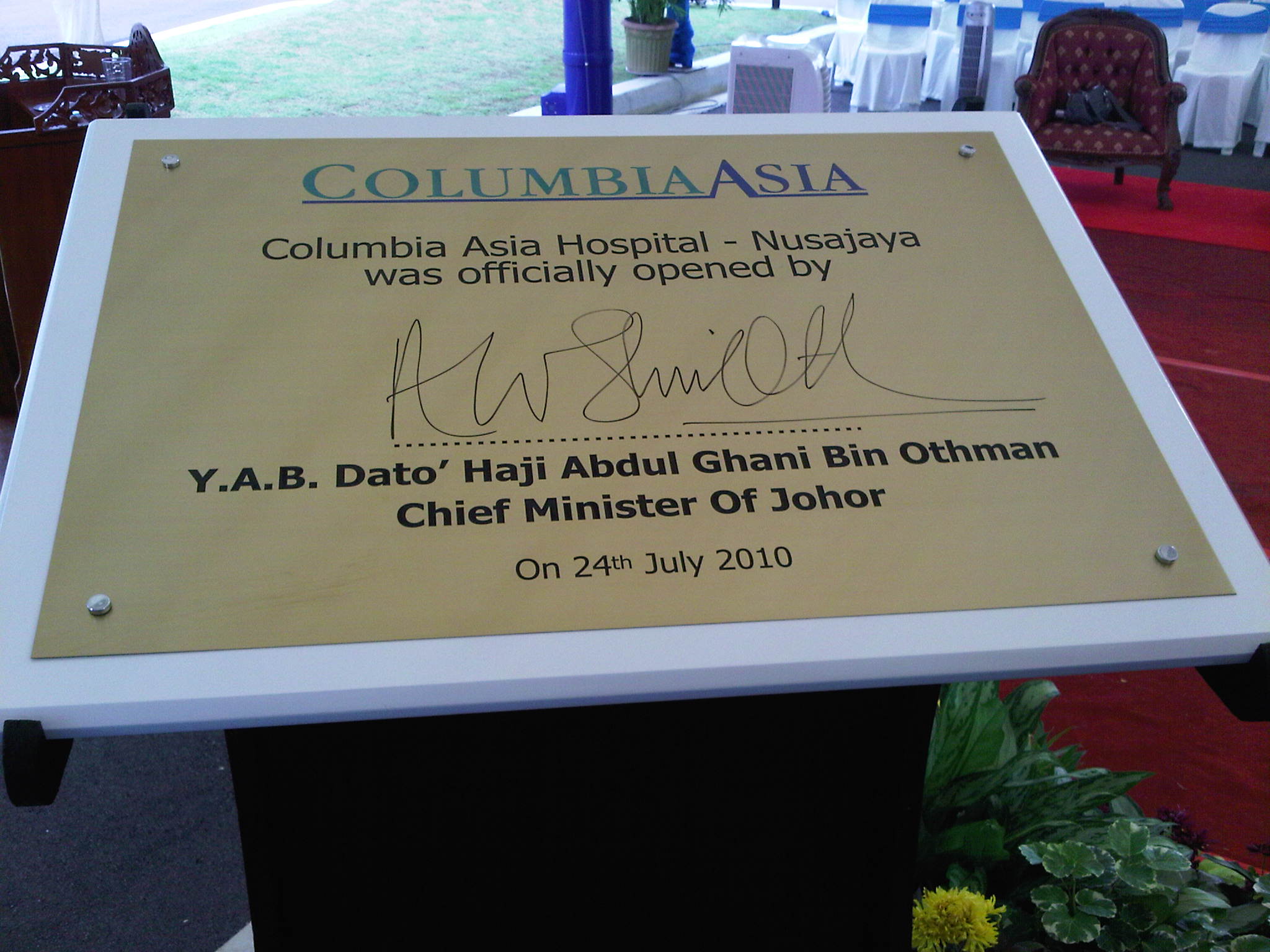
Officially opened

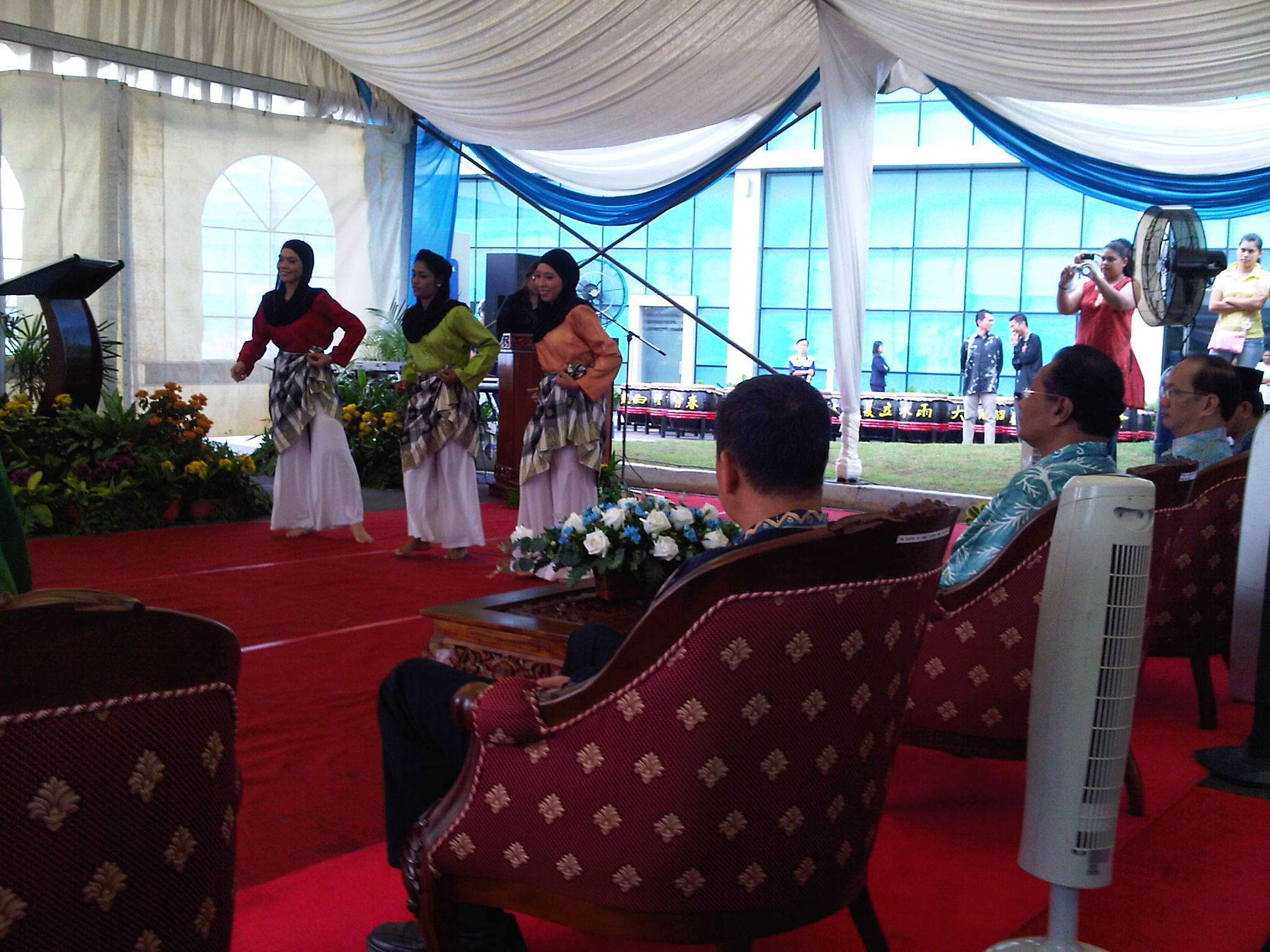
Indian dance performance by our staffs
MB watching the performance by our staffs
Before the Arrival of MB Johor


Yes, Columbia Asia Hospital Nusajaya is officially open! We had this ceremony last Saturday 24th July 2010 and our VIP guest was none other than our Johor Menteri Besar, YAB Dato Hj Abdul Ghani Othman. Coincidentally, it was also mine and my father’s birthday. It was a well attended ceremony and many people had many questions to ask about the hospital.

If you notice, one of the staff who is dancing Zapin is an Indian(2nd from left, in Green) and one of the staff who is dancing the Indian dance is a Malay(3rd from left). That’s Columbia Asia, a community based hospital, truly Malaysian……….

I hope the hospital will be a success. Today, I had my busiest day in the hospital since its soft launch. Hopefully, it will remain the same!

Read Full Post »

 Remember what I said before about our national schools? Please read my education column.

These are the issues that make non-Malays to shift away from the national schools. Religious and political issues should never be brought to the mainstream education system. Unfortunately our education system is going down the drain due to over politicization!
 
 
‘Stop banning non-Muslim societies in schools’
//
Vasugi Supramaniam and Richard Loo Wai Hoong
Jul 23, 10
4:13pm

The Education Ministry has been urged to quickly resolve the ban imposed on the formation of non-Muslim religious societies in national schools once and for all.

“This is not an isolated issue. The matter is getting worse. Schools in Penang as well are facing this problem,” MCA central committee member Loh Seng Kok told a press conference in Kuala Lumpur today. 

He said the situation was made known to him by various religious society representatives who had received complaints on the matter.

The state Education Department was aware of the matter, he said, adding not only Pakatan Rakyat states were affected but also BN-ruled states.

NONE“Why can’t the matter be resolved as quickly, as was done at Klang High School?” he asked.

Loh also called for fairer treatment by including non-Muslim associations in the co-curricular activities listed in the co-curriculum management guidelines issued to schools.

“As for now, only Islamic religious societies are listed in the guidelines,” he said.

He also called for a stop to conflicting interpretations and decisions that went against the co-curriculum implementation policy.

The issue was brought to light when an English tabloid earlier this month reported the closure of Klang High School’s Buddhist, Hindu and Christian associations.

Content of ministry circular ‘misunderstood’

Certain quarters have argued that this was a misunderstanding of the circular Bil.20/2000 issued by the Education Ministry in 2000, which said all school societies must be registered with the state education departments.

On July 13, it was reported that Deputy Education Minister Wee Ka Siong claimed that the Klang High School administration had misinterpreted the content of the circular.

The circular stated that non-Muslim religious societies formed before the year 2000 did not have to be dissolved.

NONEHowever, Loh (left) argued that all societies, regardless of the year in which they were formed, should be given fair and equal treatment.

“This issue is very serious, to the extent that some teachers have been transferred to other schools because they were active in Christian fellowship activities in their schools,” said a now retired teacher who had been in the field for about 30 years.

The teacher, who did not want to be named, claimed that no reason was given for the transfers.

“In 1998, I personally received a directive from my former superior to cease all Christian fellowship activities in the school. When I asked for a reason, I wasn’t given one,” she added.

Also present were Young Buddhist Association of Malaysia vice-president Loh Yit Phing, Subang Jaya Buddhist Association president Chim Siew Choon, MCA Religious Affairs deputy chief Raymond Low and Christian Federation of Malaysia executive secretary Tan Kong Beng.

Read Full Post »

  Brain drain is a huge problem in Malaysia. The government led by UMNO knows very clearly about this but of course, they are not bothered since the outflow is mainly non-Bumis. ” You tak Suka, you keluarlah!”, remember this famous word from a parliamentarian? UMNO’s hidden agenda since the early 1970s is to shrink the non-Malay population and to increase the Malay population. Thus they created all the frustration for the non-Malays which in turn will make the non-Malays to leave the country. I have written about this before in my post titled “Where have all the chinese gone?”  

Unfortunately what they did not realise is the fact that most of the people who left the country are the best brains that the country could have used to become a developed nation. Most of the people who received the citizenship from UMNO were Indonesian immigrants who are unskilled labourers which did not bring any good for this nation except increasing the number of “Malays” in the country. Indonesians who receive citizenship becomes instant Bumiputeras where as a non-Malays who sloughed for this country for centuries become “second” class citizens till today.  

The article below is well written about the seriousness of the Brain Drain problem for this country. As far as I am concerned, as long as Malaysia practises racial policies, it is bound to be doomed. God is watching!  

Foreign spouses and the brain drain

Sideways by Deborah Loh | 23 July 2010    

 (Pic by lusi / sxc.hu)   

WORSE than Malaysia’s brain drain problem is the fact that little is coming in to replace what goes out. Losing skilled local talent to other countries is not unique to Malaysia, as statistics show. After all, the world was built on migration.But what is unique, and not in a good way, is that we can’t seem to attract enough foreign skilled labour to equalise the outflow. “We’re a failed brain transplant,” said Dr Toh Kin Woon, a former Gerakan and Penang state exco member, at a 13 July 2010 public forum in Kuala Lumpur on Malaysia’s brain drain.Part of this lack of inflow can be attributed to immigration rules that make it difficult and arbitrary for foreign spouses of Malaysians, and the children of such unions, to obtain permanent residency (PR), citizenship and employment. And yet, adjusting these rules would be the most sensible and practical immediate solution to the brain drain problem. So why aren’t we doing it?Malaysians abroadMalaysians have long been going abroad ever since independence for tertiary education in Commonwealth countries. Between 1960 and 2005, a hundred-fold increase was recorded in emigration numbers. There were 9,576 Malaysians residing abroad in 1960. In 2005, the number rose to 1,489,168, according to World Bank statistics, said former Human Resources Minister Tan Sri Dr Fong Chan Onn, who was also a presenter at the public forum.The figure in 2005, however, shows how alarming the outflow of human capital for Malaysia is when compared with the 919,302 world average migration per nation. Malaysia is losing people at a higher rate than other nations.A high percentage of this outflow is skilled labour. Fong said there were 102,321 Malaysian graduates residing in Organisation for Economic Cooperation and Development (OECD) countries in 2000. This represented 77.24% of total Malaysian migrants in these countries. They also represent a 40.84% increase from the number of tertiary-educated migrants since 1990. 

Fong Fong at the forum

We could comfort ourselves that Malaysia is not alone in losing skilled talent to other countries. Fong said data from OECD countries in 2000 showed that Singapore had 67,560 migrants in these countries, of whom 74.04% were graduates. Of Thailand’s 222,550 migrants, 41.7% were tertiary-educated. South Korea lost 885,885 people, of whom 73.7% were graduates; and India had 1.5 million of its citizens abroad, of whom 69% had degrees.And Malaysia isn’t the only one losing doctors, nurses and other medical personnel to other countries. There were 4,129 Malaysian doctors and 7,431 nurses in OECD countries in 2000. Other Asian neighbours with higher figures in the same year were Taiwan (5,332 doctors) and the Philippines (15,859 doctors and 110,557 nurses).The reasons why Malaysians leave are varied, and have been discussed repeatedly in various other forums. But it is of little comfort when we realise that while our neighbours are able to draw an inflow of skilled talent through immigration-friendly policies, attractive rewards and open environments, Malaysia is only able to draw low-skilled foreign labour. There are an estimated 2.5 million foreign workers in the country, both legal and illegal, all largely holding menial jobs in agriculture, manufacturing, construction and low-paying service sectors. In contrast, the New Economic Model report has noted that the number of expatriates from first-world countries, which was 90,000 in 2000, was halved by 2008.If government reverse-brain drain programmes have only had minimal success, then it is time that due consideration be given to other approaches. For a start, as suggested by Fong at the forum, by relaxing immigration and employment rules for foreign spouses and children.   

Malaysians and their foreign spouses are flocking to other shores (Pic by Patrick Doheny @ Flickr) Why are Malaysians and their foreign spouses flocking to other shores? (Pic by Patrick Doheny @ Flickr) Runaround  

 What turns highly-trained Malaysians and their highly-skilled foreign spouses away? For one, the foreign spouse, whether the husband or wife, is not entitled to immediate Malaysian citizenship or PR status despite adopting Malaysia as their new home. Instead, they have to go through a repeated and tiresome application process, which involves the runaround with immigration authorities, endless waiting, and unexplained rejections. Their existence in the country, meanwhile, is validated by a renewable social visit pass that restricts their employment. Children of a Malaysian woman married to a foreign husband also do not qualify for PR status or citizenship, until recently when the government announced a “new mechanism” to let such mothers obtain Malaysian citizenship for their children abroad. How well this is working out is unclear given that it was just announced. There is also the inconvenience of having to travel back to Malaysia to appear in person at the National Registration Department headquarters with the baby. Foreign spouses have documented their difficulty and emotional trauma of being left in limbo over their PR applications, much less citizenship. These stories are many, and some end with Malaysians making the painful decision to uproot to settle in their foreign spouse’s country. Cold War mentality    

At the public forum, even Fong himself, a former cabinet minister, seemed bewildered as to why Malaysian immigration policies remain the way it is in this day and age. He described such policies as “Cold War mentality”. To be less polite, the policies are actually xenophobic. For lack of any rational explanation from the government, people are left to conclude that at worst, the snail’s pace of processing applications is part of moves to ensure a certain racial balance in the country. At best, it is just plain inefficiency if foreign spouses have had to wait for up to two decades or more.   

Vijay Singh (Pic by Siyi Chen / Wiki commons) Vijay Singh (Pic by Siyi Chen / Wiki commons) If Malaysia weren’t so xenophobic, imagine the talent we could have possibly laid claim to. Could former world number-one golfer Vijay Singh, a Fijian married to a Malaysian, be playing as a Malaysian instead? What other talents among the nearly 1.5 million Malaysians who have migrated, and their spouses, have we let slip through our fingers?  

 In his last interview on the subject in September 2009, Home Minister Datuk Seri Hishammuddin Hussein offered little new insight into reasons for the lengthy and arbitrary process of approving PR and citizenship applications. But he did understandably say that vetting thousands of such applications to ensure they were bona fide cases and not “marriages of convenience” was a time-consuming and difficult process. Fair enough. But when it comes to highly-qualified and skilled human capital, it doesn’t make sense that the government would still be as finicky and slow. If a foreign spouse has all the right academic and professional qualifications to contribute to Malaysia, why can’t PR or citizenship approvals be sped up for them? Isn’t it obvious to the policymakers that spouses with such experience and potential can be part of the solution to Malaysia’s brain drain? The government was certainly clear on Indonesian badminton champion Rexy Mainaki‘s contribution to Malaysia, when he coached the national doubles team, that it gave him and his family Malaysian PR status. Why can’t there be ways, then, to filter foreigners who are in marriages of convenience from those who can contribute to the skilled labour pool in Malaysia? For one, it is obvious that foreign spouses who are highly qualified and who have an established professional track record would not need to be so economically needy as to require the “convenience” of a Malaysian spouse to live here. Throughout history, immigrants who have made good in places where they were given the opportunity to do so not only became giants in their fields of expertise, but added to the lustre of the countries and institutions they joined. Albert Einstein, a German Jew, migrated to the US to escape Nazism and joined Princeton University. He died a US citizen. Julia Gillard was born Welsh and migrated to Australia as a child, where she is currently the prime minister. So really, the government should realise that simply clearing the backlog of citizenship and PR applications isn’t cause for applause. It simply was a job they failed to do earlier. And having done so isn’t enough. What’s needed is a reformed and unbiased way of approaching the issue of foreign spouses. Especially if the national issue at stake is to stem the bleeding of human capital.  Deborah Loh wonders when the government will appreciate the diversity of Malaysians, their spouses, and what they can contribute to the country.


Read Full Post »

Malaysia is probably the only country which retrain graduates. Instead of addressing the root of the problem which is of course the poor quality of students that are being enrolled to universities as well as the poor quality of our universities, our “boleh land” government has decided to spend more of our tax payer’s money for this kind of idiotic programmes!

Programmes like this has been going on for the past few years. I have come across a few of them as my patients. I remember a so-called graduate of biochemistry who initially got a job at Pizza Hut as assistant manager, gave up the job just to enroll herself in this programme. When I asked her why, the answer is simple : “tak sukalah kerja kat pizza hut tu, kena berdiri and jalan aje. dekat program ini, kita diajar banyak benda macam Inglish, communication skills dan sebagainya. Lagi pun kita akan di bayar rm500 sebulan dan di beri makan/minum dan penginapan free! Nanti kita akan dihantar buat attachment dekat company. Masa buat attachment, kerajaan bayar allowance RM 1000/bulan selama 6 bulan” !!! WTH

This is the main problem. Our graduates are incompetent first of all. They are not interested in the course that they have just completed in the university. Our university has a very peculiar way of giving university places for the students. Many students do not get the field that they have applied for! The UPU decides for them and many parents especially the Malays will just take whatever the university offers whether the son/daughter likes it or not, unlike the non-Malays who will sacrifice everything to send their child for the course that the child likes. Coming back to the lady above, she is now working as a teacher teaching Kemahiran Hidup and Bahasa Malaysia! When I asked her about her graduation in Biochemistry, answer: “saya tak sukalah buat kerja-kerja makmal ini” So apapasal you buat kursus ini? answer ” Saya pun tak tahu, dia orang bagi, saya ambil la! Now you know why our education system is screwed!

If you look below, UiTM(the only racist university in the world) is going to open another 12 campus and targeting to produce 200 000 graduates in 5 years!!! Do they really have any proper planning? Where are these people going to get their jobs!  Oh forgot, they will be retrained by your money! And they will also be paid by you for free! BTW, are you considered unemployed if you don’t get a job in 3 months!!!! It all depends how hard you work to get a job!


Government launches new scheme for unemployed graduates

SEGAMAT: The government has launched a special training scheme to equip fresh and unemployed graduates with skills required by the industries.

Human Resources Minister Datuk Dr S.Subramaniam said under the scheme called Graduate Employability Program (GEP), the graduates would not only enhance their chances of employability but also become more innovative and creative.

The minister said RM10.5 million had been allocated for the GEP and it would be managed by Pembangunan Sumber Manusia Berhad (PSMB) under the ministry.

“The GEP’s aim is to increase the skills and competencies of graduates to prepare them for the job market with higher salaries and to assist the less fortunate graduates who cannot find employment due to lack of skills,” he said when launching the GEP here Saturday.

Dr Subramaniam said the GEP would equip, develop and assist unemployed graduates through six key skills namely, ICT; competencies; transferable skills which include communication, analytical thinking and problem-solving; relevant working experience; exploring new route for their career; and job placement.

He said the target group would be diploma and degree holders who had been unemployed for at least three months after graduation.

“The attachment component provides hands-on learning environment and because of on-the-job experience, it makes its easier for trainees to apply what has been learnt in the classroom to where they are attached to,” he said.

He said the government would bear the fees for the graduates who would also be paid a monthly allowance of RM500.

He said on completion of the GEP, the trainees would secure employment almost immediately.

Dr. Subramaniam said to enlist, graduates could download application forms at http://www.hrdf.com.my or send their applications to PSMB. Bernama

UiTM to have 12 more campuses by 2015

JOHOR BAHARU: Universiti Teknologi Mara (UiTM) will build 12 new campuses by 2015, said Higher Education Minister Datuk Seri Mohamed Khaled Nordin.

He said this was in line with UiTM’s target of having 200,000 students in five years’ time.

The construction of six of the campuses have been approved while the rest are still are at the discussion stage prior to the Cabinet’s approval, he told reporters after the earth-breaking ceremony of UiTM Johor campus in Pasir Gudang here Saturday.

Mohamed Khaled said besides Pasir Gudang, other campuses would be built in Pekan, Dengkil, Tapah, Jasin and Seremban Tiga.

He said each campus, which would be built at the cost of RM300 million, would enrol between 4,000 and 5,000 students while each hostel could accommodate 2,000 students. On the Pasir Gudang campus, he said it would be completed in three years’ time and would offer diploma in engineering (civil, electrical, chemical and mechanical), and diploma in business studies.

Read Full Post »

With Prakash at Harbourview Hotel, Hong Kong

What a week it was! Left to Hong Kong last sunday(11/07/2010) evening and reached HK at 10.30pm. HK taxi drivers must be really crazy. I took a taxi from the airport to my hotel and the taxi fellow drove his taxi at 120-140km/hr!!! WTH. I reached the hotel at 12.10am and switched on the TV to see the World Cup 2010 final/closing ceremony. This was the first World Cup Final which I saw with Chinese commentary! whatever! as long as I can see the game. It went on till 5am and had to get up by 7.30am on Monday for my congress.

Hong Kong is a vibrant trade based city. I admire the way the British developed the city with good planning and public transport. You can go anywhere easily with their public transport. Their MRT system is excellent similar to Singapore. Hardly any traffic jams. However, due to space constraints, their hotels are rather small thou!. The temperature was rather hot at 30-33 C. I just made a few visits here and there, including the cable car at Lantau island.

Interestingly, I met an old friend of mine, Prakash in HK. Thanks to Facebook!. We studied together till Form 5 and I last met him 10 years ago in JB when he was working in Singapore. He is an Aeronautical engineer working with Cathay Pacific in Hong Kong. W e had a very interesting chat on Wednesday night.

Overall, it was a very tiring week. Reached back to JB at 4pm Thursday 15/07/2010. returned to work on Friday. Still exhausted, I must say.

Read Full Post »

Well, the World Cup 2010 is coming to an end in 2 days time. What a World Cup this was? Interesting, with full of upsets. Now we have to wait another 4 years for the next World Cup in Brazil 2014 and you will be 4 years older!

I will be flying off to Hong Kong tomorrow(11/07/2010) for APLAR 2010 congress as I am presenting a poster. I will be reaching Hong Kong around 10.30pm tomorrow and hoping to catch the finals between Holland and Spain over in Hong Kong at 2.30am Monday morning. I hope Hong Kong guys watch football!

I will be back from Hong Kong on 15/07/2010.

BTW the latest Berita MMA is out (June 2010). Please enjoy reading my latest article in this edition of  berita “The place that shall not be named, Welcome to the world of wizardry!” —> “Siapa Makan Cili, dia rasa pedas“. Will be uploading the article in my blog once I am back from Hong Kong.

Read Full Post »

I received this joke in my mail box recently, from a friend of mine:

“In Kuala Lumpur, Malaysia an old priest lay dying in the hospital.

For years he had faithfully served the people of the nation’s capital.

He motioned for his nurse to come near.

“Yes, Father?” said the nurse.

“I would really like to see Najib and the Muyhiddin before I die”, whispered
the priest.

“I’ll see what I can do, Father”, replied the nurse.

The nurse sent the request to Putrajaya (Administration Capital of Malaysia)
and waited for a response.

Soon the word arrived; Prime Minister Najib and his Deputy PM Muhyiddin
would be delighted to visit the priest.

As they went to the hospital, Najib commented to Muyhiddin, “I don’t know
why the old priest wants to see us, but it will certainly help our images
and might even get me all the Christian votes.

After all, I’m ‘IN IT TO WIN IT”.

Muyhiddin agreed that it was a good thing.

When they arrived at the priest’s room, the priest took Najib’s hand in his
right hand and Muyhiddin’s hand in his left.

There was silence and a look of serenity on the old priest’s face.

Finally Najib spoke.. “Reverend, of all the people you could have chosen,
why did you choose us to be with you as you near the end?”

The old priest slowly replied, “I have always tried to pattern my life after
our Lord and Saviour Jesus Christ.”

The old priest continued, “Jesus died between two lying thieves; I would
like to do the same.”

Read Full Post »

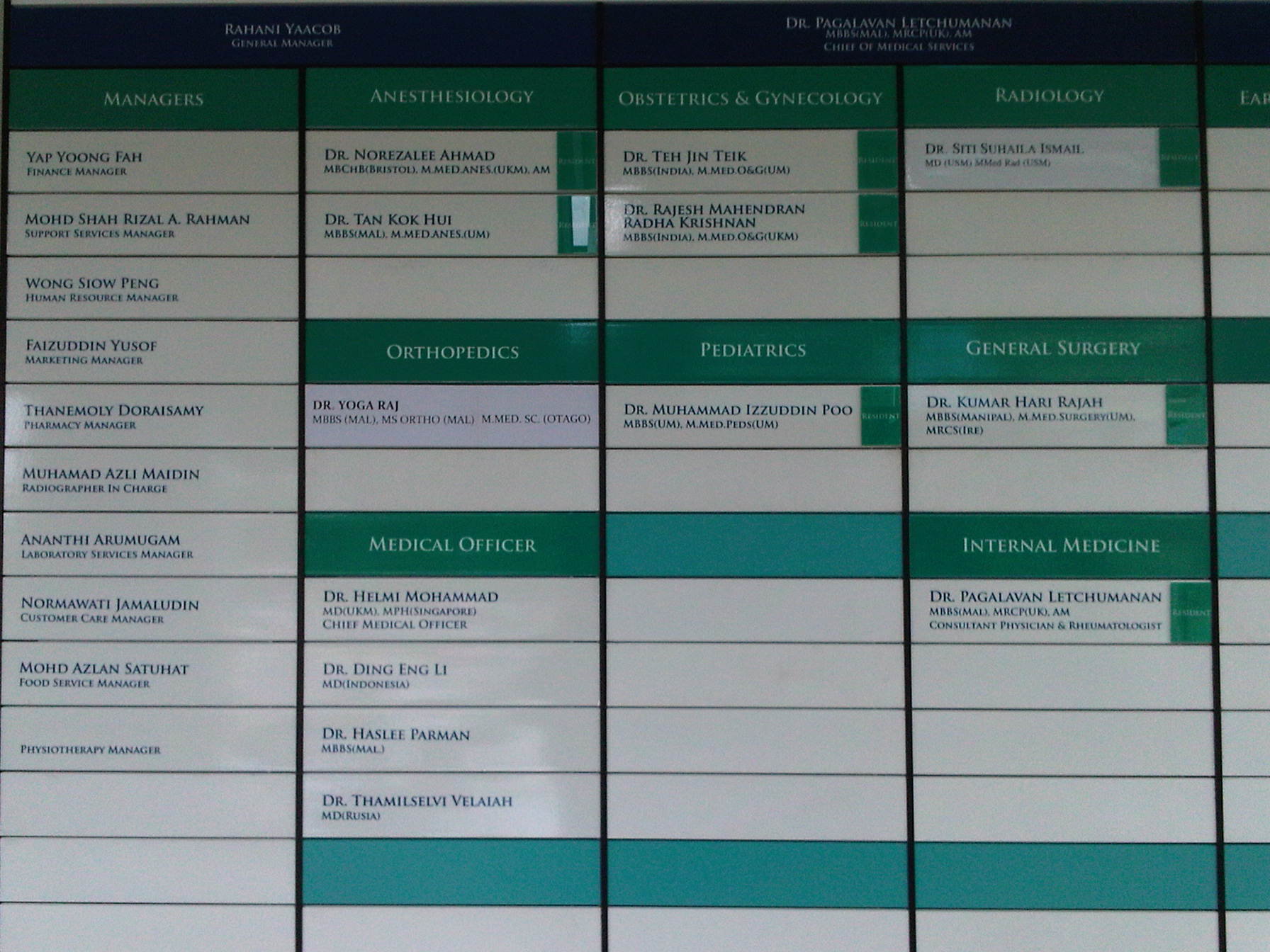
List of Consultants CAH, Nusajaya

Since the soft opening of Columbia Asia Hospital, Nusajaya, I have been quite busy. There were many things that I needed to settle slowly. I manage to give up my Rheumatoid Arthritis clinical trial last Monday as I know  I would not be able to complete it. I also manage to close down my Monash sponsored research, end of last month.

Year 3 Monash Students will be back to their campus this week and I will be starting my teaching, even though the university is still processing my application to downgrade from full-time to fractional. I have also started to inform my patients at Hospital Sultanah Aminah that I will slowly phase out my clinic. It is sad that I have to do this but I got no choice. My commitment to my new hospital is important as I am also the Chief of Medical Services for Columbia Asia Hospital, Nusajaya. Furthermore, Hospital Sultanah Aminah do not appreciate the services you provide. Even though, ministry has advertised that they will pay for services provided by private doctors in government hospitals, my application was not entertained!

Well, we will be having our official opening ceremony on 24t July 2010 at 10am by Johor Menteri Besar. This date was given by the Menteri Besar himself. Coincidentally it is also my birthday, and my father’s too!

Read Full Post »